








Introduction
Choosing between 304 and 316 stainless steel sheet looks simple until the buyer has to balance corrosion risk, price, surface finish, fabrication, and inspection documents in the same RFQ. Both grades are common austenitic stainless steels for sheet, plate, and coil supply, but they do not solve the same sourcing problem.
For many indoor fabrication jobs, 304 stainless steel sheet is the practical and cost-aware choice. For coastal, chloride, marine-adjacent, chemical, or aggressive cleaning environments, 316 stainless steel sheet often gives the buyer a wider safety margin because it includes molybdenum for better pitting and crevice corrosion resistance. The right answer depends less on the grade name and more on the service environment, welding plan, document requirement, and inspection risk.
This guide focuses on procurement decisions: what to specify, what to verify on the MTC, when to request PMI, and how to write an RFQ that prevents a supplier from quoting the wrong stainless grade.
304 vs 316 Stainless Steel Sheet At A Glance
The main buyer-side difference is corrosion exposure. 304 is widely used because it offers good formability, weldability, and corrosion resistance in many general environments. 316 is selected when the buyer expects chloride exposure, coastal atmosphere, salt spray, chemical processing, or harsher cleaning conditions.

| Buyer Decision | 304 Stainless Steel Sheet | 316 Stainless Steel Sheet |
|---|---|---|
| Typical selection logic | General fabrication, indoor equipment, mild atmosphere, cost control | Coastal, marine-adjacent, chloride, chemical, pharmaceutical, or harsher service |
| Alloy difference buyers check | Chromium-nickel austenitic stainless steel, normally without intentional molybdenum | Chromium-nickel-molybdenum austenitic stainless steel |
| Corrosion risk | Good in many mild conditions, but higher risk of chloride pitting | Better resistance to chloride-related pitting and crevice corrosion |
| Price position | Usually lower | Usually higher because of alloying cost, especially molybdenum |
| Document check | MTC should match grade, standard, heat number, chemistry, and mechanical results | Same checks as 304, with extra attention to Mo content |
| Common buyer mistake | Using 304 outdoors near salt exposure to save upfront cost | Over-specifying 316 where 304 would meet the real service condition |
If the order connects to stainless flat products, also review the available site product pages for stainless steel plate, 304L stainless steel plate, and 316L stainless steel plate before finalizing the RFQ.
Which Grade Fits The Service Environment?
Start with the environment, not with the price list. A buyer can often control cost by using 304 where the exposure is mild and reserving 316 for the sections that face chloride or chemical risk.
Use 304 stainless steel sheet when the project is mainly indoor, dry, and not exposed to salt, strong chlorides, or aggressive cleaning chemicals. Typical examples include general sheet metal fabrication, interior decorative panels, kitchen equipment in normal conditions, appliance panels, and many non-coastal architectural components.
Use 316 stainless steel sheet when the sheet will be near sea air, salt water, de-icing salts, chlorinated cleaning, chemical splash, or process fluids that increase localized corrosion risk. 316 is not magic and still needs correct cleaning, passivation, packing, and maintenance, but it gives a stronger margin where chloride-related pitting is a realistic risk.
If welding is part of the fabrication plan, confirm whether the buyer actually needs 304L or 316L. The low-carbon L grades are commonly requested to reduce sensitization risk after welding. Do not let a supplier substitute 304 for 304L or 316 for 316L unless the project engineer accepts it in writing.
Standards And MTC Checks Buyers Should Confirm
For stainless steel sheet, buyers commonly reference ASTM A240/A240M for plate, sheet, and strip, or the relevant EN/JIS/GB standard required by the project. The standard and grade must appear in the purchase order, proforma invoice, packing list, and MTC.
An EN 10204 3.1 certificate or equivalent MTC should not be treated as a formality. It is the buyer’s main traceability document. At minimum, compare these items before shipment release:
| MTC Field | Buyer Check | Why It Matters |
|---|---|---|
| Standard and grade | Confirm ASTM A240, EN 10088, JIS, or the specified standard and grade | Prevents quoting or shipping a nearby but unapproved grade |
| Heat number | Match MTC heat number to coil label, sheet bundle, and packing list | Links the physical material to the test certificate |
| Chemical composition | Check Cr and Ni for 304; check Cr, Ni, and Mo for 316 | Mo is a key differentiator for 316 stainless steel |
| Mechanical properties | Confirm values meet the specified standard and product form | Reduces risk of accepting material outside the project requirement |
| Surface finish | Confirm 2B, No.1, BA, brushed, or other finish as ordered | Finish affects appearance, fabrication, and corrosion performance |
| Dimensions and tolerance | Confirm thickness, width, length, and tolerance basis | Avoids disputes after cutting, forming, or installation |
If your team is still building a document review process, pair this article with the existing guide on how to verify a steel mill test certificate before shipment and the EN 10204 3.1 certificate checklist.
Practical Inspection Notes
For critical stainless orders, inspection should not stop at reading the MTC. The most useful approach is to connect documents, markings, measurements, and buyer use case in one review.
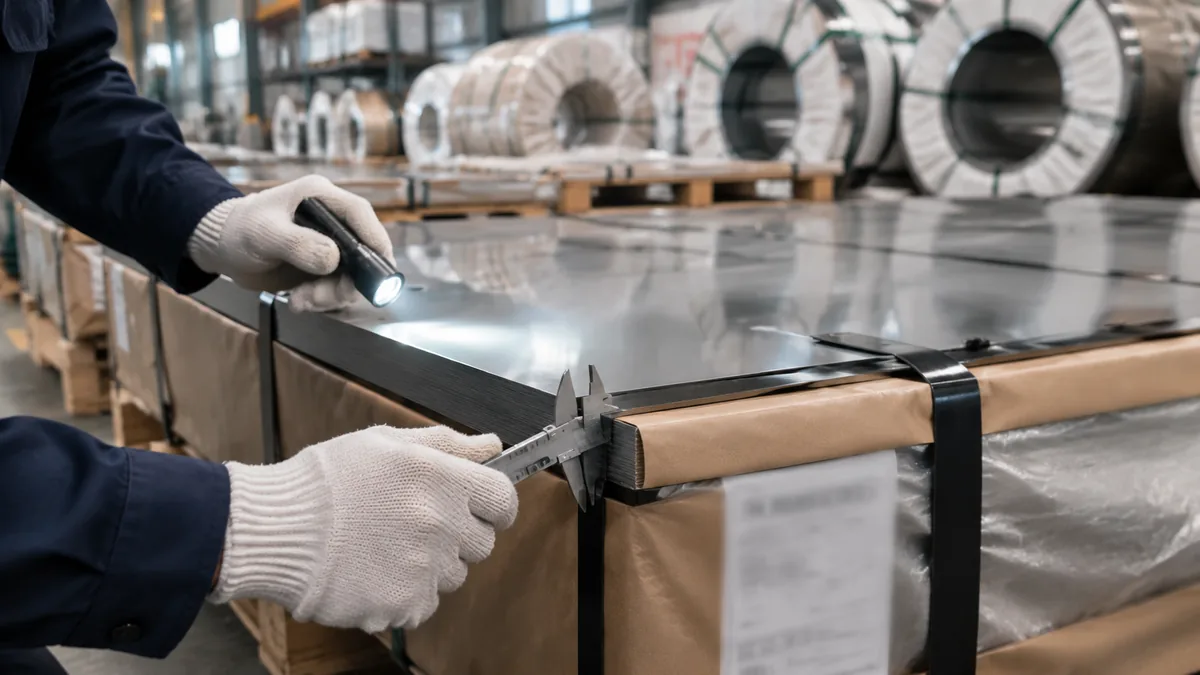
- Ask the supplier to mark or label each coil, sheet bundle, or pallet with grade, heat number, size, and quantity.
- Compare the physical marking with the MTC and packing list before loading.
- Measure thickness at multiple points, especially after slitting, cut-to-length, or polishing.
- Check surface finish under clean lighting and confirm whether protective film is required on one side or both sides.
- Request PMI testing for high-risk orders, 316 substitutions, unfamiliar suppliers, or projects where material mix-up would be expensive.
- For welded fabrication, ask the buyer’s engineer whether 304L or 316L is required, and write the exact grade into the PO.
Buyers sourcing from China can also use the broader stainless procurement notes in how to source stainless steel from China without specification mistakes.
RFQ Details That Prevent Misquoting
Many 304 vs 316 price disputes start because the first RFQ is too short. A supplier may quote “stainless sheet” quickly, but the buyer later discovers that the finish, tolerance, edge, certificate, or L-grade requirement was never locked.
A strong RFQ should include:
- Grade: 304, 304L, 316, or 316L.
- Standard: ASTM A240/A240M, EN 10088, JIS, GB, or project-specific requirement.
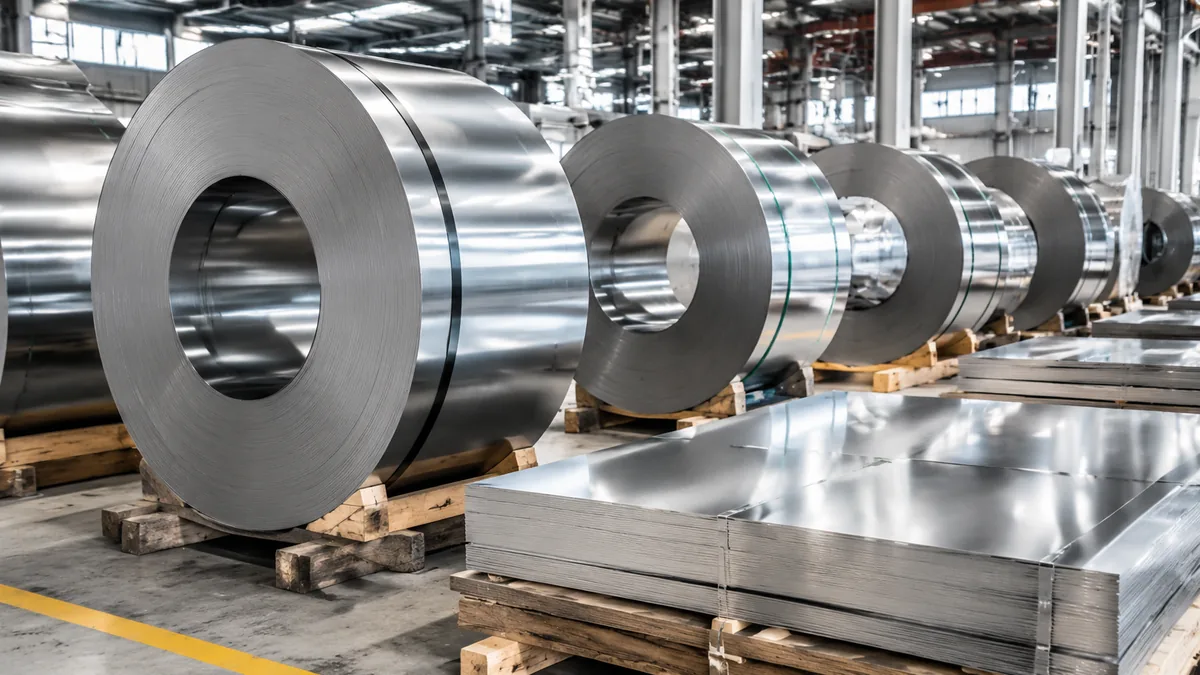
- Product form: sheet, plate, coil, strip, slit coil, or cut-to-length sheet.
- Thickness, width, length, tolerance, and quantity.
- Surface finish: 2B, No.1, BA, hairline, No.4, mirror, or other specified finish.
- Edge condition: mill edge, slit edge, deburred edge, or cut edge.
- Protection: paper interleaving, PVC film, pallet packing, waterproof wrapping, or seaworthy export packing.
- Certificate: EN 10204 3.1, MTC, third-party inspection, PMI report, or other documents.
- Destination port, Incoterms, delivery window, and loading requirements.
When you are ready to compare supply options, send the exact specification through request a quote so the commercial offer and technical review start from the same information.
Common Buyer Mistakes To Avoid
The first mistake is treating 316 as automatically “better” for every order. In a mild indoor application, the extra cost may not create real value. The better buying decision is to map grade to environment and keep the specification consistent.
The second mistake is using 304 in coastal or chloride exposure only because the unit price is lower. If corrosion claims, replacement cost, or customer rejection are likely, a lower purchase price can become expensive after installation.
The third mistake is approving the shipment based only on a PDF certificate. The MTC must be connected to the physical material through heat numbers, labels, bundle marks, and inspection records. For 316, PMI is a practical check because molybdenum content is a key part of the grade.
The fourth mistake is forgetting surface and packing details. Stainless sheet can arrive technically correct but commercially unacceptable if the surface is scratched, the PVC film is missing, the pallet is weak, or seaworthy packing was not defined before shipment.
Conclusion
For most buyers, 304 vs 316 stainless steel sheet is a risk allocation decision. Use 304 when the environment is mild and the project needs practical corrosion resistance at a controlled cost. Choose 316 when chloride, coastal, marine, chemical, or aggressive cleaning exposure makes pitting and crevice corrosion a real concern.
Before placing an order, write the grade, standard, surface finish, tolerance, certificate type, packing method, and inspection requirement into the RFQ. Then verify the MTC, markings, and physical material before shipment release. That process gives your team a better chance of receiving the stainless sheet you actually specified, not just the grade name printed on the quotation.