








Introduction
Steel can meet the purchase order and still fail at Saudi customs if the conformity path is incomplete. For construction plates, rebar, structural sections, coated coil, stainless flat products, and many related metals, Saudi import clearance often depends on SASO technical rules and the SABER platform—not only on price, mill capacity, or a Mill Test Certificate.
This guide is written for Saudi importers, project buyers, and overseas exporters who supply them. It explains how SABER and SASO fit together, how PCoC and SCoC differ, when the Saudi Quality Mark and MIM product declaration commonly appear in steel files, and which RFQ fields prevent late certificate surprises. It is procurement and logistics guidance, not legal advice. Confirm the current technical regulation, HS-code path, and notified-body requirements on SABER and with your Conformity Assessment Body before production is frozen.
SABER vs SASO: Who Does What?
SASO (Saudi Standards, Metrology and Quality Organization) sets and enforces product safety and quality rules. For metals used in buildings and construction, a core reference is the Technical Regulation for Building Materials – Part 1: Sectors of Metals and their Alloys for Buildings and Constructions. That regulation defines essential requirements, supplier obligations, labelling expectations, and conformity assessment procedures. Only the Arabic version is authentic where translations differ.
SABER is the online product-safety platform used to register regulated products and manage certificates linked to those rules. In practice, the Saudi importer (or another local party with commercial registration) works in SABER; foreign mills and traders normally support the technical file, testing, factory evidence, and shipment data rather than “owning” the Saudi account alone.
| Role | Organization / system | Buyer takeaway |
|---|---|---|
| Rule setter | SASO technical regulations and related standards | Decide which standard, mark, and test evidence the product must support |
| Transaction platform | SABER | Product registration, PCoC/SCoC workflow, CAB selection |
| Assessment | SASO-notified Conformity Assessment Bodies (CABs) | Testing, factory audit, technical-file review, certificate issuance |
| Shipment gate | Customs / port controls using valid certificates | Incomplete SABER path can stop a cargo that already left the mill |
PCoC vs SCoC: Product Path vs Shipment Path
Most regulated imports use a two-step certificate logic:
| Certificate | Typical scope | Typical validity concept | Why steel buyers care |
|---|---|---|---|
| PCoC (Product Certificate of Conformity) | Product model / type for a given importer and regulation path | Often about one year, subject to the CAB and scheme | Without a valid product path, shipment certificates cannot be issued cleanly |
| SCoC (Shipment Certificate of Conformity) | One consignment / shipment | That shipment only | Required evidence for clearance of the actual cargo |
| Saudi Quality Mark (SQM) | Higher-control scheme for selected products (notably rebar and plates under the metals TR) | Scheme-based, not a one-off packing-list stamp | Factory system + product conformity; can change how SABER evidence is prepared |
| MIM-approved Product Declaration | Selected iron/steel HS codes under expanded SASO/MIM controls | Industry sources commonly cite short validity (for example about 60 days); reconfirm current rules | CABs may refuse SCoC if a required declaration is missing or expired |
Treat validity periods, fee levels, and exact HS lists as time-sensitive. Secondary trade guides disagree on edge cases; the live SABER record and your notified body decide the path for each SKU.
Which Steel Products Usually Fall Under the Metals Technical Regulation?
The Building Materials Part 1 metals regulation covers metal and alloy products designed for construction works. In buyer language, that often includes:
- Carbon and low-alloy reinforcing bars
- Steel plates and sheets used in construction
- Structural steels and related sections
- Many pipes and construction metal products referenced in the regulation annexes
- Stainless and coated products when they fall under the regulated construction-metal scope and HS matching
The regulation does not replace the Saudi Building Code. Project drawings, owner specifications, and municipal acceptance can still demand extra grades, coatings, or tests beyond the minimum conformity route.
Saudi Quality Mark focus for rebar and plates
Under the metals technical regulation, suppliers placing reinforcement steel or steel plates on the Saudi market commonly need the Saudi Quality Mark or an accepted equivalent route. Other metals in scope often use Certificate of Conformity assessment (frequently described as Type 3 procedures through a notified body), with a technical file and supplier declaration elements. Do not assume that a plate package and a general structural section share the same certificate workflow—match the product form and HS code first.
For plate-heavy projects, align the commercial grade early against common export grades such as A36 carbon steel plate, then map those grades to the SASO-referenced standards named by the CAB—not the other way around.
MIM Product Declaration: A 2026 Clearance Risk for Iron and Steel
Industry circulars and major inspection groups report that SASO has expanded the list of iron, steel, stainless, and related products that need a valid MIM-approved Product Declaration (Ministry of Industry and Mineral Resources) before a Shipment Certificate can be approved on SABER. CAB practice described publicly includes:
- Checking that the declaration is present in the technical file
- Rejecting expired declarations
- Random compliance checks after issuance
Because HS lists and effective dates change, freeze this question in the pre-order meeting: “Does this HS code currently require MIM product declaration before SCoC?” If yes, put ownership (importer vs exporter support), lead time, and document expiry control on the critical path. Do not discover the gap after the vessel is booked.
Buyer Workflow: From RFQ to Clearance
A workable steel workflow usually looks like this:
- Confirm product identity — form (plate, rebar, coil, pipe, section), grade, standard, size, coating, and end use in construction or other applications.
- Confirm HS code with the Saudi importer — HS matching drives the regulation path more than the English product nickname on a quotation.
- Open or align the SABER product registration — local commercial registration (CR) is required for the Saudi party running the platform steps.
- Engage a SASO-notified CAB — technical file, testing to referenced standards, factory audit when the scheme requires it, and Quality Mark route when applicable.
- Prepare mill quality evidence — chemistry and mechanical results, heat-number traceability, and certificate type such as EN 10204 3.1 / MTC. Our guides on how to verify a steel mill test certificate before shipment and the EN 10204 3.1 certificate checklist cover document hygiene that CABs and buyers both expect.
- Obtain the product-level certificate path — PCoC and/or Saudi Quality Mark evidence as required.
- Secure shipment-level SCoC — after packing list, commercial invoice, and any MIM declaration are ready.
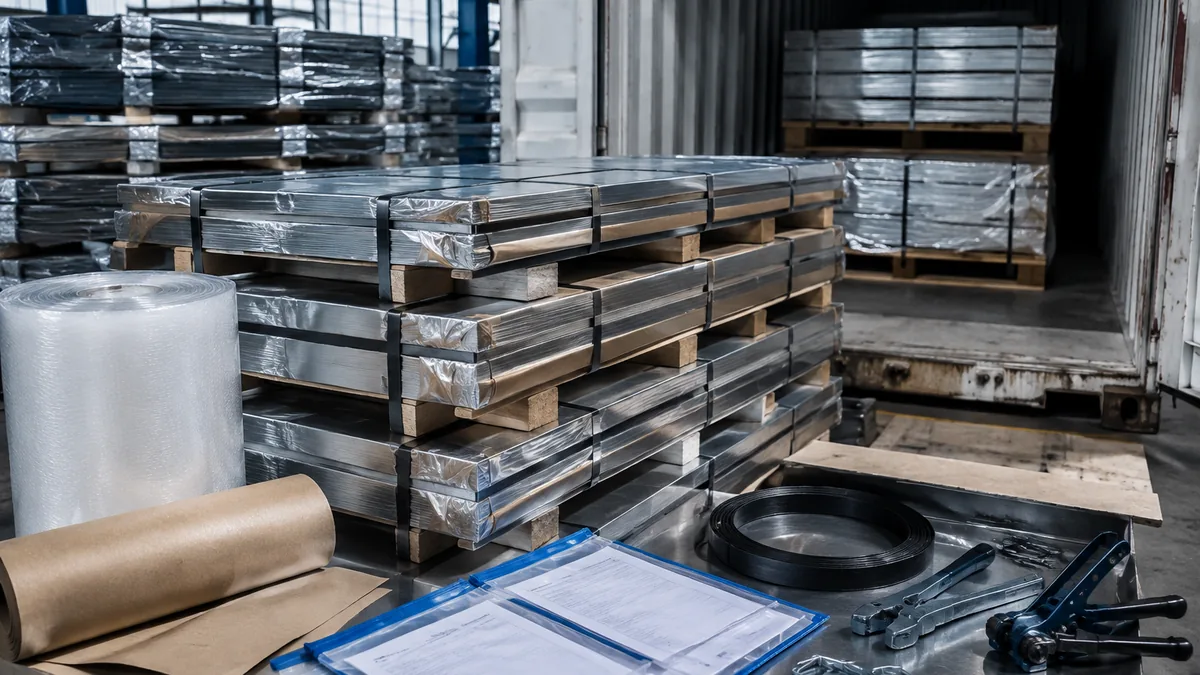
- Ship with matching marks and packing — labels, bundle tags, and export packing must match the approved file. See the steel export packing guide on rust prevention and container loading.
What Chinese Exporters Should Prepare for the Technical File
Saudi importers clear the cargo; Chinese mills and traders still make or break the file. Before production, agree who supplies:
| Evidence package | Typical contents | Common failure |
|---|---|---|
| Product identity | Grade, standard edition, size, coating mass, drawing/spec reference | Quotation says one standard; MTC shows another |
| Mill test evidence | Heat number, chemistry, mechanical tests, EN 10204 3.1 / MTC where ordered | Heat on tags does not match certificate |
| Factory / QMS evidence | Process capability, inspection plan, ISO or SQM-related system proof when required | Trading company cannot show production control |
| Lab reports | Accredited tests against SASO-referenced standards named by the CAB | Generic mill brochure used instead of test evidence |
| Labelling plan | Arabic or bilingual Arabic/English marks, origin, product description, durable tags | English-only temporary stickers that peel in transit |
| Packing plan | Bundle/coil protection, moisture control, container loading photos if requested | Packing list SKU does not match PCoC product description |
If the counterparty identity is still unclear, run supplier checks first using how to verify a Chinese steel supplier before ordering. A clean SABER path on paper does not fix a mill that cannot produce the certified grade.
Labelling and Marking Expectations Buyers Should Not Leave Verbal
The metals technical regulation requires accurate labelling for products placed on the market. Buyers should treat the following as commercial requirements, not afterthoughts:
- Arabic, or Arabic plus English, as required for the product path
- Product description and identification consistent with the SABER registration
- Country of origin and manufacturer/supplier identification as required
- Durable marks on the product or packaging appropriate to steel form (tag, stencil, label)
- SI units on commercial and technical documents
Future labelling expansions (for example supplier commercial registration details on certain product categories) have been discussed in trade updates. Treat any new mark field as to be confirmed against the current regulation version, and put the agreed marking sketch in the purchase order annex.
RFQ Checklist Before You Request Quotes for Saudi Delivery
Freeze these fields so offers are comparable and certificate work can start early:
- Destination: Saudi Arabia port / project site and Incoterm
- Product form: plate, rebar, coil, pipe, section, stainless, coated steel
- Grade and standard (including edition if the project names it)
- Size, tolerance class, coating, surface, and quantity
- HS code proposed by the importer (or joint confirmation before production)
- Certificate package: EN 10204 3.1 / MTC, third-party inspection, PCoC, SCoC, SQM if applicable
- Whether MIM product declaration is expected for the HS code
- Labelling language and mark locations
- Packing method and photo requirements
- Producing mill name to appear on documents and tags
- CAB already selected by the importer, if any
Common Sourcing Mistakes on Saudi Steel Orders
| Mistake | Risk | Better practice |
|---|---|---|
| Treating SABER as “the mill’s problem only” | Importer CR and platform steps are incomplete | Assign Saudi-side SABER ownership in the contract kickoff |
| Starting production before HS path is confirmed | Wrong CAB scheme or missing SQM/MIM step | Confirm regulation path before mill rolling slot is locked |
| Assuming every steel item needs the same certificate | Over- or under-certification, delays, cost disputes | Split SKUs by product form and HS code |
| Shipping on MTC alone | Customs or project rejection for missing SCoC/PCoC | Build mill documents and SABER shipment documents |
| Ignoring declaration expiry | SCoC blocked for expired MIM declaration | Track declaration validity on the shipment critical path |
| Marks that do not match the approved description | Inspection holds and rework at destination | Approve sample tags before packing |
Conclusion
For Saudi-bound steel, commercial success is certificate success as much as mill quality. Map the product to the correct SASO technical path, run SABER product and shipment certificates with a notified body, prepare heat-traceable MTC / EN 10204 3.1 evidence, and freeze HS code, labelling, packing, and any MIM declaration needs before production. Rebar and plate packages deserve special attention because of Saudi Quality Mark expectations under the metals building-materials regulation.
If you are preparing a Saudi delivery RFQ for plates, coils, pipes, or structural steel, request a quote with grade, size, destination port, HS code if known, and the certificate package you need. Clear specifications make conformity work and mill scheduling move on the same timeline.