







Introduction
The lowest-priced steel offer is rarely the lowest-risk offer. For importers buying plates, coils, pipes, or bars from China, the largest pre-order risk is usually the counterparty itself: a company that is not the mill named on the Mill Test Certificate, a license that does not match the contract, or a factory that cannot produce the grade and size sold in the quotation.
Supplier verification should happen before deposit, not after production starts. This guide is a practical due-diligence sequence for overseas buyers and their sourcing agents. It is general procurement guidance, not legal, tax, or sanctions advice; confirm final checks with your counsel and compliance team when the order value or destination market requires it.
Step 1: Confirm Legal Identity on the Business License and GSXT
Every mainland Chinese company has a public registration record. The official portal is the National Enterprise Credit Information Publicity System, commonly called GSXT or NECIPS, operated under the State Administration for Market Regulation (SAMR). Buyers normally search by the exact Chinese legal name or the 18-character Unified Social Credit Code (USCC).
| Check item | What to request from the supplier | What to verify yourself |
|---|---|---|
| Legal Chinese name | Full registered name as on the business license | Matches GSXT record and the contract party name |
| Unified Social Credit Code | 18-character USCC | Same code on license scan and GSXT |
| Legal representative | Name on license | Same person (or authorized signatory) on contracts and PI |
| Registered address | License address | Plausible against claimed factory location; note if only an office is registered |
| Business status | Current license copy | Active / existing status, not revoked or abnormal operations |
| Business scope | License scope text | Covers steel manufacturing, processing, or trading as claimed |
| Establishment date and capital | License / GSXT fields | Cross-check against claimed years of export experience |
Practical tips:
- Ask for a clear scan of the business license and the Chinese legal name in text form, not only an English trading name.
- GSXT is Chinese-language and often requires a captcha; many foreign teams use a bilingual colleague, agent, or a commercial registry tool after confirming the free public record exists.
- Do not treat a polished English website or marketplace badge as proof of legal status.
Step 2: Separate Mill, Processor, and Trader Before You Negotiate
Many steel problems start when the buyer believes they are contracting a mill but signs with a trader that will buy elsewhere after the deposit. Traders can be legitimate; the risk is opacity, not the business model itself.
Ask early:
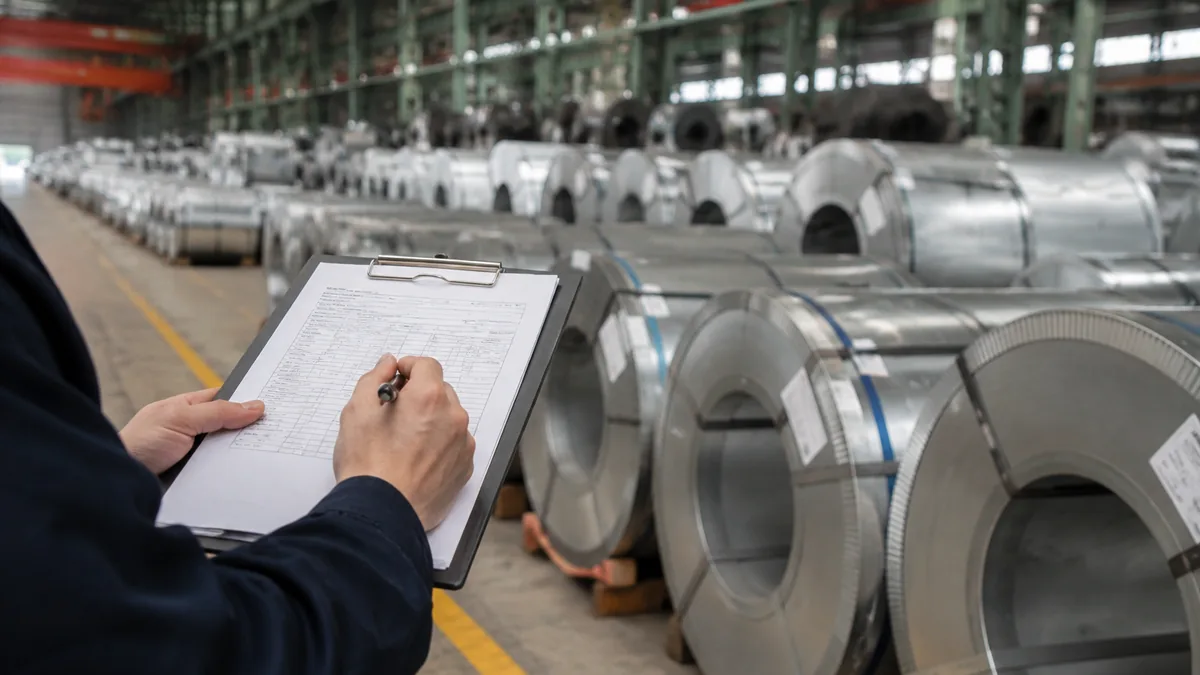
- Who will issue the EN 10204 3.1 Mill Test Certificate, and under which mill name?
- Will the contracting company name match the MTC manufacturer name?
- Is the product melted and rolled in-house, processed from purchased semi-finished steel, or fully traded?
- Can the supplier show the production route for the exact product form you are buying?
If the names will not match, require written disclosure of the producing mill and keep that mill name on the proforma invoice, packing list review plan, and pre-shipment inspection scope. Our guides on how to verify a steel mill test certificate before shipment and the EN 10204 3.1 certificate checklist explain how heat numbers and certificate parties should align later.
Step 3: Validate Certificates by Scope, Not by Wall Display
An ISO 9001 certificate hanging in a lobby is not a supplier approval. Treat certificates as evidence to authenticate, then test on the floor.
| Certificate claim | Buyer verification | Why it matters for steel |
|---|---|---|
| ISO 9001 | Certifier name, certificate number, expiry, and certified scope | Scope may cover only trading or a different product family |
| Product or mill certifications | Edition, product form, and issuing body when claimed | Project specs may require specific mill or product approvals |
| Inspection document capability | Sample blank or redacted EN 10204 3.1 layout | Confirms the mill can issue heat-specific test data |
| Export packing practice | Photos of real packing for your product form | Coils, plates, and pipes need different rust and handling controls |
Authenticity habits that work in practice:
- Confirm the certification body is a recognized registrar and that the certificate is still valid.
- Read the scope line carefully. A quality system for trading services is not the same as a mill QMS for melting, rolling, heat treatment, or coating.
- Ask for a redacted past MTC that shows how heat numbers, grades, and mechanical tests are presented for your product family.
- Keep certificate files with the USCC and company name so later document packs stay consistent.
Step 4: Run a Factory Audit Checklist Before High-Risk Orders
Document checks reduce identity fraud. A factory audit reduces capability fraud. For first-time mills, critical grades, large tonnage, or tight delivery, remote video alone is usually not enough.
Core factory audit areas for steel suppliers
| Audit area | What good looks like | Buyer questions |
|---|---|---|
| Legal and ownership | License, USCC, and site name consistent | Who owns the mill and who signs export contracts? |
| Product capability | Equipment and process route match the offered grade and size | Can this line produce the thickness, OD, or coating you ordered? |
| Capacity and planning | Realistic monthly output and loading plan | How many concurrent export orders share the same line? |
| Raw material control | Incoming scrap, billet, slab, or coil control | How is incoming material grade verified? |
| Process control | Written work instructions and in-process checks | Where are critical parameters recorded? |
| Testing capability | Lab equipment or approved external lab route | Which tests are done in-house vs subcontracted? |
| Traceability | Heat / cast / coil / bundle identification | How does a heat number travel from melt to packing list? |
| Nonconforming product | Quarantine area and disposition records | What happens when a heat fails chemistry or tensile? |
| Packing and storage | Dry storage, VCI, wrapping, and lifting practice | How are export coils or plates protected for sea freight? |
| Document control | Controlled MTC, packing list, and photo evidence process | Who releases shipment documents? |
Live video or on-site walk-through sequence
- Start at the gate with the company name plate and compare it to the license.
- Walk the claimed production route for your product, not a showroom only.
- Ask to see heat or coil identification in production or warehouse.
- Visit the lab or the sample-retention area if mechanical or chemical testing is claimed in-house.
- Finish at packing and loading, including how marks and tags are applied.
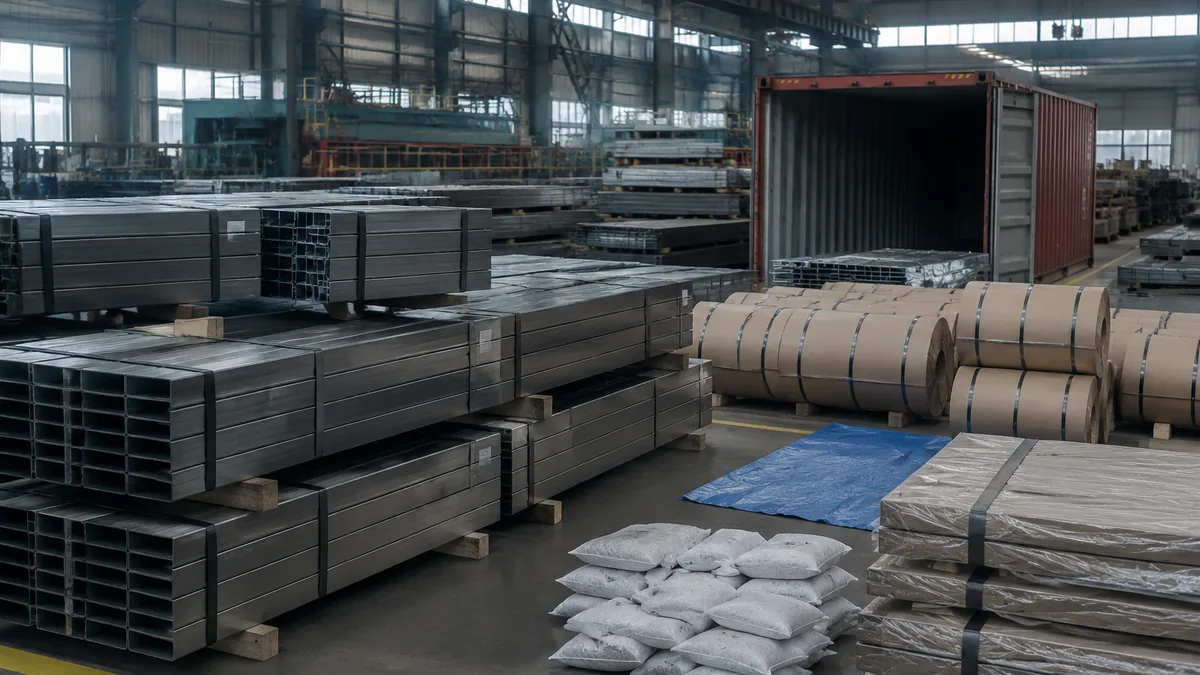
For packing-related risk after approval, use our steel export packing guide on rust prevention and container loading.
Step 5: Check Commercial References Without Treating Them as Proof Alone
Client references, past shipment photos, and marketplace ratings can support a decision, but they do not replace GSXT and capability checks.
Useful reference checks:
- Ask for two or three recent export references in a similar product family and destination region when confidentiality allows.
- Request unedited warehouse or production video timestamps rather than only catalog photos.
- Compare offered lead time and MOQ against the equipment and inventory you saw.
- Confirm payment terms, inspection windows, and document release timing in writing before deposit.
For broader China steel sourcing process context, see how to source steel products from China.
Before approval, agree the scope of a factory inspection visit and the EN 10204 3.1 document requirements for the proposed order. The visit reviews the supplier; the shipment documents must identify the material actually delivered.
Pre-Order Verification Checklist
Use this sequence before you pay a deposit or issue a purchase order:
- Collect the Chinese legal name, USCC, business license scan, and English contract name mapping.
- Search GSXT / NECIPS and confirm active status, legal representative, and business scope.
- Classify the counterparty as mill, processor, trader, or mixed model in writing.
- Authenticate ISO or other claimed certificates by scope, expiry, and certifier.
- Confirm who issues the EN 10204 3.1 MTC and whether the mill name matches the contract party.
- Complete a live video walk-through or third-party factory audit for first orders and critical projects.
- Align grade, standard, size tolerance, testing, packing, and inspection hold points in the RFQ and proforma invoice.
- Freeze document requirements: MTC type, packing list detail, marking photos, and any third-party inspection scope.
- Only then compare final price; do not reverse the order by choosing the lowest quote first and verifying later.
Common Red Flags
| Red flag | Why buyers should pause | Practical response |
|---|---|---|
| Only English trading name, no Chinese legal name | Hard to search GSXT | Stop until the legal name and USCC are provided |
| USCC or license does not match contract party | Wrong counterparty risk | Rework the contract party or walk away |
| ISO certificate scope does not cover the product | Quality system may not apply | Ask for the correct scope or treat as uncertified for that product |
| Supplier refuses any live video of the production site | Capability cannot be confirmed | Use third-party audit or do not award first order |
| MTC mill name will “be decided later” | Traceability risk | Require producing mill disclosure before deposit |
| Price far below other qualified mills without process explanation | Possible substitution or incomplete scope | Re-check grade, testing, packing, and mill identity |
| Pressure for full payment before any document or audit | Weak commercial control | Keep inspection and document milestones in the payment plan |
Conclusion
Verifying a Chinese steel supplier is a sequence, not a single certificate request. Start with legal identity on the business license and GSXT, clarify whether you are buying from a mill or a trader, validate certificate scope, then prove production capability with a structured factory audit or live walk-through. Only after those gates should commercial terms close.
As an exporting mill partner, we expect buyers to run these checks. Our team provides the Chinese legal entity details, USCC, quality certificate package, and production-route explanation with every serious enquiry, and shipment documents follow the same heat-number discipline described on our quality certificates page.
If you are qualifying a steel supplier for plates, coils, pipes, or bars and want a quotation that already lists producing mill identity, certificate type, packing method, and inspection hold points, send us your requirement and we will reply with commercial terms and the verification documents side by side.