






Introduction
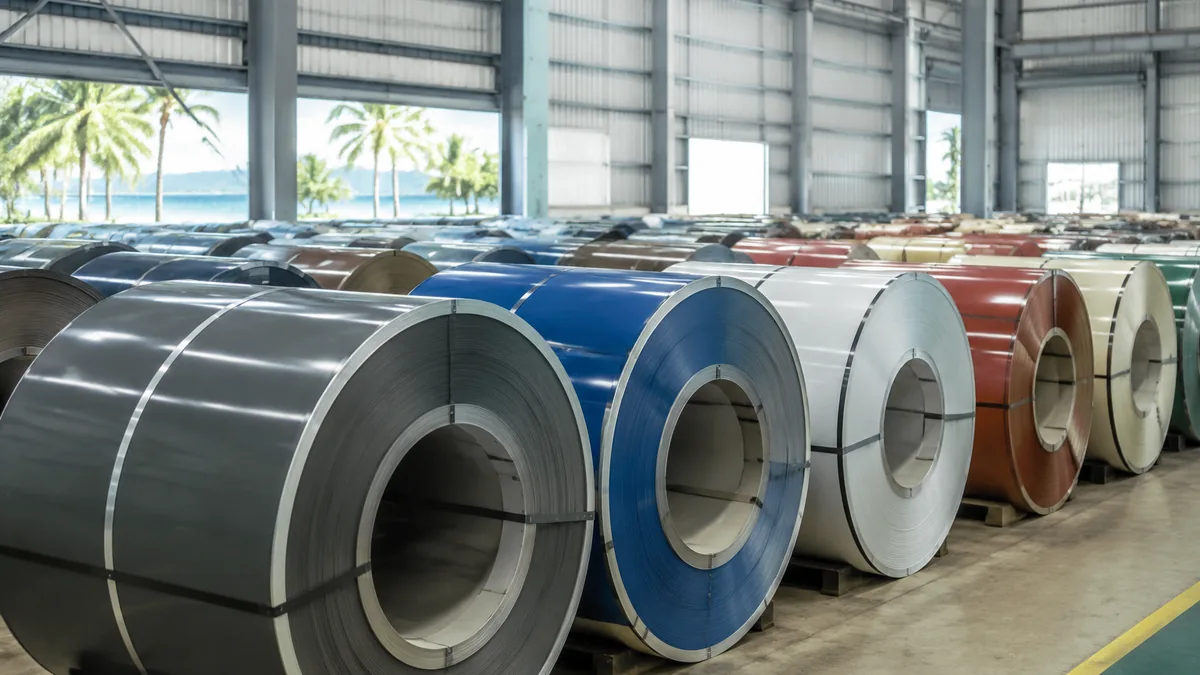
A distributor in Riyadh, a roll-former in Lagos, and a project material supplier in Jakarta all order the same product name: color-coated coil for roofing. The three quotes come back with three different answers. One mill quotes zinc substrate and standard polyester. Another offers galvalume with a tougher topcoat. A third names only a RAL color and a coil size. The color code matches. The building envelope does not.
This guide is for buyers who supply roofing, wall cladding, and sandwich panels in hot climates: distributors holding stock, roofing fabricators who roll-form their own profiles, and engineering material suppliers who quote complete building packages. It walks a decision tree in the order a buyer actually decides: the building envelope job, the climate zone, the metallic substrate, the paint system, then the coil order block. It is procurement guidance, not a substitute for the standard ordered or the project specification. Start from the finished-product view in our steel roofing sheet selection guide if you are buying sheets, and come back here when you buy coils.
Three Building Envelope Jobs, Three Different Coil Demands
A coil that performs on a roof can disappoint on a wall, and the same coil can behave differently inside a sandwich panel. Name the job before the coating.
| Building envelope job | Main stress on the coated coil | What the buyer should lock |
|---|---|---|
| Roofing | Sun, heat cycling, rain runoff, occasional foot traffic during installation | Substrate and paint matched to climate, thickness for the profile, acceptable forming behavior |
| Wall cladding | Lower heat load than roofing, but wind, cleaning, and mechanical contact near openings | Color stability, scratch resistance, and consistent gloss across batches |
| Sandwich panel facings | Cutting, crimping, and adhesive contact at the panel line | Flatness tolerance, reverse-side coating, and a paint system that survives secondary forming |
Distributors often stock one or two coil specifications to serve all three jobs. That is a commercial decision, but it should be a conscious one: a single spec that covers roofing, cladding, and panel facings usually means specifying for the hardest job and paying for it on the others.
Climate Zones That Change the Coating Decision
Most of the Middle East, Africa, and Southeast Asia sits in one of three exposure families. Treat them separately, because they fail coated steel in different ways.
| Climate zone | Typical exposure | What buyers see fail |
|---|---|---|
| Hot-dry desert | Strong UV, sand abrasion, large day-night temperature swings | Chalking, fading, and coating erosion on exposed surfaces |
| Hot-humid tropical | High humidity, frequent rain, condensation cycles | Blistering, staining, and organic growth where water sits on the panel |
| Coastal salt | Marine aerosol and salt-laden wind, often combined with heat and humidity | Corrosion at cut edges, fasteners, and scratches, faster than inland |
The same coating can serve zones that are close on a map and fail in a zone two hundred kilometers away on the coast. Ask for the project location and the exposure, not the country name. For a full corrosion-priority view of zinc and aluminum-zinc systems, compare our GI vs Galvalume buyer guide.
Decision Tree: Substrate First, Then Paint, Then Coating Mass
The coating decision has three layers, and buyers who jump to paint color skip the two layers that cause most claims.
Step 1: substrate. Zinc-coated (GI) and aluminum-zinc-coated (galvalume, AZ) substrates are the two families that dominate building envelope coil. Galvalume uses roughly 55% aluminum-zinc chemistry and is commonly chosen for roofing where heat and long atmospheric life matter. GI remains the familiar, often lower-cost choice for general building work. Neither is automatically better; coastal chemistry, forming severity, and cut-edge behavior decide the fit. The cut-edge story is the part buyers miss: zinc gives sacrificial protection at exposed edges, while AZ systems behave differently at the cut line and often depend on the paint system and edge sealing for the same service life.
Step 2: paint system. The organic topcoat is what the sun and the salt see first. Polyester (PE), SMP, HDP, and PVDF are different resin families with different outdoor behavior and price. Match the system to the exposure and the forming route, not only to the lowest initial price. Paint and metallic coating solve different failure modes; writing one does not replace the other.
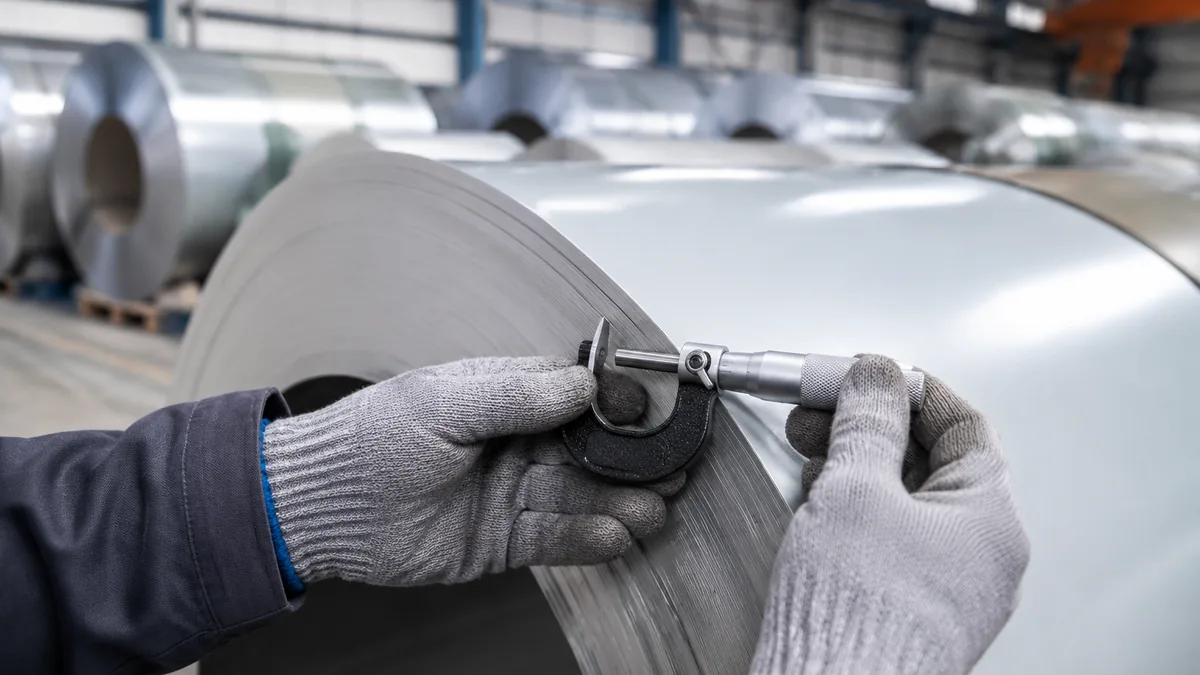
Step 3: coating mass. On the galvanized substrate, name a zinc designation such as Z180 or Z275 (or G90 class in the older US language). On the galvalume substrate, name an AZ designation such as AZ100 or AZ150. The designation belongs on the RFQ even when the coil is painted, because cut edges and scratches are protected by the metallic layer, not by the color. If the coil will be slit or edge-trimmed for panel lines, state that in the inquiry; trimming creates the exact surface where coating mass matters most.
Paint Systems Under Hot Sun: PE, SMP, HDP, and PVDF
Under strong sun, the questions buyers actually search are about chalking, fading, and how long the color stays presentable.
- PE (polyester): common for interior, mild exterior, and cost-sensitive projects. Confirm film build and gloss with the mill; PE is not a reason to skip coating mass.
- SMP (silicone-modified polyester): often chosen when outdoor chalking and color retention need to improve over standard PE at moderate cost.
- HDP (high-durability polyester): a step up in exterior durability, frequently discussed for roofing and cladding in high-UV markets.
- PVDF: typically specified for architectural projects where color stability is the priority. Higher cost and different forming characteristics apply; confirm the mill’s PVDF definition, because the name alone does not guarantee a film structure.
The resin family is one field. A comparable RFQ also names topcoat and primer film build, reverse-side coating, gloss and texture, and the color reference (RAL or an approved sample). Our PPGI specification guide walks every field; the PPGI vs PPGL paint durability guide explains the paint-vs-substrate split for prepainted coil.
What Roll-Forming and Detailing Add to the Coil Spec
Roofing fabricators convert the coil into profiles, and the conversion step is where coil complaints start. Three checks matter before the coil order is confirmed.
- Forming behavior: the paint and the substrate must survive the bend radius of the profile. Tell the mill the profile type and the tightest bend; a coating that passes flat-panel tests can crack on a deep rib.
- Protective film: for visible cladding and panels that will be handled, a peelable protective film avoids scratches in transit and on site. Film type, application side, and removal time belong on the order.
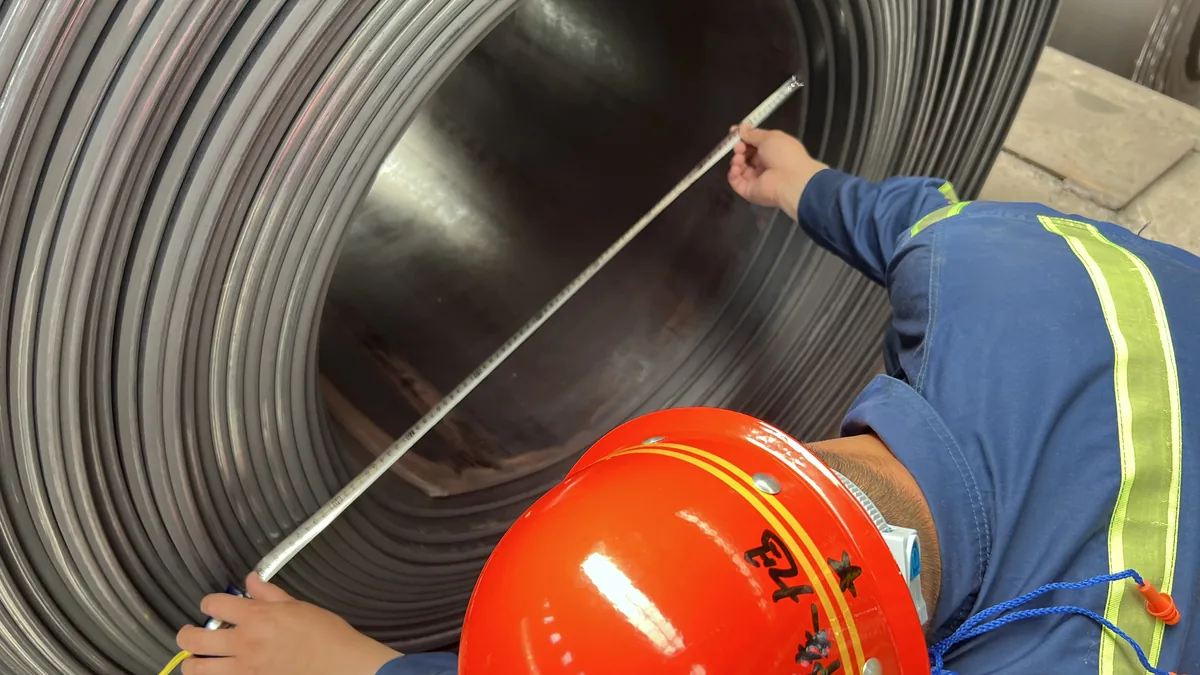
- Width and flatness for the line: state slitting width, coil inner diameter, and weight limits for the roll-former’s decoiler. A coil that is right on chemistry but wrong on width costs a shift of downtime.
Detailing at the site does the rest: cut edges that are left bare, fasteners chosen without regard to the substrate, and panels that trap condensation all shorten the life of a correctly specified coil. The PPGI coil product family is the painted-coil side of the same specification chain.
The Coil Order Block Distributors and Fabricators Should Freeze
In practice, disputes start when the purchase order carries less information than the sales talk. The order block below is the minimum that makes coated coil quotes comparable across mills.
- Product form: PPGI, PPGL, or bare coated coil, stated exactly
- Substrate: standard family (for example ASTM A653 or ASTM A792, EN 10346, JIS G3302 or JIS G3321) and coating designation (Z or AZ)
- Paint system: resin family, top and reverse film build, gloss, color reference
- Coil geometry: thickness and width with tolerance, slitting note, inner diameter, weight limits
- Surface treatment and film: passivation or oiling, protective film if required
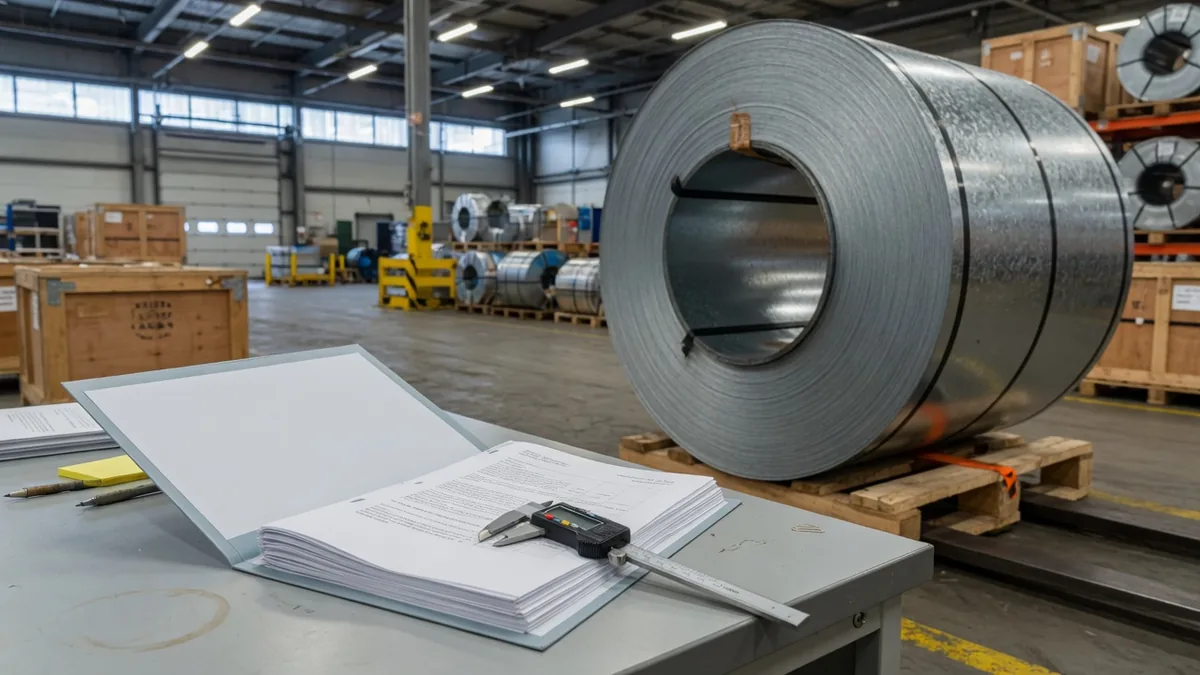
- Certificate scope: mill certificate type, such as EN 10204 3.1 MTC, with heat number traceability to the coil
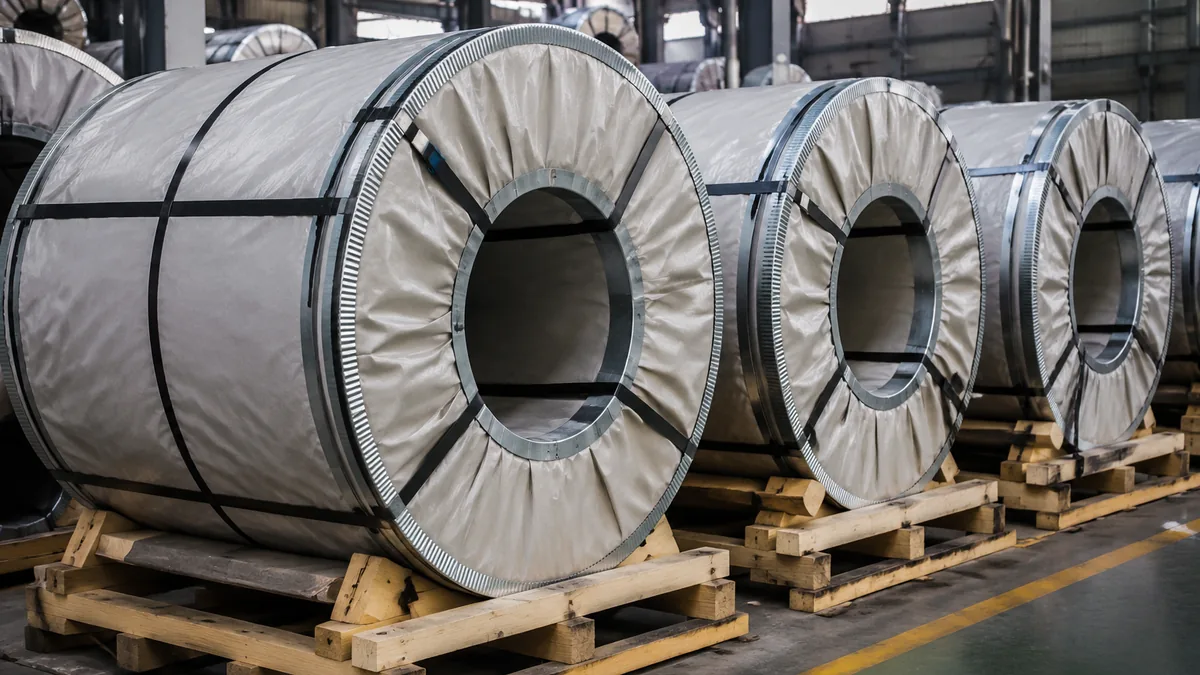
- Packing: export packing for sea freight with rust protection and edge protection
Check the EN 10204 3.1 MTC when the coil arrives: heat number, grade, coating designation, film build, and coil identity should match the order. A certificate that names a color but not the coating mass cannot protect a claim later. Packing that kept the coil dry on the voyage is the difference between a ready-to-run coil and a white-rust investigation; our steel export packing guide covers the sea-freight side.
Conclusion
Coated coil for building envelope is not one product; it is a decision with four steps: name the building envelope job, read the climate zone, choose substrate and paint for that exposure, and freeze the coil order block. Buyers who walk these steps in order get comparable quotes, fewer site claims, and a defensible position when a coil underperforms. Send the completed specification to the sales team via the request a quote page, or ask for a sample coil before committing a container. The mill certificate, the coating designation, and the packing list are the documents that make the coil order reviewable: write them into the RFQ first.