







Introduction
Many PPGI offers look complete until the buyer lines them up. One mill froze only a RAL shade. Another talked paint brand language but left zinc mass open. A third locked Z120 and PE, then skipped reverse-side film and gloss. The prices are not comparable, and the first claim after delivery is hard to settle.
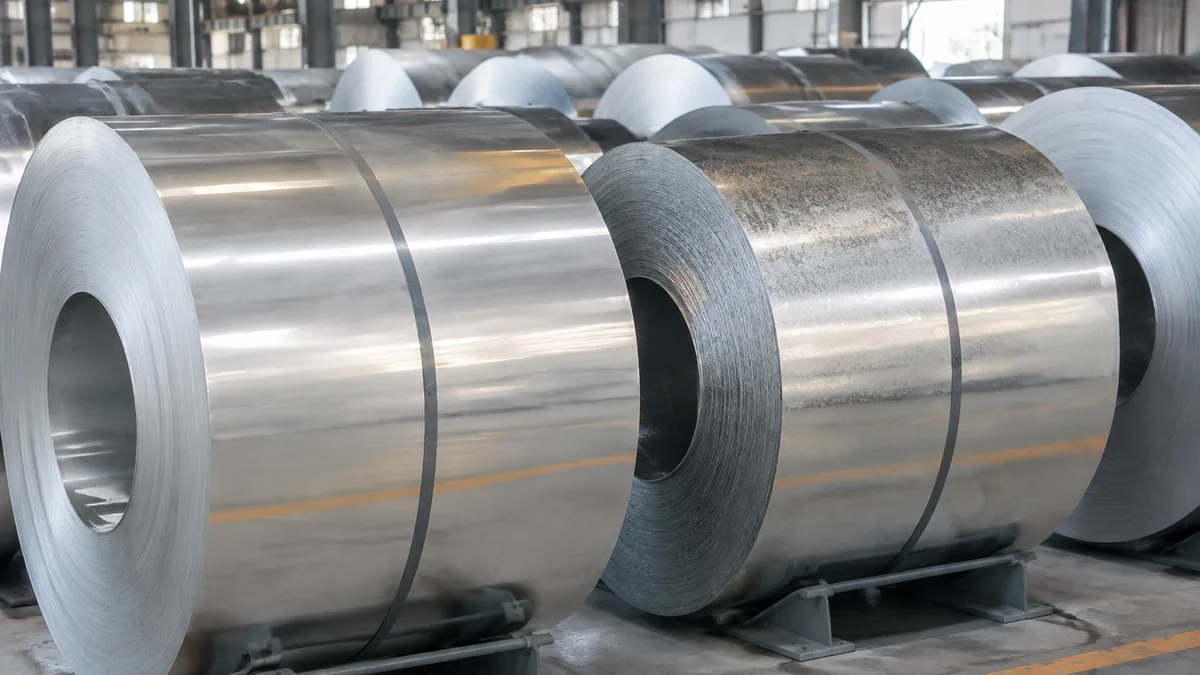
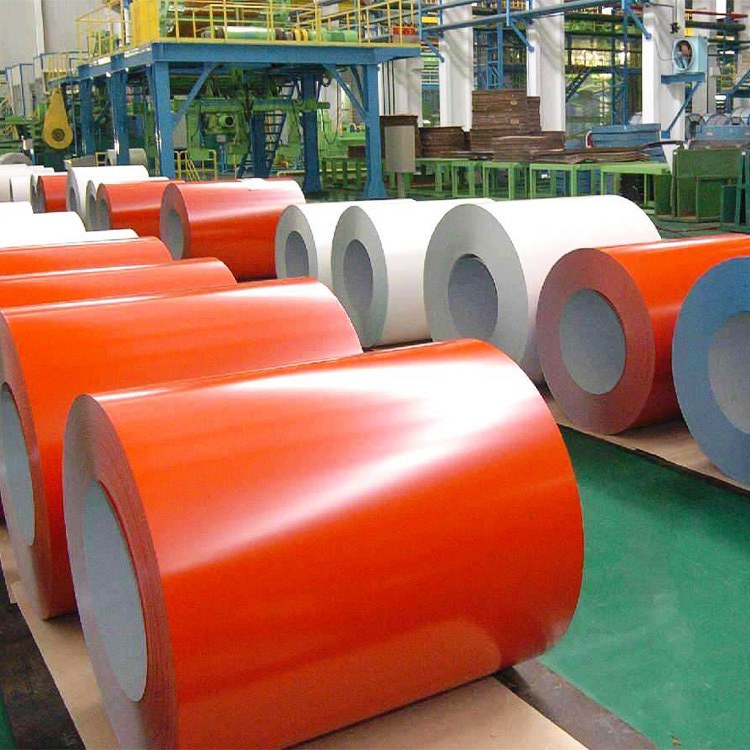
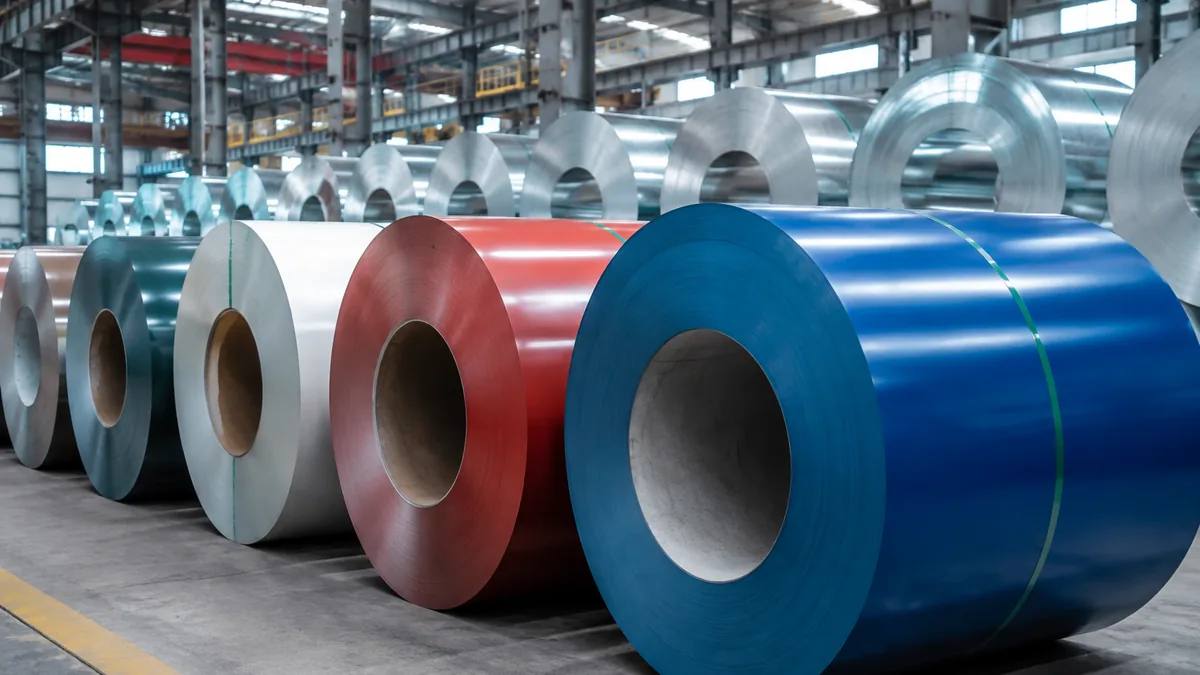
PPGI means pre-painted galvanized steel coil: a zinc-coated steel substrate plus organic paint layers applied on a coil-coating line. This guide is a procurement specification brief for importers, roofing buyers, cladding distributors, and appliance or panel fabricators. It is not a substitute for EN 10169, ASTM A755, JIS G 3312, or the project coating specification.
For product-family choice, start with PPGI vs galvanized coil and PPGI vs PPGL durability. For bare zinc mass language on the galvanized substrate, use the galvanized steel coil coating weight guide. For catalog context, see the PPGI coil product page.
PPGI Specification At A Glance
A usable order freezes three layers at once: steel, zinc, and paint. Color is only one paint field.
| Layer | What to freeze | Why it matters |
|---|---|---|
| Steel substrate | Grade/standard, thickness, width, tolerance, hardness if relevant | Forming, strength, springback |
| Zinc (or metallic) coating | Mass class such as Z60, Z100, Z120, Z180, Z275 (project-dependent) | Edge and scratch corrosion margin |
| Pretreatment | Clean/chem treat package as mill practice or named system | Paint adhesion and blister risk |
| Primer + topcoat | PE / SMP / HDP / PVDF (or other named system), film build each side | Weathering, chalking, color hold, cost |
| Reverse side | Backer film thickness and color | Nesting, condensation face, cost |
| Appearance | RAL or approved master sample, gloss, texture (smooth/wrinkle/matt) | Visual match and claims |
| Coil geometry | ID, max OD, max coil weight, core type | Uncoiler and container plan |
| Documents | EN 10204 3.1 / MTC, coating mass and paint test scope | Traceability and claim defense |
Typical commercial ranges on supplier sheets (always confirm on the proforma) include zinc masses roughly 30-275 g/m² class language, top film often discussed in about 15-25 μm class builds, and reverse films thinner. Treat catalogue numbers as starting points, not universal guarantees.
Application Scenarios: Zinc And Paint (Cautious)
The table below is procurement guidance, not a project warranty. Climate, forming radius, cut-edge density, cleaning chemicals, and warranty documents can all override catalogue defaults.
| End use (typical) | Zinc mass direction (cautious) | Paint system direction (cautious) | What buyers still freeze |
|---|---|---|---|
| Interior liners, dry warehouse panels, mild indoor appliance skins | Often lower Z-class packages when edges stay dry and protected | PE common when outdoor weathering is not the driver | Grade, film build, reverse side, gloss |
| Mild-climate roofing and wall cladding away from salt spray | Mid Z-class language is often discussed (project-dependent) | PE only if exposure is mild; many exterior packages move to SMP or HDP | Zinc class, system name, top film min, RAL/sample |
| Coastal, industrial, or high-UV exterior panels | Higher zinc packages are often specified for cut edges and scratches | SMP/HDP frequent commercial step-up; PVDF when color retention and weathering are critical | Full stack + any warranty or test sheet the project names |
| Deep drawing / tight bends on painted strip | Zinc and paint both affect cracking risk at the bend | System and film must match forming; thicker film is not always better | Bend radius, hardness if ordered, reverse film |
Do not treat this matrix as a fixed life table. Two mills can label a package “SMP exterior” with different primers, film builds, and warranty wording.
Mistake 1: Ordering Color Without Zinc Mass
PPGI is still a galvanized product underneath the paint. Cut edges, drill holes, forming cracks, and field scratches expose the metallic coating. If the RFQ only says “RAL 5015 blue PPGI,” mills can commercially quote very different zinc packages and very different lifetimes in humid or coastal service.
Freeze zinc the same way you would on bare GI: coating mass designation, test method if the project names one, and whether the mass is total both sides. The coating weight guide above explains why Z-class language must sit on the purchase order, not only in sales chat. The same PO discipline used for bare coil (see how to specify galvanized coil on a purchase order) applies to the zinc line on PPGI.
Mistake 2: Treating All Paint Systems As Equal
Common organic systems discussed on export PPGI packages:
| System | Buyer shorthand | Typical selection logic (cautious) |
|---|---|---|
| PE (polyester) | Economy general purpose | Mild climate, cost control, many interior or less aggressive exterior uses |
| SMP (silicone-modified polyester) | Tougher PE family option | More abrasion or outdoor demand than basic PE in many commercial packages |
| HDP (high-durability polyester family language) | Mid-to-high outdoor package | Exterior panels where PE is judged too weak and PVDF is not budgeted |
| PVDF (fluoropolymer topcoat family) | High outdoor durability | Higher weathering and color-retention expectations; usually higher cost |
These labels are commercial families. Exact resin recipes, primer chemistry, and warranty language differ by paint house and mill line. Do not assume one mill’s “SMP 20 years talk” equals another mill’s SMP. Write the system name, minimum dry film thickness, and any project-required test or warranty document on the RFQ.
Mistake 3: Freezing RAL Without Film Build, Gloss, And Reverse Side
A RAL code is a color coordinate, not a coating stack.
- Top side: primer + topcoat film (each layer or total top stack, as the project prefers)
- Reverse side: backer thickness and color (often thinner and different color)
- Gloss: e.g. low / medium / high or a numeric gloss target when required
- Texture: smooth, matt, wrinkle, embossed, or printed, if relevant
- Master sample: when RAL is not enough, approve a physical or digital master and reference its ID on the PO
Without reverse-side rules, two “same RAL” coils can differ in cost and in how they behave in stacked sheets or insulated panels.
How To Build A Comparable PPGI RFQ
Copy this field list into the inquiry:
- Product: PPGI coil (or sheet cut after coating)
- Base steel grade and standard (for example commercial DX51D-class language only if that is truly ordered)
- Thickness and width + tolerance class
- Zinc coating mass (Z-class or g/m² language the project uses)
- Paint system: PE / SMP / HDP / PVDF (or named brand system if the project locks it)
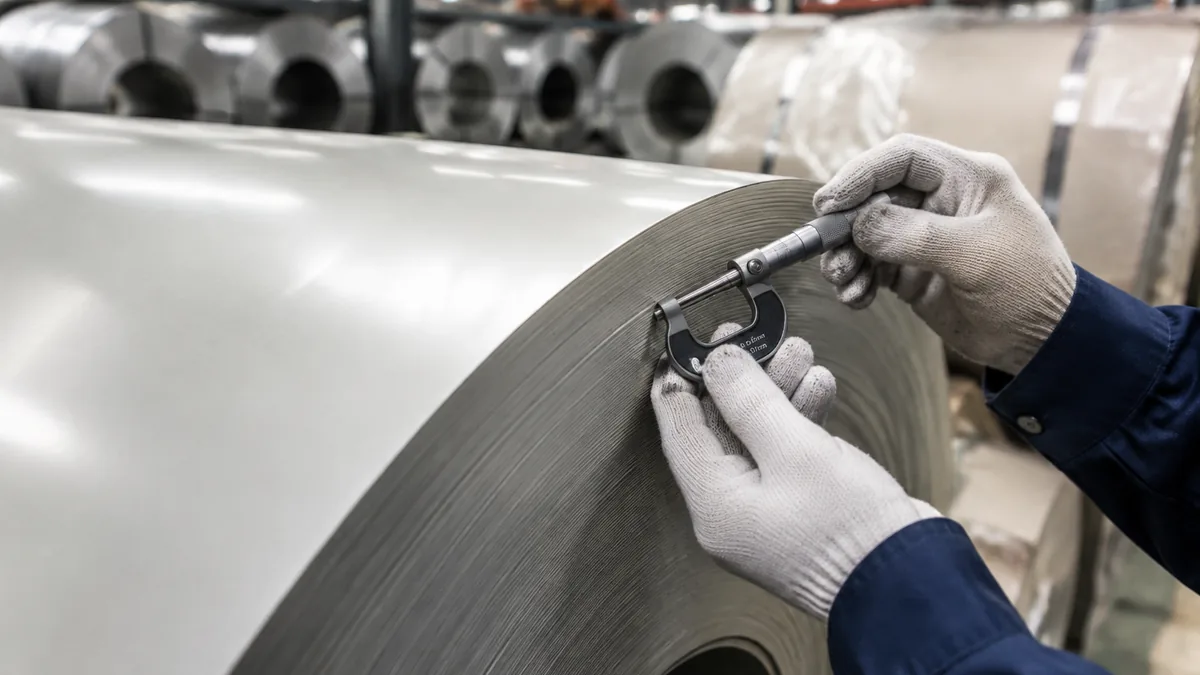
- Top film build (primer + topcoat) and reverse film build
- Color: RAL code and/or approved sample ID
- Gloss and surface texture
- Coil ID, max OD, max coil weight
- Protective film (yes/no, thickness, print) if needed
- Packing method for sea freight
- Certificate type such as EN 10204 3.1 / MTC, plus any coating test report scope
- Destination port and Incoterm
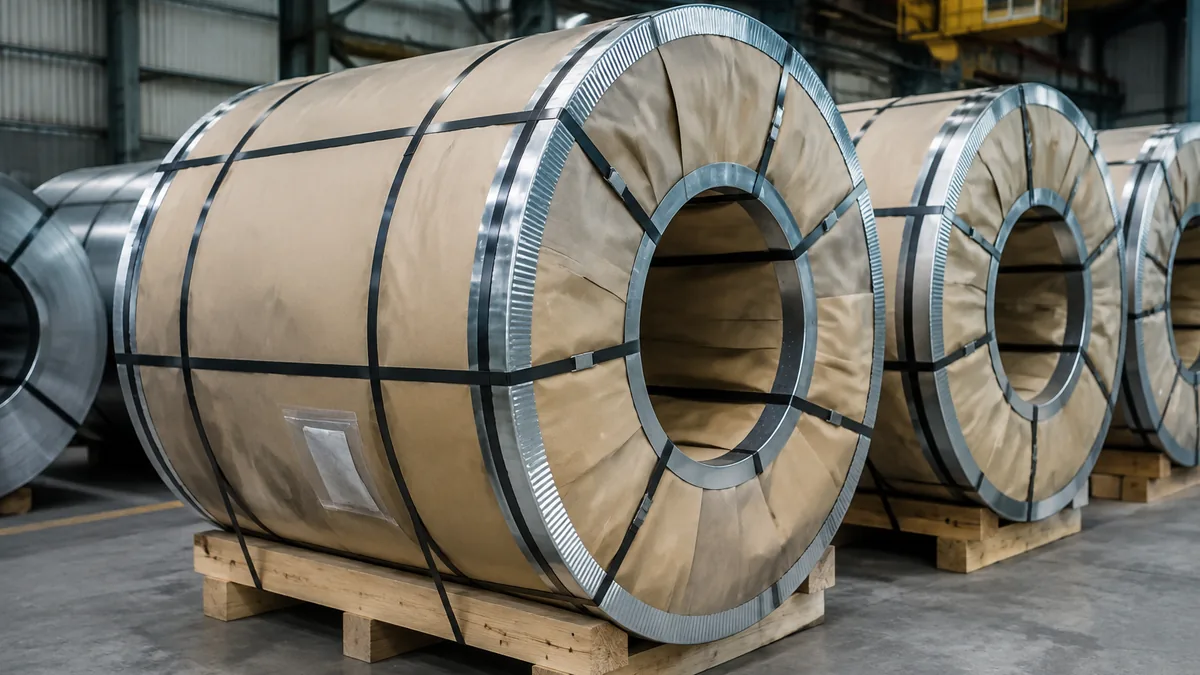
For packing and rust risk after coating, align with the steel export packing guide.
Claim And Shipment Scenarios
These are the disputes that show up when the RFQ was soft.
| Scene | What went wrong | How a tight PO helps |
|---|---|---|
| Color claim after install | RAL matched in catalogue language, but gloss or master sample was never frozen; batch looks “off” under site light | Freeze RAL or sample ID, gloss band, and keep the approved master photo/ID with the PO |
| Edge rust in the first wet season | Paint system was named; zinc mass was not. Cut edges and drill holes rust while panel faces still look fine | Freeze zinc class and test scope; do not treat paint color as corrosion design |
| Quote war that cannot be ranked | Mill A: PE + Z60. Mill B: SMP + Z120. Mill C: PVDF with reverse film open. All labeled “RAL 9002 roofing PPGI” | Force every offer onto the same RFQ field list before price ranking |
| Destination uncoiler jam | Coil OD or weight exceeded the plant limit; packing looked fine on paper | Freeze ID, max OD, max coil weight, and packing method with the booking |
If the mill only prints a color name without zinc and paint system on the MTC / packing list / tags, treat the document set as incomplete for claim defense.
What To Check On Documents Before Shipment
| Check | Confirm |
|---|---|
| Product name | PPGI / prepainted galvanized, not bare GI only |
| Zinc mass | Matches PO class |
| Paint system | PE/SMP/HDP/PVDF or named system as ordered |
| Film build | Top and reverse within agreed min/max |
| Color / gloss | RAL or sample ID and gloss band |
| Size | Thickness, width, coil geometry |
| Heat / coil ID | Traceability on tags and packing list |
| Certificate | MTC / EN 10204 3.1 when ordered |
Common Sourcing Mistakes
| Mistake | Risk | Better practice |
|---|---|---|
| RFQ with RAL only | Non-comparable quotes; early chalking or edge rust | Freeze zinc + paint system + film + RAL |
| Assuming PE equals outdoor PVDF life | Premature fade or chalk in harsh exposure | Match system to climate and forming |
| Ignoring reverse side | Cost and condensation-face surprises | Specify backer film and color |
| No coil weight/ID limits | Handling failure at destination | Freeze uncoiler and container limits |
| Mixing PPGI and PPGL language | Wrong substrate aluminum-zinc package | State galvanized substrate for PPGI; use PPGL only if intended |
Conclusion
A clean PPGI order is a three-layer specification: steel size and grade, zinc mass on the galvanized substrate, and a named paint system with film build, RAL (or master sample), gloss, and reverse side. Color alone is not a specification.
If you are preparing a roofing, cladding, or panel RFQ, request a quote with thickness, width, zinc class, paint system, film build, RAL or sample reference, coil limits, destination port, and the certificate package you need so mill offers stay comparable.