








Introduction
A mill offer that says S355JR plate, 12 mm x 1500 x 6000, painted looks cheap until the fabricator opens the pack. One lot still carries mill scale. Another was blasted to a class the mill nicknamed Sa 2.5 and then sat in rain. A third arrived with a thin red shop primer and no dry-film number. Grade can match. Thickness can match. The next process cannot use all three skins.
This is a surface-path guide for importers who buy carbon structural plate from China for fabrication, coating shops, or module yards. It is procurement guidance, not a substitute for the ordered edition of ISO 8501-1, EN 10025-2, or EN 10029. Grade pages for S275JR carbon steel plate and S355 carbon steel plate freeze strength class. The impact letter still belongs on the EN 10025-2 impact-letter RFQ guide. Ultrasonic class stays on the EN 10160 plate UT RFQ guide. Come back here when the mill fills “black,” “shot blast,” or “primer” after the bid is already compared.
Start From The Next Process, Not From The Mill Stock Photo
Surface is a duty question. The mill already has as-rolled plate with mill scale. Blasting and priming are extra operations, extra days, and extra rust risk. If the RFQ only writes “good surface” or “painted,” bids can default to the least-defined surface that still looks acceptable in a photograph.
Walk the next process first, then write one surface line.
| Next process at destination | Surface line buyers freeze | What mill floor stock usually is | Hold if the pack shows |
|---|---|---|---|
| Cut, drill, weld later; paint after erection | Mill scale / as-rolled; light oil optional | Black plate with intact mill scale | Shop primer already applied, or heavy rust that hides the scale |
| Immediate coating or lining at the fabricator | ISO 8501-1 Sa 2.5, plus roughness if the coating spec names it | Mill scale, or a blast the mill did not class | Primer on top of unblasted scale, or rust bloom after blast |
| Module yard or paint shop that will over-coat | Sa 2.5 plus shop primer type and dry-film thickness | Bare blasted plate that rusts in transit | Mill scale under a decorative red film |
A USD 30 per tonne gap on 12 mm plate is often this missing line, not freight. Two FOB numbers that both say S355JR are not comparable if one is mill scale and the other is blasted and primed.
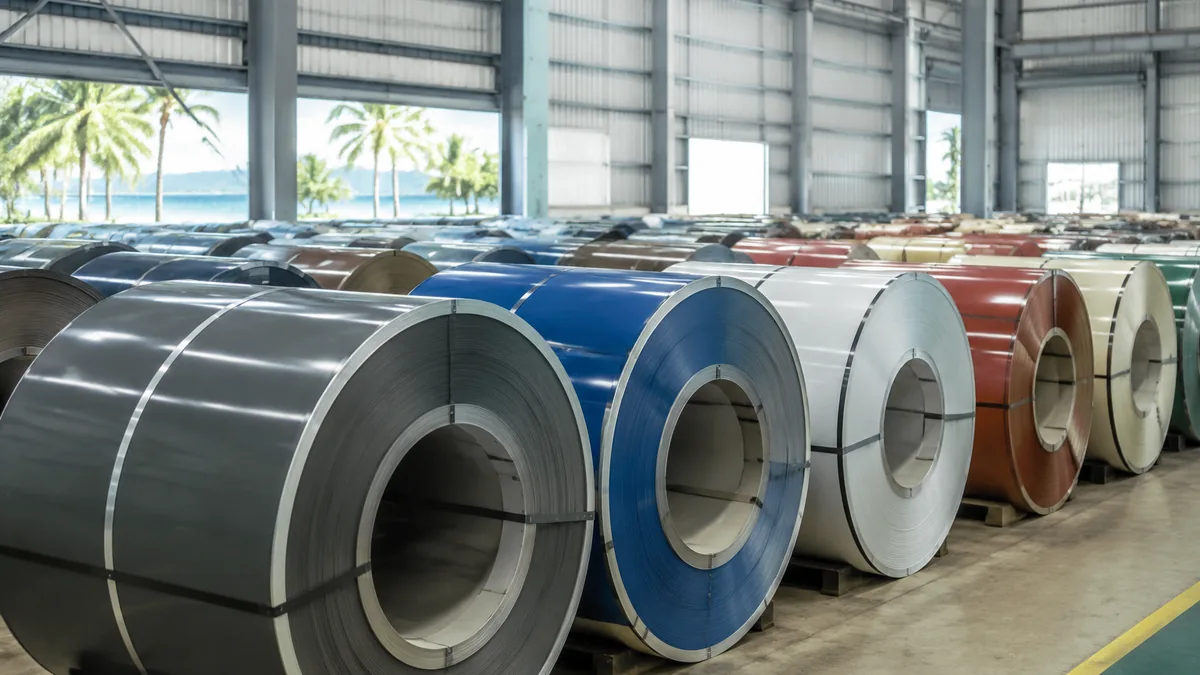
Do not let the mill pick the path from a warehouse photo. The photo is stock. The RFQ is the duty.
Mill Scale Is The As-Rolled Skin The Mill Already Has
Mill scale is the iron-oxide layer that forms on hot-rolled plate. Export desks still call it black plate, as-rolled, or “natural surface.” It is a delivery state. It is the default for commodity A36 carbon steel plate and for EN 10025-2 lots that nobody asked to blast.
Intact mill scale can travel. Broken scale plus rain becomes red rust in the same 20GP. That rust is a packing and storage issue. It does not convert the plate into Sa 2.5. A fabricator who planned to blast at destination can live with mill scale if the PO said mill scale. A coating shop that priced Sa 2.5 at the mill cannot.
Write mill scale when that is the duty. Write oil or dry. Write mill edge or trimmed edge. Leave blast class off that line so a mill cannot “upgrade” the quote with an unpriced shot-blast pass.
Typical chemistry and yield still sit under that skin. Confirm the ordered edition; do not treat these as the heat you already bought:
| Grade family | C % max, thinner plate (typical table) | Mn % max | P % max | S % max | Yield class buyers discuss at t ≤ 16 mm |
|---|---|---|---|---|---|
| S235JR | 0.17 | 1.40 | 0.035 | 0.035 | 235 MPa |
| S275JR | 0.21 | 1.50 | 0.035 | 0.035 | 275 MPa |
| S355JR | 0.24 | 1.60 | 0.035 | 0.035 | 355 MPa |
Tensile bands commonly discussed for the thinner product are about 360-510 MPa for S235, 410-560 MPa for S275, and 470-630 MPa for S355. Surface class does not change those numbers. A mill that blasts S275JR still owes the same yield class. Thickness basis stays EN 10029 class A or B. Mill talk of ±0.3 mm is not a class.
When ISO 8501-1 Sa 2.5 Belongs On The RFQ
ISO 8501-1 is the visual blast-cleaning standard coating specs still name. Sa 2.5 is the class fabricators write when they want very thorough blast cleaning, often called near-white metal in mill English. Sa 2 is thorough blast. Sa 3 is white metal. Confirm the pictures and residual-stain language in the ordered edition. Do not copy a brochure synonym into the purchase order.
| Class buyers name | Temperature of the decision | What a mill may still ship if the class is blank |
|---|---|---|
| Sa 2 | Coating system that accepts more staining | Light sweep or mill scale called “shot blast” |
| Sa 2.5 | Most epoxy and inorganic zinc shop systems | Sa 2, or blast plus flash rust |
| Sa 3 | Specs that refuse residual stains | Sa 2.5 quoted as if it already matches |
If the coating procedure names a roughness range, write it on the same line as Sa 2.5. A mill that only blasts to a visual class can miss the profile the primer needs. If the procedure is silent, freeze the class and leave roughness as “mill to report” so the quote still prices the blast.
Blasted plate rusts. Bare Sa 2.5 that sits in a humid yard for two days is no longer the class you paid for. Either the mill primes inside the hold time the coating maker names, or the plate ships under VCI and waterproof wrap, or the fabricator blasts again at destination. Pick one. A quote that says “Sa 2.5” with no hold time and no wrap is an open rust claim.
Shop Primer Adds Dry Film Thickness After The Blast
Shop primer is a thin holding coat. It is there so blasted steel can travel and wait for the full paint system. It is not a blast class. Inorganic zinc silicate (IOZ) shop primers are commonly discussed at 15-25 μm dry film. Epoxy or epoxy-zinc shop primers are often discussed at 20-40 μm. Weld-through primers sit in the same DFT conversation and add a weld-fume constraint. Confirm the product data sheet the coating contractor named. Do not invent a DFT from a mill color chart.
A red or grey film over mill scale is paint on oxide. It is not Sa 2.5 plus primer. The mill saved the blast. The fabricator later strips both the film and the scale.
Name four fields on one line:
- Blast class: ISO 8501-1 Sa 2.5 (or Sa 2 / Sa 3 if the drawing uses those)
- Primer type: IOZ, epoxy, or the named product
- Dry-film thickness: 20 μm, or the band the data sheet allows
- Color: only after type and DFT, because color is the cheap field
If the destination will apply a full system, write whether the shop primer is a keep-coat or a blast-off coat. Keep-coat means the over-coat must be compatible. Blast-off means you paid for transit protection you will throw away. Both are valid. They are different prices.
What PSI Photographs When The Skin Does Not Match
The first warning is rarely a failed pull-off test. It is a PI that wrote “painted” on 12 mm plate.
Floor pattern: the PI writes S355JR, 12 x 1500 x 6000, painted, mill edge. The bundle is black mill scale with broken oxide and rain rust. The fabricator had priced ISO 8501-1 Sa 2.5 plus IOZ shop primer at 20 μm. PSI photographs the rust because rust is visible. The missing blast and the missing DFT never enter the report. The claim then argues appearance, while the coating shop argues schedule.
Check this before anyone books blasting, painting, or stuffing.
- Offer surface line versus PO surface line. Mill scale is not Sa 2.5. Sa 2.5 is not shop primer. Shop primer without DFT is an incomplete line.
- Visual class against ISO 8501-1 pictures when Sa 2, Sa 2.5, or Sa 3 was ordered. Flash rust after blast is a hold unless the PO allowed a grade of rust-back.
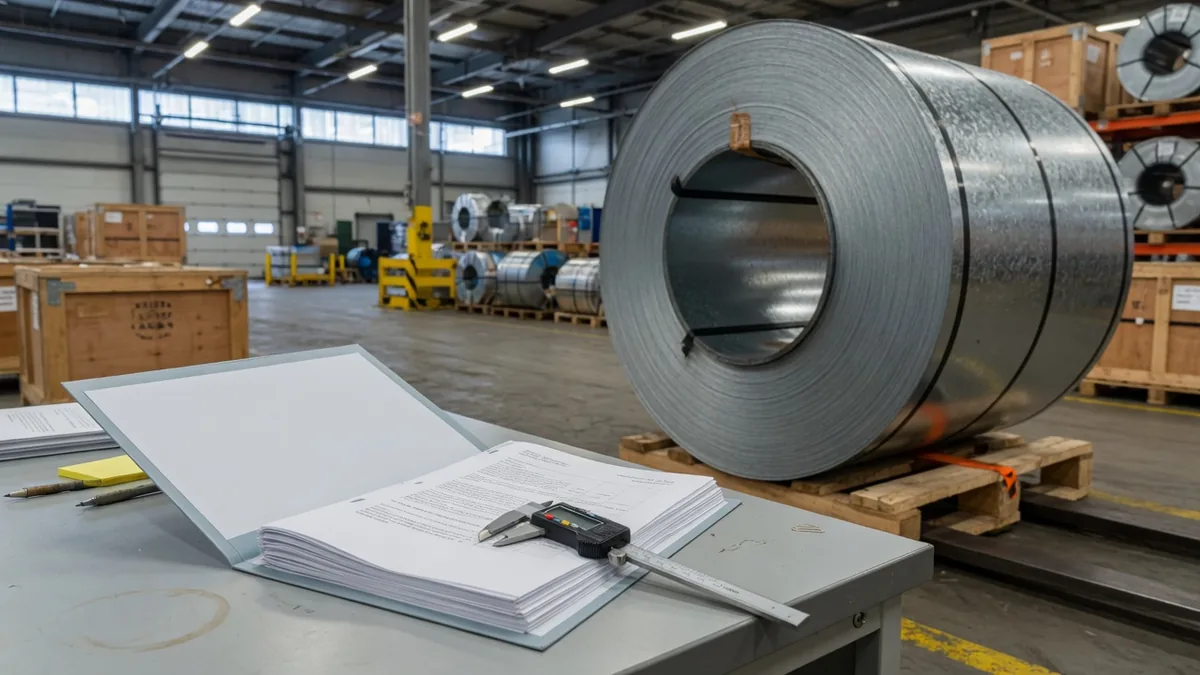
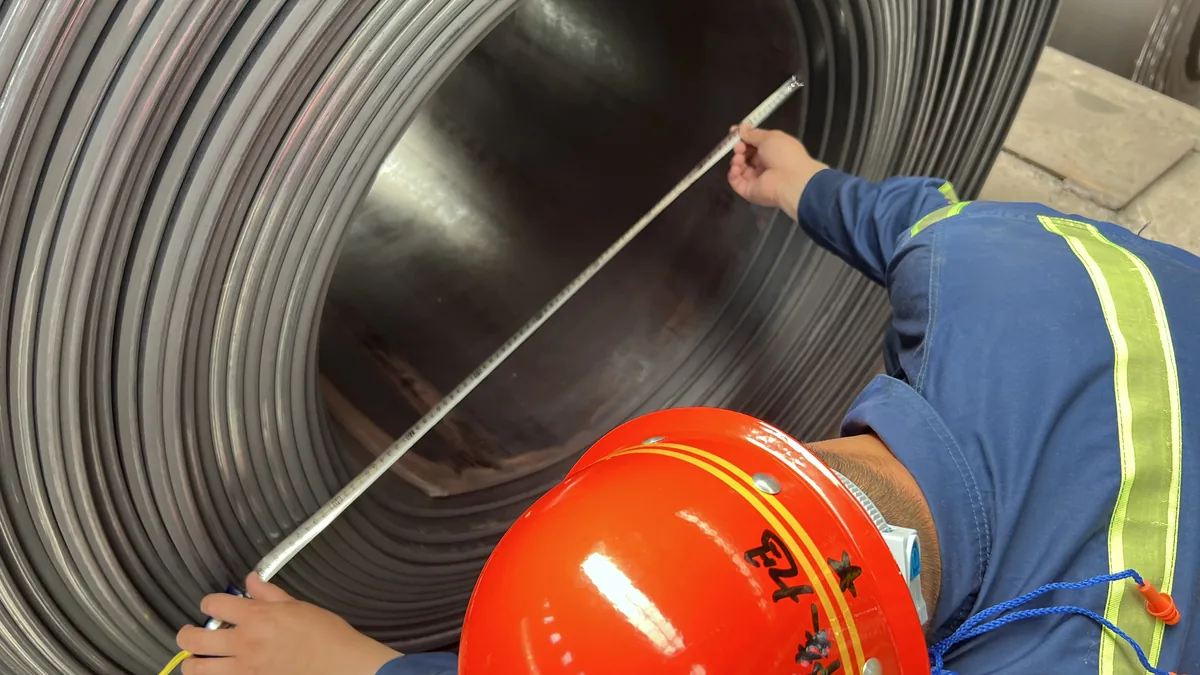
- Primer type and DFT when a shop primer was ordered. A wet-film comb or a dry-film gauge on a sample plate beats a color photo.
- Heat number on plate, bundle, packing list, and EN 10204 3.1 MTC. The certificate may not print Sa 2.5. The inspection report must.
- Packing that matches the skin. Mill-scale plate can travel with steel straps and edge guards. Bare blasted plate needs VCI paper or wrap, waterproof film, and edge protectors before the straps go on. Plate bundles for a 20GP still land near 25-27 MT. Overfilling a blasted bundle to chase that number does not replace wrap.
Third-party PSI that only checks thickness, width, and “no heavy rust” will miss this. Tell SGS, BV, or TUV to read the surface line on the PO and to photograph the actual skin before the bundle is wrapped.
If the mill says mill scale, shot blast, and primer are equivalent because the grade is S355JR, ask for the ISO 8501-1 class and the DFT on the same page as yield. Equivalence talk without those numbers is a commercial convenience.
Copy Block For The Surface Line On The Purchase Order
Copy this into the carbon plate block after grade and size. Leave impact letters, UT, and destination extras as their own lines.
- Product form: plate, mill edge or trimmed edge
- Thickness x width x length, and the thickness basis (EN 10029 class A or B)
- Grade string still on its own line: S235JR / S275JR / S355JR or the ASTM A36 line
- Surface path, pick one: mill scale / ISO 8501-1 Sa 2.5 / Sa 2.5 plus shop primer
- If mill scale: oil or dry; no blast nickname
- If Sa 2.5: roughness if the coating spec names it; maximum hours bare before prime or wrap
- If shop primer: type (IOZ / epoxy / named product), DFT 15-25 μm or 20-40 μm as the data sheet requires, keep-coat or blast-off
- Mechanical table required on EN 10204 3.1 MTC: yield, tensile, elongation; surface class on the inspection report if the mill will not print it on the certificate
- Heat number on plate / bundle / packing list / MTC
- Packing: VCI on blasted or primed faces, waterproof wrap, edge guards, steel straps; 20GP payload still near 25-27 MT
- Hold: do not blast again, over-coat, or load if the skin does not match the PO
If the project also allows mill-scale plate with blasting at destination, write that as a second approved path. Do not let a mill collapse both paths into one “painted” cell.
Conclusion
On carbon structural plate, the surface line is a hold point, the same as thickness. Mill scale is the as-rolled skin. Sa 2.5 is an ISO 8501-1 blast class. Shop primer is a dry-film system that sits on that class. A mill that fills one of those from leftover stock is not doing you a price favor. Freeze the next process on the RFQ, then match that skin on the bundle and the EN 10204 3.1 MTC before the straps go on.
Planning an Order or Need a Technical Verification?
If you are sourcing carbon structural plate to S275JR, S355JR, or ASTM A36 and you need the mill to confirm mill scale, ISO 8501-1 Sa 2.5, or shop primer DFT against the coating procedure:
- Fast technical quote: Send grade, surface path, thickness x width x length, quantity, and destination via our request a quote form.
- Quality assurance: Every order is backed by genuine EN 10204 3.1 Mill Test Certificates with full heat-lot traceability. Third-party inspections (SGS, BV, TUV) are welcomed.
- Urgent inquiries: Contact the Shandong export desk directly on WhatsApp +86 151 5311 2221 for instant specification confirmation. MTC requirements belong in the RFQ. Traceability starts there.