







Introduction
For roofing buyers, galvanized steel coil coating weight is not a small technical detail. It affects corrosion resistance, forming performance, painted sheet quality, and whether the material matches the project specification.
The confusion usually starts with coating names. One buyer may ask for Z275, another may ask for G90, and a supplier may quote DX51D+Z or SGCC without clearly stating the coating mass. Before placing an order, buyers should confirm the standard, coating designation, test basis, base steel grade, thickness, width, surface finish, and MTC.
For coil selection, compare the GI family specifications with the forming requirements of DX51D galvanized coil. Zinc coating mass and the base-steel grade answer different questions and should be specified separately.
What Coating Weight Means
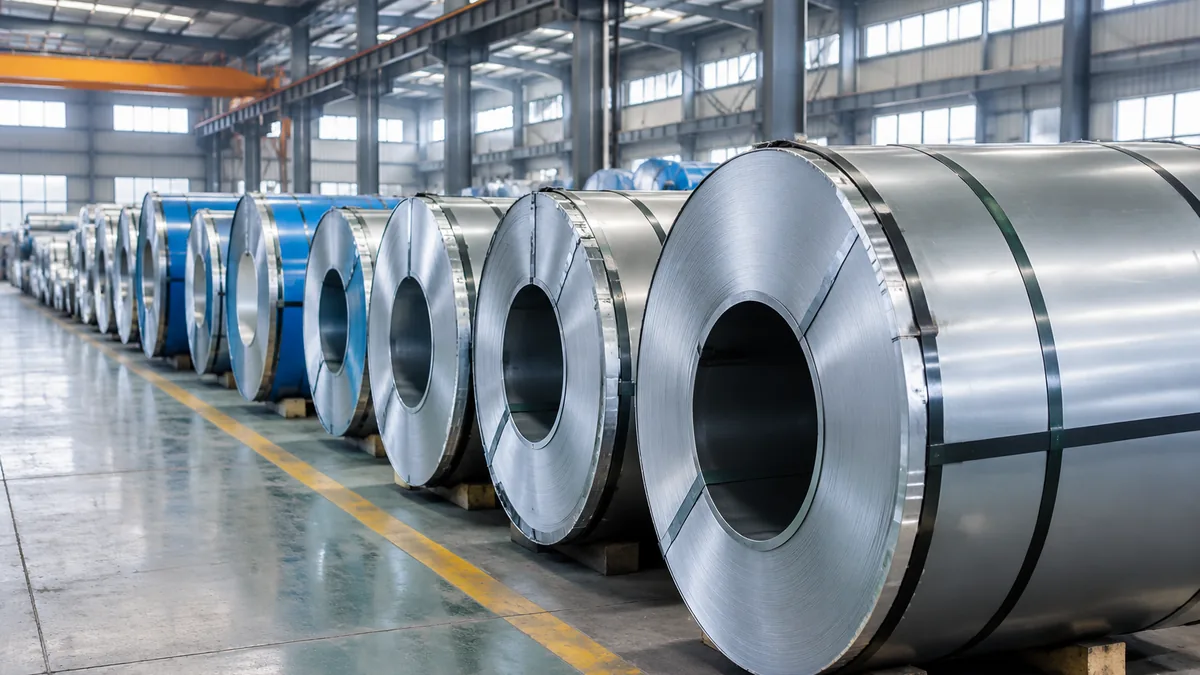
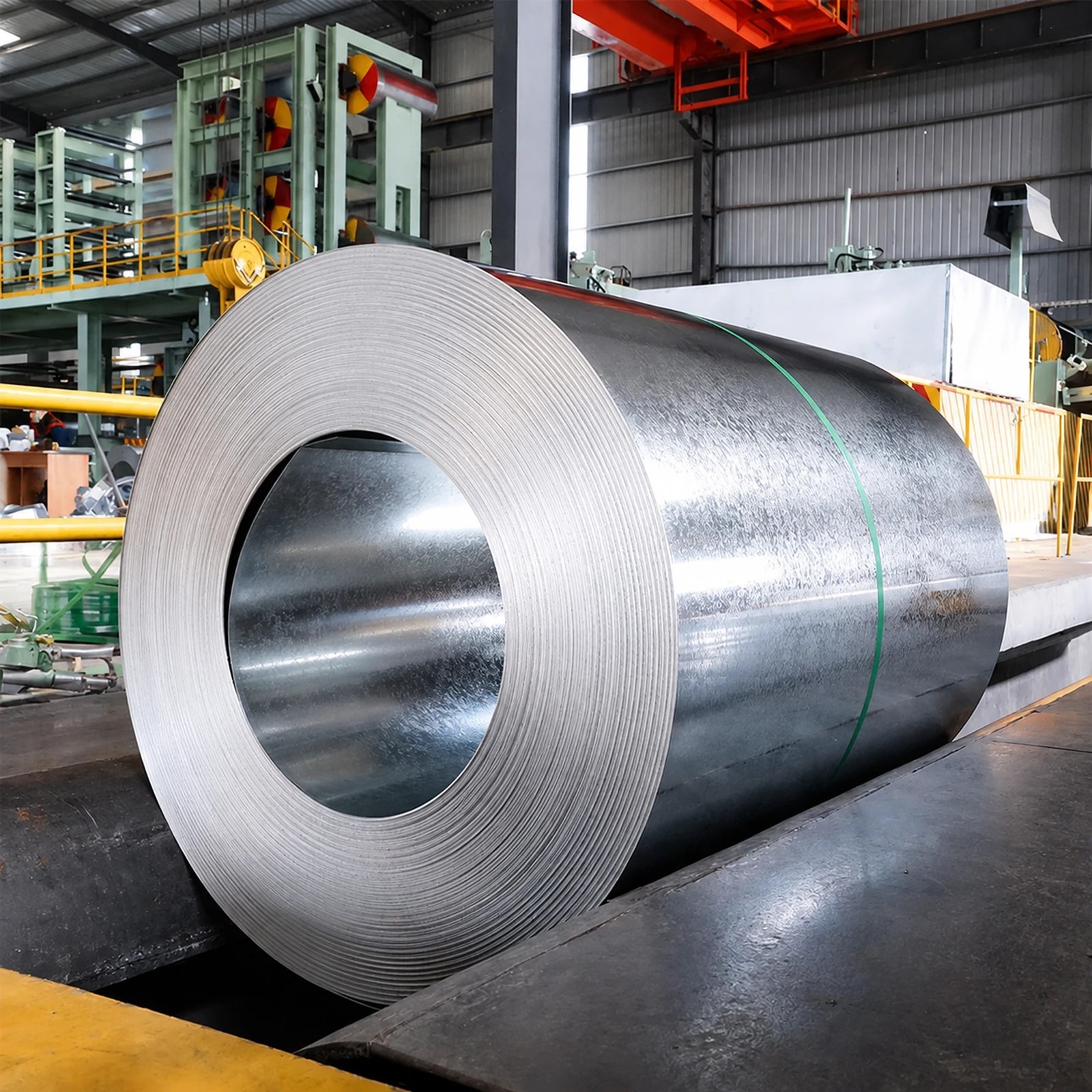
Galvanized steel coil is protected by a zinc coating applied to the steel substrate. Coating weight, also called coating mass, describes how much zinc is present on the sheet surface. For many hot-dip galvanized sheet standards, common designations describe the total coating mass on both sides of the sheet.
This matters because a higher zinc coating mass usually gives more sacrificial protection in the same environment, but it can also affect cost, forming behavior, availability, and painted product processing. Buyers should avoid choosing coating weight by price alone.
| Buyer term | Common system | Approximate meaning | Procurement reminder |
|---|---|---|---|
| G60 | ASTM inch-pound | 0.60 oz/ft2 total both sides | Often compared with Z180 |
| G90 | ASTM inch-pound | 0.90 oz/ft2 total both sides | Commonly compared with Z275 |
| Z180 | Metric / EN or ASTM metric style | 180 g/m2 total both sides | Confirm standard and test method |
| Z275 | Metric / EN or ASTM metric style | 275 g/m2 total both sides | Common roofing and cladding discussion point |
| Z350 | Metric / EN or ASTM metric style | 350 g/m2 total both sides | Check availability, forming, and project need |
Z275 vs G90: Why Buyers Confuse Them
G90 is widely used in ASTM A653/A653M discussions. The G indicates a galvanized zinc coating, and the number refers to coating weight in oz/ft2 total both sides. Z275 uses metric coating mass in g/m2 total both sides.
Because 1 oz/ft2 is about 305 g/m2, G90 at 0.90 oz/ft2 is commonly converted to about 275 g/m2. This is why many suppliers and buyers describe G90 and Z275 as comparable. Still, the purchase order should not only say “equivalent.” It should state the required standard and coating designation, such as ASTM A653 G90 or EN 10346 Z275.
How Roofing Buyers Should Choose Coating Weight
There is no single best coating weight for every roof. A warehouse in a dry inland location, a coastal roofing project, and an agricultural building exposed to humidity or chemicals may need different specifications.
For roofing applications, buyers commonly consider:
- Local environment: inland, coastal, industrial, high humidity, agricultural, or chemical exposure.
- Product route: bare GI roofing sheet, corrugated sheet, or prepainted galvanized steel coil.
- Base steel grade and forming requirement, such as DX51D, SGCC, structural grade, or commercial quality.
- Sheet thickness, width, coil weight, spangle, passivation, oiling, and surface finish.
- Required coating designation, such as Z180, Z275, G60, or G90.
- Paint system or topcoat/backcoat requirement when ordering PPGI.
For critical or exposed roofing projects, ask the project designer or end customer to approve the coating designation before the supplier begins production.
RFQ Checklist For Galvanized Roofing Coil
A clear RFQ reduces misunderstandings between ASTM, EN, JIS, and supplier naming systems. Include these items:
- Product type: GI coil, galvanized roofing sheet, corrugated sheet, or PPGI coil.
- Standard: ASTM A653/A653M, EN 10346, JIS G3302, or the project-specified standard.
- Base grade: for example DX51D, SGCC, commercial steel, or structural steel grade.
- Dimensions: base metal thickness, total coated thickness if needed, width, coil ID, coil weight, and quantity.
- Coating designation: for example Z275 or G90, and whether total both-side or single-side coating is required.
- Surface condition: regular, minimized, or zero spangle; chromated, passivated, oiled, anti-fingerprint, or dry.
- Inspection documents: EN 10204 3.1 MTC, coating mass test result, chemical and mechanical data, and packing list.
- Packing: seaworthy packing, edge protection, waterproof paper, pallet or eye-to-wall/eye-to-sky coil orientation.
What To Check On The MTC Before Shipment
Before shipment, the MTC should match the purchase order and actual coil tags. Roofing buyers should check:
| MTC checkpoint | What to verify | Why it matters |
|---|---|---|
| Standard and grade | ASTM, EN, JIS, base grade, and coating type | Prevents wrong standard or wrong substrate delivery |
| Coating designation | Z275, G90, or ordered coating mass | Confirms corrosion protection target |
| Coating test result | Reported coating mass and test basis | Helps verify the order was produced as specified |
| Thickness and width | Actual or certified values against PO tolerance | Affects roll forming, overlap, and roofing yield |
| Coil identity | Coil number, heat number, batch, and weight | Supports traceability from MTC to packing list |
| Surface treatment | Passivation, oiling, spangle, paint system if PPGI | Affects storage, forming, and appearance |
Common Mistakes To Avoid
The most common mistake is asking for “high zinc” without naming a standard or coating designation. Another mistake is comparing per-side coating thickness with total both-side coating mass. These are not the same purchasing language.
Also avoid accepting a quote that only lists “galvanized coil” without the base grade, thickness, zinc coating, surface treatment, and MTC requirement. For roofing, these details affect forming, corrosion performance, appearance, and customer acceptance.
Conclusion
Galvanized coating weight is one of the most important RFQ items for roofing coil buyers. Z275 and G90 are useful reference points, but the final order should state the standard, coating designation, base grade, thickness, surface treatment, packing, and EN 10204 3.1 MTC requirement.
If you are preparing a roofing coil RFQ, send your target standard, grade, thickness, width, coating weight, surface finish, quantity, destination, and MTC requirement to the Tsingshan Steel Export Team. We can help compare GI and PPGI options before quotation.
Related coated steel tools
- Metal roofing profiles tool
- RAL colors for PPGI / PPGL
- GI vs Galvalume buyer guide
- How to specify GI on a purchase order
- Hot-dip galvanized coil product