








Introduction
A mill offer that says UT included looks complete until two prices sit in the same spreadsheet. One mill ran mill-line automated scanning and printed “UT pass” on the MTC. Another quoted EN 10160 S2 on the body and a numbered edge class. A third offered ASTM A435 as if it filled a European class letter. The plates may share a grade name. The inspection packages do not.
This guide is for importers who buy carbon or low-alloy steel plate from China against drawings that name ultrasonic testing. It is procurement specification guidance, not a substitute for the ordered edition of EN 10160, EN 10307, ASTM A435/A435M, or ASTM A578/A578M. Start with the ASTM A36 plate order requirements for the material and size schedule, then specify the UT method and acceptance classes separately.
If the RFQ itself is still a loose list of sizes, start with the steel RFQ template and add the UT block from this article.
EN 10160 is required when the drawing, purchaser specification, or end-user quality plan names ultrasonic testing on flat product—not on every commodity plate RFQ by default. Typical triggers are welded structural members where laminations matter, pressure-retaining or critical load paths, and OEM freezes that print an S/E class string. BS EN 10160 and DIN EN 10160 are national designations of the same CEN reflection method; treat the class letters the same way whichever prefix the PO uses.
Freeze grade and size on the product page first—for example A36 carbon steel plate, S275JR carbon steel plate, or S355 carbon steel plate—then freeze the UT method and classes here. Impact letter and delivery condition stay on the EN 10025-2 impact-letter RFQ guide; surface path stays on the mill-scale / Sa 2.5 / shop-primer RFQ guide.
What A Mill Quote Leaves Open When It Only Says UT
Ultrasonic testing on plate is a named method plus an acceptance class. “UT” is neither.
| Field left blank | What the mill can still choose | Why the quote is not comparable |
|---|---|---|
| Standard | EN 10160, EN 10307, ASTM A435, ASTM A578, or mill internal practice | Different methods, different thickness floors, different language |
| Body class | An S letter, or no body class at all | Scan density and acceptance in the plate body stay commercial |
| Edge class | An E letter, a bare “E”, or no edge scan | Edge-band work is often the cost and the rejection risk |
| Thickness floor | EN 10160 title starts at 6 mm; some purchaser specs start later | Thin plates can be sold with no UT while the RFQ assumed it |
| Scan route | Mill automated line UT versus a defined manual or grid scan | Time, coverage, and report format change |
| Inspection reporting | Full standard and classes on the agreed MTC or linked UT report | Claims after cutting need traceable results |
The CEN title recorded on purchaser documents is Ultrasonic testing of steel flat product of thickness equal or greater than 6 mm (reflection method). That title is the method. It is not an acceptance class.
A named OEM purchase specification, Sulzer PS-3003 dated 28 June 2024, shows how a careful buyer still has to write numbers. That document applies only to plates 24 mm and thicker. Plates under 24 mm are excluded from that purchasing specification, even though EN 10160 itself is titled from 6 mm. For ferritic plates it calls DIN EN 10160, acceptance S2, E. For austenitic and ferritic-austenitic plates it calls DIN EN 10307, acceptance S2, E3. ASTM A435 is listed as an alternative method. Mill automated UT is acceptable unless the purchase order says otherwise. EN 10204 3.1 is the certificate type. Copy those facts as an example of a purchaser freeze, not as a universal mill default.
EN 10160 Body And Edge Classes You Have To Name
EN 10160 splits the plate into a body zone and an edge zone. Commercial mill quotes print a body class with an S letter and an edge class with an E letter. A complete RFQ names both.
Do not paste discontinuity sizes from a mill brochure into the purchase order. The official class table lives in the ordered edition of EN 10160. What belongs on the RFQ is the class string the project engineer already chose, or a purchaser string you are willing to live with, such as S2 plus a numbered edge class.
The Sulzer freeze is useful here because it is incomplete in one letter. It names S2 and E for EN 10160, and it names S2, E3 for EN 10307. The austenitic line has a numbered edge class. The ferritic line does not. If your drawing only says “UT to EN 10160,” mills will fill the missing number in different ways, or they will omit the edge scan and still call the offer EN 10160.
Stainless and duplex plate that a mill routes to EN 10307 should stay on EN 10307. Do not accept an EN 10160 ferritic class string against an austenitic drawing unless the project engineer wrote that substitution.
ASTM A435 And A578 Speak A Different Language
US and mixed-spec bills of materials often name ASTM ultrasonic specifications instead of EN 10160 class letters. Those ASTM texts do not use S and E.
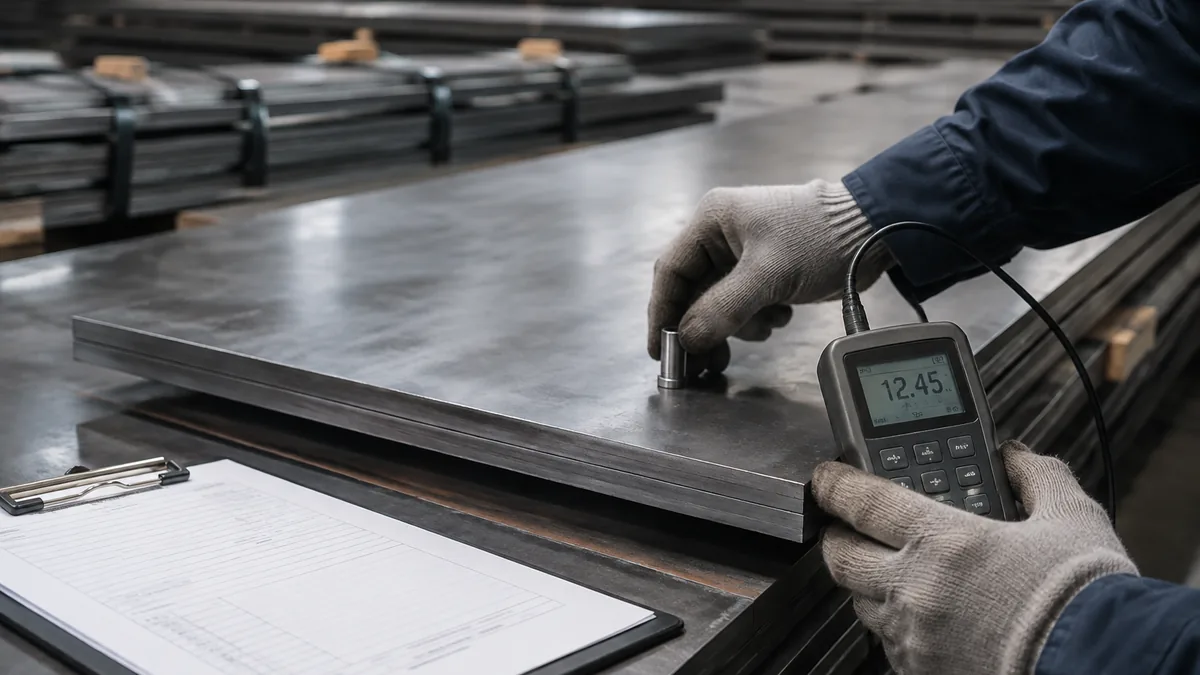
ASTM A435/A435M covers straight-beam, pulse-echo examination of rolled fully killed carbon and alloy steel plates, 12.5 mm and over. ASTM wrote it to support delivery of plates free of gross internal discontinuities such as pipe, ruptures, or laminations. It applies when the inquiry, contract, order, or specification states that the plates will be ultrasonically examined. The published abstract describes one acceptance idea: a discontinuity indication that causes a total loss of back reflection and cannot be contained within a circle is unacceptable. Operator qualification is written against ASNT SNT-TC-1A or an equivalent accepted standard.
ASTM A578/A578M covers straight-beam, pulse-echo examination of rolled carbon and alloy steel plates 10 mm and over for special applications. The method is written to detect internal discontinuities parallel to the rolled surfaces. The scope states that three levels of acceptance standards are provided, with supplementary requirements for alternative procedures. This article does not name those three levels as letters because the public abstract does not. If the drawing uses A578, freeze the level in the ordered edition, not in a mill nickname.
A435 is not a silent fill-in for EN 10160 S2. A578 is not a silent fill-in for a numbered edge class. A mill may quote A435 against an EN 10160 line because both are “plate UT.” Put the two standards in separate price columns, or name one of them as an approved alternative the way Sulzer does.
Quotes That Collapse When The Class Is Missing
These are the first-lot patterns that make two FOB numbers look interchangeable:
- The RFQ says “plate, UT” and one mill prices mill-line auto UT to ASTM A435 while another prices EN 10160 with both class letters.
- The offer prints EN 10160 S2 and leaves the edge class blank, so the edge band is commercial.
- Thickness is 12 mm. The mill skips UT because a purchaser spec they use internally starts at 24 mm, while the drawing assumed EN 10160 from 6 mm.
- Austenitic plate is quoted to EN 10160 instead of EN 10307.
- The MTC says UT passed. The UT report has no class string, no heat, and no plate identity.
Price the inspection package, then the steel. If two mills quote the same plate size and only one can print EN 10160 S2 plus a numbered edge class on the EN 10204 3.1 MTC, they are not the same offer.
Copy Block: Freeze UT On The Purchase Order
Copy this block into the RFQ and the purchase order. It is the specification that makes mill quotations comparable.
- Product: steel plate, grade and delivery standard already frozen (for example ASTM A36 or EN 10025 S355JR)
- Thickness x width x length, quantity, mill edge or cut edge
- Ultrasonic testing: EN 10160 (or BS EN 10160 / DIN EN 10160) body class S[ ] and edge class E[ ], ordered edition
- Or, if the drawing is ASTM: ASTM A435/A435M or ASTM A578/A578M plus the acceptance level in the ordered edition
- Approved alternative only if named (example: ASTM A435 as an alternative to EN 10160, written on the PO)
- Thickness range the UT applies to; do not assume a 24 mm purchaser floor unless you wrote it
- Scan route: mill automated UT accepted or not
- Stainless / duplex: EN 10307 plus its S and E classes when that is the named method
- Documents: EN 10204 3.1 MTC with the UT standard and class string; separate UT report tied to heat and piece
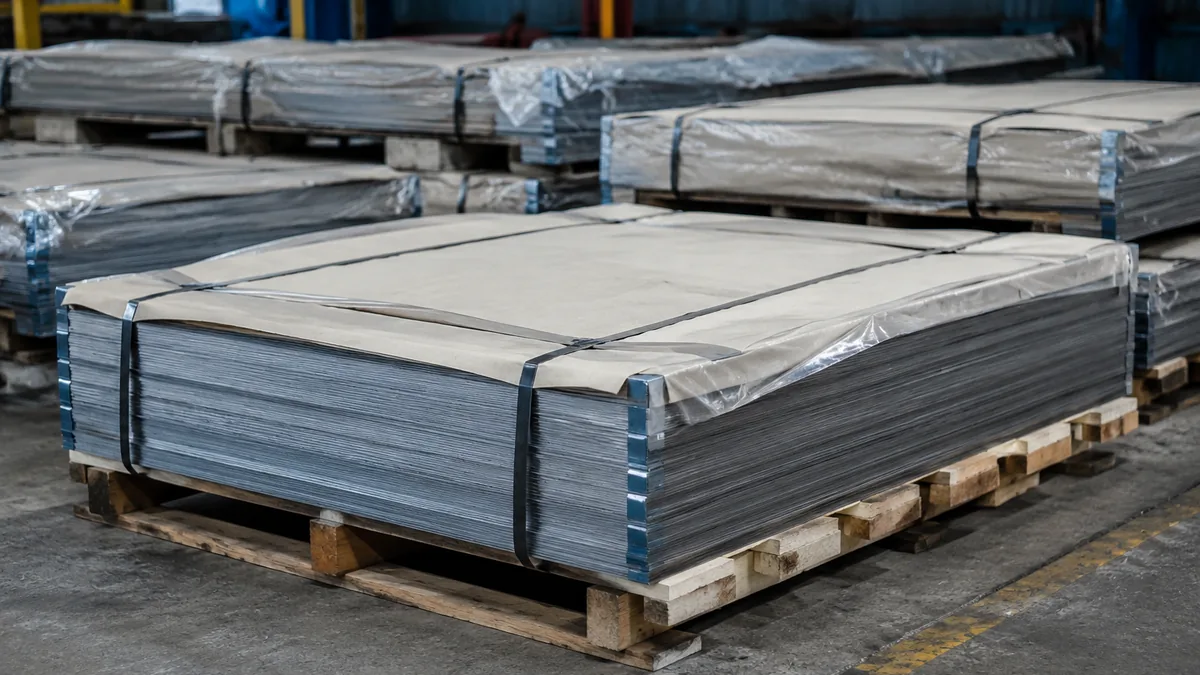
- Packing: piece or bundle marks that carry the same heat and plate identity
If you want that block priced as a single quotation line, request a quote with grade, size, EN 10160 or ASTM UT string, destination, and whether mill automated scanning is accepted.
Matching The UT Report To The Heat And The Pack
A class string on the purchase order still fails at loading if the paper and the plates do not agree. Use the same heat-to-piece habit as MTC verification before shipment and the field list on the EN 10204 3.1 checklist.
Agree the EN 10204 3.1 document scope before release, including how any separate UT report is linked to the shipment.
Hold points we use on first lots:
- PO shows EN 10160 S and E (or the named ASTM specification and level), not “UT included.”
- The agreed inspection-document package identifies the UT standard and acceptance classes. Results may appear on the EN 10204 3.1 MTC or a separate UT report linked to the same heat and plate identity, as agreed in the order.
- UT report lists heat number, plate or piece identity, thickness, standard, class, and scan route.
- Heat and piece marks on the plates match the packing list.
- If a third-party inspector is on the lot, the UT class sits in the inspection instruction, not only in email. The pre-shipment inspection report guide covers how that report should name the test.
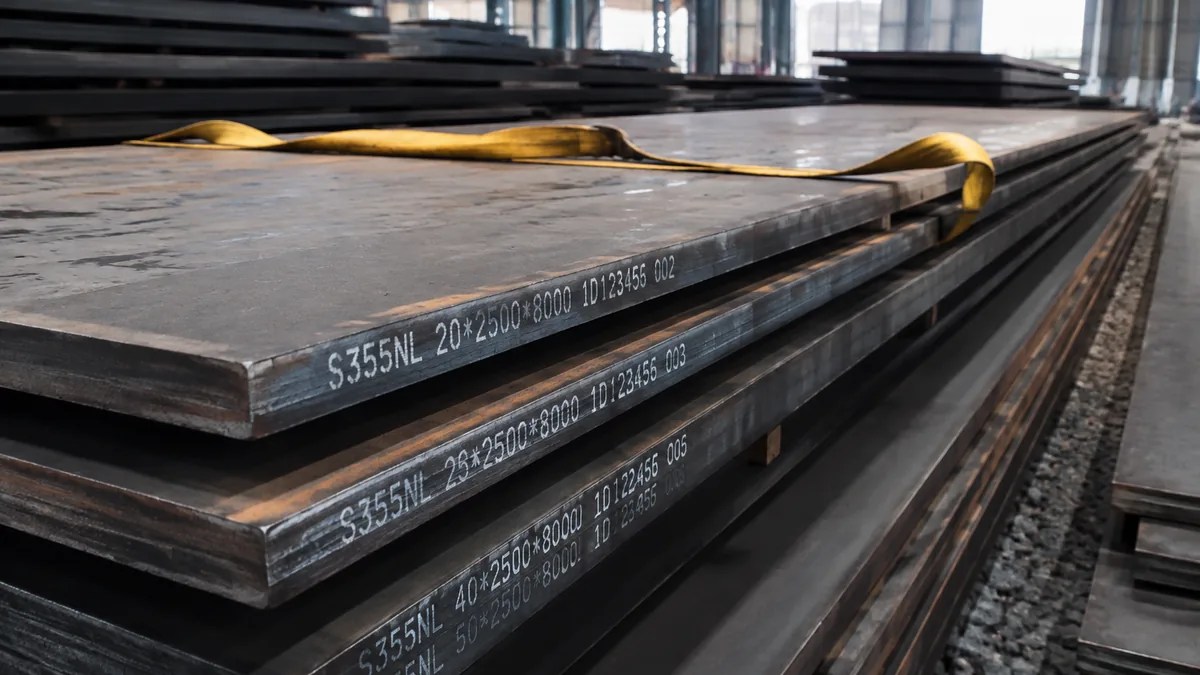
If the MTC says EN 10160 S2/E3 and the UT report only says passed, hold the shipment. If the stencil shows a heat that is missing from the UT report, hold the shipment.
Conclusion
“UT included” is not a steel-plate specification. EN 10160 is a reflection-method test for flat product from 6 mm. A buyer still has to freeze the body class and the edge class, the thickness the test applies to, the scan route, and the certificate string. ASTM A435 and ASTM A578 are different languages with their own thickness floors and acceptance ideas. A dual-named mill quote is a commercial convenience. The purchase order still has to name one method and one class.
We quote carbon steel plate with the UT standard and class written on the offer, and we align the EN 10204 3.1 heat data, the UT report, and packing marks before shipment. Send the grade, size list, and the EN 10160 or ASTM string in one request a quote if you want mill prices that can sit in the same column.