







Short answer
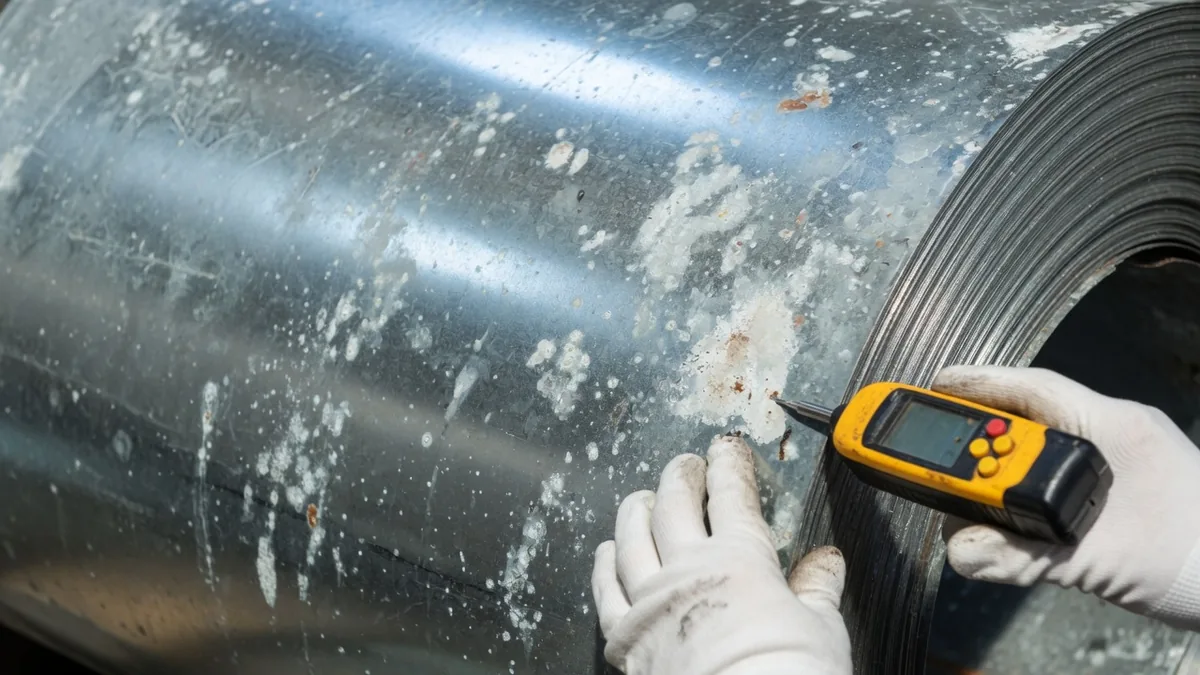
Most “mystery” GI coil claims are traceable to moisture management, under-specified surface treatment, abrasion, or mismatched bend severity—not to zinc metallurgy alone. Buyers who lock coating mass + surface package + packing + forming notes on the purchase order cut claim loops before production starts.
Use this page with the GI product family and the PO checklist for galvanized coil.
Defect map (what buyers see → frequent causes)
| Defect | Observation | Frequent causes | What to write in the PO / RFQ |
|---|---|---|---|
| White rust / wet-storage stain | White powdery or gray patches between wraps | Condensation in coils, damaged waterproof packing, weak/missing passivation, long humid storage | Passivation class (chromate / Cr-free), oil or dry rule, seaworthy packing for destination climate |
| Bare spots / thin zinc | Early red rust islands | Air-knife instability, dross, strip shape, under-ordered coating mass, abrasive handling | Coating designation (e.g. Z180 / Z275), coating-mass test basis, handling notes |
| Spangle non-uniformity | Uneven sparkle or dull bands | Bath chemistry, cooling rate, skin-pass differences | Spangle type (regular / mini / zero); call out cosmetic vs reject criteria |
| Coating cracking at tight bends | Zinc cracks on outside radius | Heavy coating + high-strength substrate, too-small bend radius, dry forming | Grade, coating mass, min bend radius / roll-forming route, lubrication plan |
| Black marks / friction burnish | Dark linear tracks after roll forming | Dry forming without enough oil/AFP, dirty rolls, high entry tension | Surface package for forming; oil range or AFP if required |
| Oil streaks / dirty surface | Stripes, sticky dust adhesion | Uneven oiling, excessive oil weight, warm storage after oiling | Target oil band or dry + passivation; cleaning method before paint |
| Edge wave / camber after slitting | Poor nesting, tracking issues | Incoming shape, slit tension, dull knives | Slit width tolerance, camber limit if critical (strip product) |
| Later paint adhesion failure | Blister or peel on organic coat | Residual oil, incompatible passivation, incomplete pretreatment | Cleanliness / oil residual limit, pretreatment class before PPGI or field paint |
White rust: logistics system, not a slogan
Fresh zinc is chemically active. Without surface treatment and moisture control, coils can develop wet-storage stain during sea freight or humid yard storage.
Prevention is a package:
- Passivation — conversion film that slows white rust under wet nested conditions. Order chemistry class: chromated, trivalent, or chromium-free.
- Oil or AFP — oil for forming friction and short-term humidity protection; AFP for handling cleanliness on selected lines. Oil is not a substitute for passivation on long voyages.
- Seaworthy packing — waterproof wrap, edge protection, desiccant practice as agreed. See export packing and rust prevention.
- Yard discipline — dry storage, avoid open rain exposure of opened packages.
Coating mass still sets corrosion reserve
Outdoor life scales largely with coating thickness (mass). That is why Z275-class coatings typically outlast lighter zinc under the same atmosphere when packing and design detailing are equal. For roofing substrate selection, also read the coating weight guide and GI vs Galvalume.
Oil weight: balance formability and cleanliness
Industrial GI is often shipped with light mill oil, but the exact target must be agreed with the mill and validated when critical. Too little oil increases galling and scratch tracks; too much oil causes dirt pickup and cleaning problems before painting or coil coating.
PO language example:
Surface: Cr-free passivated + light oil (target band to confirm) OR dry + passivated
Reject: heavy oil streaks that prevent painting without washing (if paint-critical)
Forming cracks and black marks
Heavy zinc + high-strength substrate + tight bend radius is a classic crack recipe. If the strip will be roll-formed or stamped tightly, discuss coating mass vs formability and whether a lighter coating or forming grade reduces scrap.
For panels that leave the plant as roofing sheet, lock profile and cover width in the roofing profiles tool.
Inspection evidence that shortens disputes
- Coating mass tests linked to coil / heat numbers
- Photos of packing and coil ends before loading
- Clear acceptance notes for cosmetic spangle vs functional defects
- MTC EN 10204 type required on the order — verify MTC before shipment
Buyer checklist (copy into RFQ)
- Standard / grade
- Coating mass (Z/G designation)
- Thickness basis (base metal vs total) and width
- Spangle + surface treatment + oil/AFP/dry
- Forming route and min bend notes if severe
- Packing for voyage climate
- Documents and optional third-party inspection
- Photo evidence rules for white rust or edge damage claims
Key takeaway
GI quality is a system: zinc mass sets corrosion reserve; passivation and oil manage logistics and forming; packing and storage decide whether that system survives the voyage. Specify the system on the PO—not only “good quality GI coil.”