








Introduction
A steel furniture RFQ that only says SPCC cold rolled coil, 0.8 x 1250, commercial quality does not freeze a buyable coil. One mill quotes SPCC-SD light-oiled for powder-coated cabinets. Another ships full-hard strip that cracks on tube-mill corners. A third fills DC01 on the proforma and SPCC on the tag. Thickness can look right. The temper, oil film, and slit width will not.
This is a specification tear-down for steel furniture factories and OEM tube-and-sheet makers who buy SPCC cold rolled steel coil. It freezes the RFQ fields that make export quotes comparable. It is procurement guidance, not a substitute for the ordered edition of JIS G 3141. For grade-family cross-reference to DC01 / ASTM A1008, use the existing guide SPCC vs DC01 vs ASTM A1008 instead of rewriting that comparison here. For general HR vs CR importer context, see hot-rolled vs cold-rolled steel coil.
The Furniture-Line Fields That Make Three SPCC Quotes Incomparable
Quick Technical Summary (Featured Snippet Direct Answer):
For steel furniture SPCC coil, freeze JIS G 3141 grade, temper (A / S / hard class), BMT thickness with tolerance class, slit width and edge, surface finish for powder coat or paint, oiling, packing against coil scratches, and EN 10204 3.1 MTC lines before you rank FOB prices.
The bid fails when any of those fields is a nickname. Commercial CR, annealed, or furniture quality are not temper symbols. 0.8 mm without a tolerance class is not a BMT gate. Slit as needed is not a tube-mill width.
| Missing RFQ field | What the mill will fill | Why furniture quotes cannot be ranked |
|---|---|---|
| Temper omitted (“SPCC commercial”) | S, A, or hard 8/4/2/1 stock | Soft panel stock and hard strip share one price |
| Surface / oil omitted | Heavy oil, light oil, or dry | Powder-coat adhesion and rust risk diverge |
| BMT vs nominal thickness | Nominal only, no class A/B gate | Panel flatness and weld gap drift on the line |
| Slit width open | Parent coil 1000–1500 mm | Tube-frame strip cannot run from an unslit bid |
| Packing left as “export standard” | Soft wrap without edge guards | Cabinet face scrap from coil rub marks |
| MTC lines not named | Heat chemistry only | Temper and dimensional proof missing at PSI |
Write the furniture coil as a copy block, not as a chat. The sections below tear down each field.
Temper, Annealed, And Oiled: What Each Symbol Freezes
Under JIS G 3141, commercial quality is SPCC. Temper is a separate symbol:
| Temper symbol | Meaning on the PO | Furniture-line implication |
|---|---|---|
| A | As-annealed | Soft, formable; may show coil break / edge wave; surface finish symbols usually not applied |
| S | Standard temper (skin-passed) | Common default for wide coil; better flatness for panels and cabinets |
| 8 / 4 / 2 / 1 | 1/8, 1/4, 1/2, full hard | Higher hardness; bend and tube-forming windows shrink |
| SPCCT | SPCC with tensile guarantee requested | Use when the drawing needs a tensile/elongation gate on commercial quality |
Surface finish symbols on standard temper are typically D (dull / matt) or B (bright). Example marking: SPCC-SD = commercial quality, standard temper, dull finish. Default supply under JIS is oiled unless the purchaser designates unoiling. Unoiled coil can show rust or scratches that the standard does not treat as detrimental defects—so furniture OEM lines that degrease for powder coat must still decide oil film weight deliberately.
Common commercial limits published for SPCC heat analysis (confirm the ordered JIS G 3141 edition on the PO; older informative tables differ):
| Element | Typical SPCC commercial max (mass %) | Buyer note |
|---|---|---|
| C | 0.15 max | Keep low for weldability and powder-coat formability |
| Mn | 0.60 max (some edition extracts list up to 1.00) | Confirm edition; do not invent a mill card |
| P | 0.100 max | Impurity gate |
| S | 0.035 max | Impurity gate |
Do not treat those cells as a silent upgrade to SPCD / SPCE drawing grades. If the furniture draw needs higher elongation, order the drawing quality explicitly or map via the SPCC vs DC01 guide.
Do not treat annealed + oiled as a free synonym for SPCC-SD. Name temper, finish, and oiling as three lines. If your tube mill needs harder strip for thin closed sections, order the hard class explicitly rather than hoping the mill ships leftover full-hard against a soft RFQ.
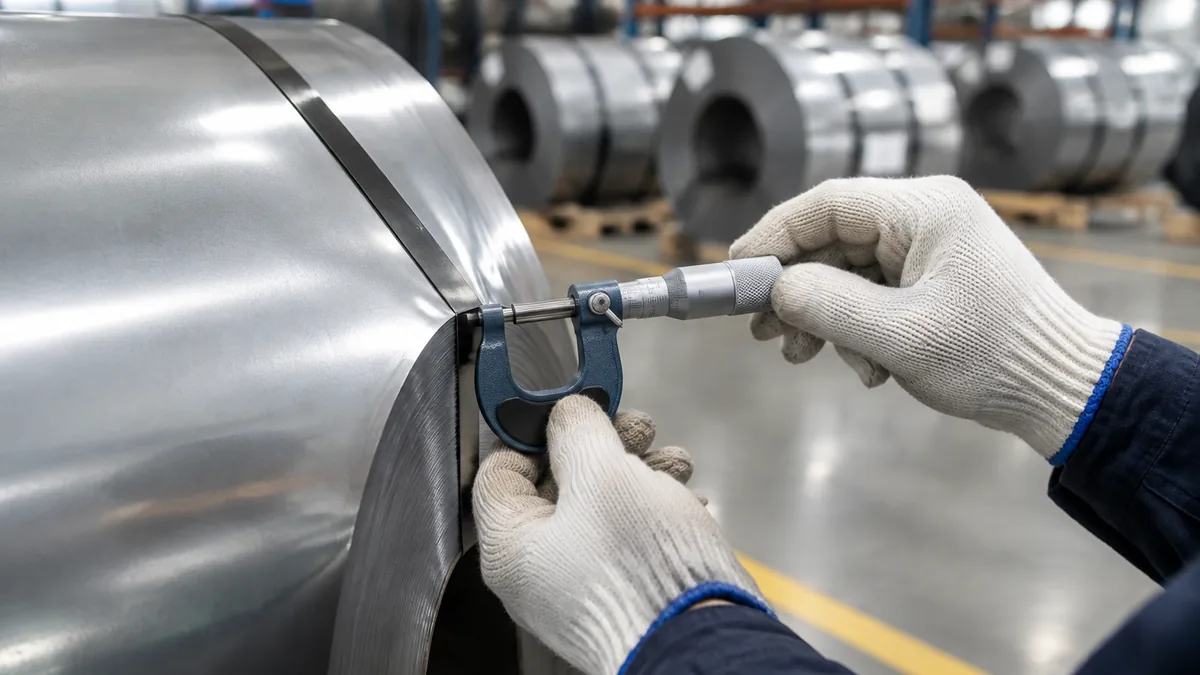
BMT Thickness, Tolerance Class, And Slit Width For Tube And Frame
Furniture plants mix two product forms on one purchase plan: wide coil for cabinets / shelves, and slit coil for roll-formed tube, frames, and runners. Those are different commercial lines even when both say SPCC.
| Dimension field | What to freeze on the RFQ | Bid failure if left open |
|---|---|---|
| BMT / nominal thickness | Ordered thickness in mm plus tolerance class (A or B per JIS G 3141 tables) | One mill ships class A; another ships wider commercial band |
| Width (parent coil) | e.g. 1000 / 1219 / 1250 / 1500 mm + mill or slit edge | Panel nesting and scrap rate diverge |
| Slit width (furniture tube / frame) | Finished strip width, tolerance, max burr, camber | Unslit parent coil cannot feed the tube mill |
| Coil ID / max coil weight | Usually 508 or 610 mm ID; max MT per coil for decoiler | Line stops when OD / weight exceeds uncoiler |
| Flatness / camber | Class for sheets; camber limit for narrow strip | Door panels and long frames warp |
JIS G 3141 publishes thickness tolerance classes A and B by width and thickness bands (class B is tighter on narrow strip). Furniture buyers who only write ±0.02 mm without naming the standard class still get incomparable offers: one mill treats that as a special agreement, another ignores it. Prefer: ordered thickness + JIS G 3141 thickness tolerance class A/B + any tighter special gate your tooling needs.
For slit programs, also freeze edge condition (slit edge vs mill edge), maximum burr, and whether recoiling / oiling after slitting is included. Link those size fields to the broader checklist in steel coil width and thickness tolerance RFQ checklist so the furniture PO stays consistent with other CR buys.
Surface Class For Powder Coat And Paint Adhesion
Most steel furniture faces are powder-coated or wet-painted after forming and welding. Surface class is therefore a paint-shop input, not a mill nickname.
| Surface / prep field | Furniture intent | RFQ language that ranks bids |
|---|---|---|
| Finish D / B | Dull vs bright skin-pass | SPCC-SD or SPCC-SB as ordered |
| Oil film | Rust protection vs degrease load | Light oil / heavy oil / dry; name if special oil brand is banned |
| Defect side | Visible cabinet face | Critical surface side; no rust, pits, or deep scratches on outer wrap |
| Cleanliness for powder coat | Phosphate / powder adhesion | Degrease compatibility note; reject heavy residual oil claims without process trial |
| Weld / grind zones | Tube frames and corners | Separate from coil surface—do not invent mill guarantees for post-weld paint |
Surface defects other than holes and laminations are generally judged on one side of the coil (outside wrap). Cabinet OEMs should still define the critical face and photo reject criteria in the PSI plan. Powder-coat lines that need dry-to-the-touch strip must order dry or controlled oil—not assume SPCC means paint-ready dry coil.
First-Hand Buyer Check: Oil Film, Packing Scratches, And MTC 3.1 Lines
On furniture container loads we see three repeat claim patterns that a clean RFQ would have blocked:
- Oil film mismatch — Mill ships heavy export oil; buyer’s powder line expects light oil. Degrease time doubles, or orange-peel appears after cure. Fix: name oil class on the PO and keep a retained sample coupon from the first coil.
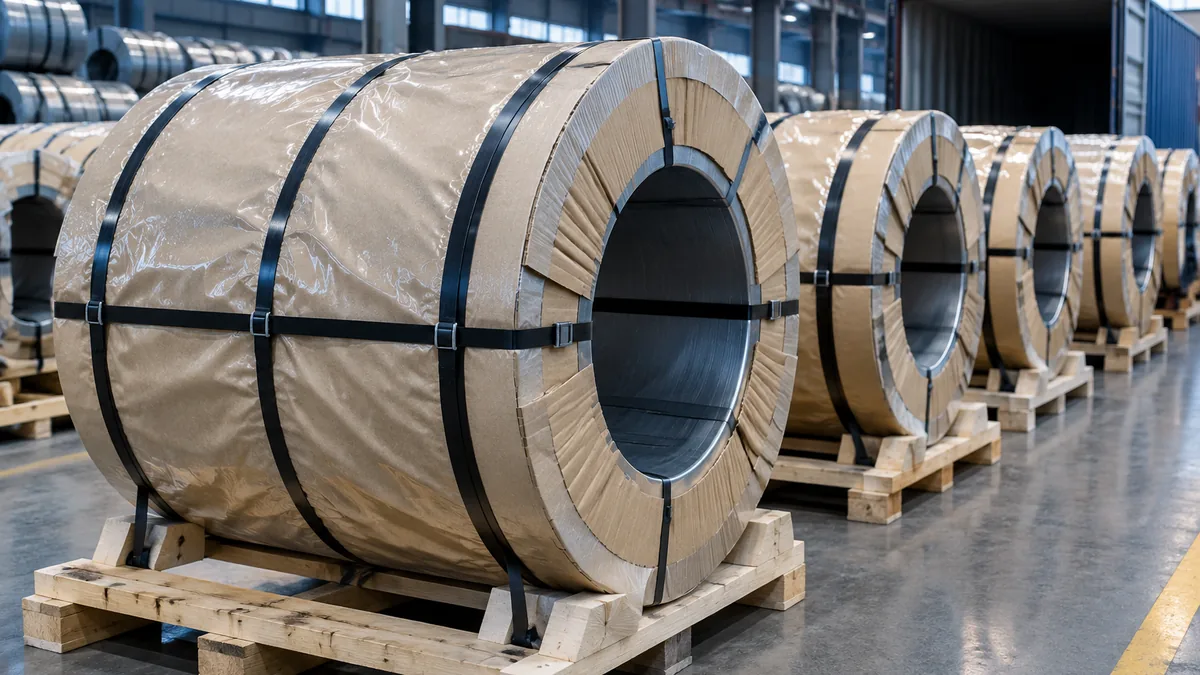
- Coil rub / edge crush — Soft wrap without steel edge protectors leaves scratch bands on the outer wraps used for visible panels. Fix: specify VCI + waterproof film + edge guards + radial/circumferential straps; require packing photos before sealing.
- MTC missing temper / size proof — Certificate shows chemistry only. PSI cannot tie temper symbol or slit width to the heat. Fix: require EN 10204 3.1 lines for standard, grade, temper if ordered, heat number, chemistry, and dimensional check; welcome SGS/BV witness.
| Packing / QC item | Minimum furniture export ask |
|---|---|
| Anti-rust wrap | VCI paper + plastic film |
| Mechanical protection | Inner/outer edge rings, side boards, steel straps |
| Stowage | Eye-to-sky or eye-to-wall as agreed; timber chocks; max ~25–28 MT per 20GP |
| Marking | Grade, temper, size, heat/coil number on tag |
| Documents | EN 10204 3.1 MTC + packing list aligned to coil numbers |
Use EN 10204 3.1 certificate practice when you brief the inspector. Keep the commercial RFQ template pattern aligned with steel RFQ template for accurate comparable quotes.
Copy-Paste RFQ Block For Steel Furniture SPCC Coil
Paste and edit. Do not leave parentheses as open options without choosing one.
Product: Cold-reduced carbon steel coil for steel furniture (panels / tube-frame strip)
Standard / grade: JIS G 3141 SPCC
Temper: S (or A / 8 / 4 / 2 / 1 — choose one). SPCCT tensile guarantee: Yes/No
Surface finish: SD (dull) or SB (bright)
Oiling: Light oiled / heavy oiled / dry (choose one); oil film compatible with powder-coat degrease
Thickness (BMT): __.__ mm; tolerance: JIS G 3141 class A or B (choose) + special ±__ mm if needed
Parent coil width: ____ mm; edge: mill edge / slit edge
Slit program (if any): finished width ____ mm; width tol ____; max burr ____; camber ____; ID 508/610 mm
Coil weight: __–__ MT max per coil (decoiler limit)
Surface: critical face free of rust, pits, deep scratches; photo reject criteria attached
Packing: VCI + waterproof film + edge guards + steel straps; packing photos before container seal
Documents: EN 10204 3.1 MTC (standard, grade, temper if ordered, heat no., chemistry, dimensions); packing list by coil
Quantity: 1 x 20GP (25–28 MT) trial acceptable; total ____ MT
Delivery: FOB / CIF ____; target dispatch 7–15 days for standard sizes
Inspection: SGS / BV / buyer PSI welcome before loading
Application note: steel furniture panels / OEM tube-and-sheet (not structural plate; not galvanized RFQ)
Send that block with drawings for tube OD / wall and panel nesting. Comparable quotes start only after temper, BMT, slit, oil, packing, and MTC lines are closed.
Conclusion
Steel furniture SPCC buys fail on open temper, open oil, open BMT/slit fields, and weak packing—not on the word SPCC alone. Freeze JIS G 3141 symbols, dimensional classes, powder-coat surface needs, and EN 10204 3.1 proof so three mills answer the same PO. Use the grade cross-reference guide when you must map to DC01 / A1008; keep this article for the furniture-line RFQ tear-down.
Planning an Order or Need a Technical Verification?
If you are sourcing SPCC cold rolled steel coil for steel furniture panels or OEM tube-and-sheet lines:
- Fast Technical Quote: Standard trial orders supported from 1 × 20GP container (25–28 MT) with 7–15 days dispatch for standard sizes. Submit grade, temper, BMT × width / slit width, oiling, and quantity via our Online RFQ Form.
- Quality Assurance: Every order is backed by genuine EN 10204 3.1 Mill Test Certificates with full heat-lot traceability. Third-party inspections (SGS, BV, TUV) are welcomed.
- Urgent Inquiries: Contact our Shandong export desk directly on WhatsApp at +86 151 5311 2221 for instant specification confirmation.