








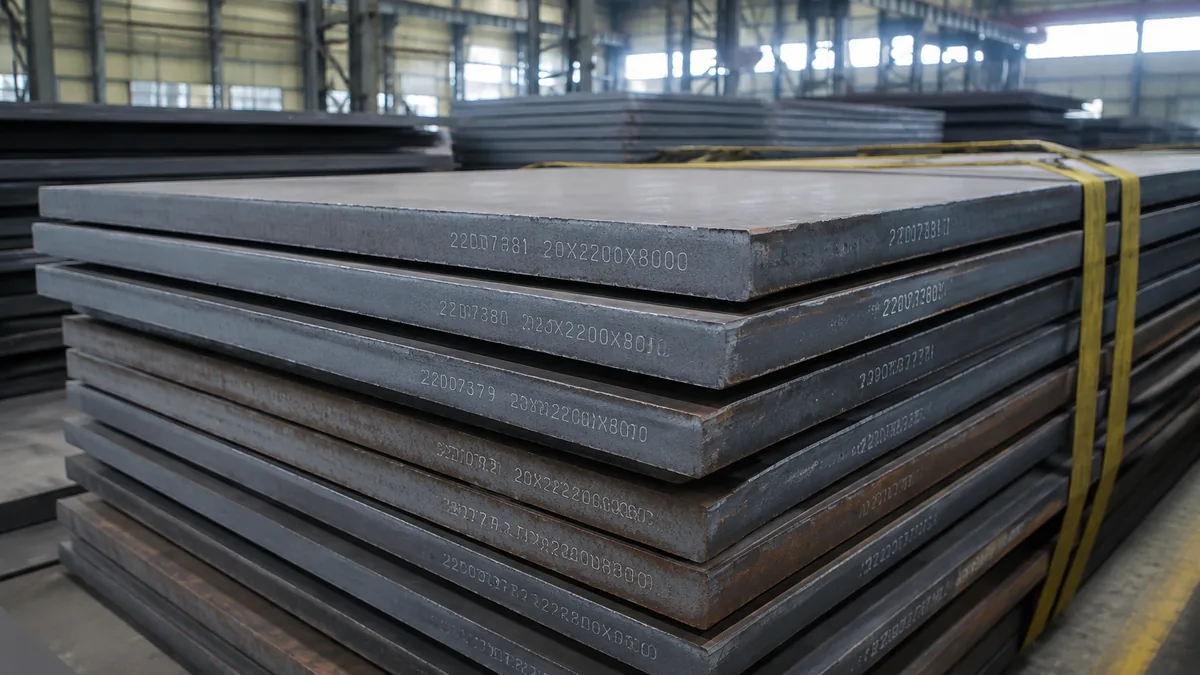
Introduction
Choosing between API 5L and ASTM A53 steel pipe by the words “Grade B” alone is a procurement risk. The grade label is only one part of the order. The applicable standard, edition, product level or type, manufacturing route, dimensions, ends, inspection requirements, marking, documents, and intended service all affect what the mill must supply and what the buyer can accept.
API 5L and ASTM A53/A53M overlap in some product forms, but they do not create a universal replacement rule. API 5L is written for line pipe used in pipeline transportation systems. ASTM A53/A53M covers black and hot-dipped galvanized welded and seamless pipe for mechanical and pressure applications and ordinary steam, water, gas, and air lines within its stated scope.
This guide turns that scope difference into an RFQ and inspection workflow for EPC teams, importers, and project buyers.
API 5L vs ASTM A53 at a Glance
The safest comparison starts with what the project is ordering, not which grade name looks similar.
| Buyer checkpoint | API 5L | ASTM A53/A53M | RFQ implication |
|---|---|---|---|
| Core scope | Seamless and welded steel line pipe for pipeline transportation systems | Black and hot-dipped galvanized welded and seamless steel pipe for mechanical, pressure, and ordinary utility uses within scope | State the service and governing project specification before selecting the material standard |
| Product classification | Two product specification levels: PSL1 and PSL2 | Type F furnace-butt-welded, Type E electric-resistance-welded, and Type S seamless, with grades as applicable | Write the PSL or A53 type instead of ordering only “Grade B” |
| Manufacturing route | Seamless or an accepted welded route, subject to the ordered requirements | Defined seamless and welded types | Confirm the route, not just “welded pipe” |
| Finish and delivery condition | Project and ordered-edition dependent | Black or hot-dipped galvanized within the standard scope, plus ordered options | State coating, surface, ends, and any supplementary requirement |
| Acceptance evidence | Inspection, testing, marking, and traceability must align with the order | Testing, inspection, and purchaser requirements must align with the order | Define records, hold points, MTC, markings, and release criteria before production |
| Substitution | Not established by a similar grade label | Not established by a similar grade label | Require written permission and an objective compliance matrix for any proposed substitute |
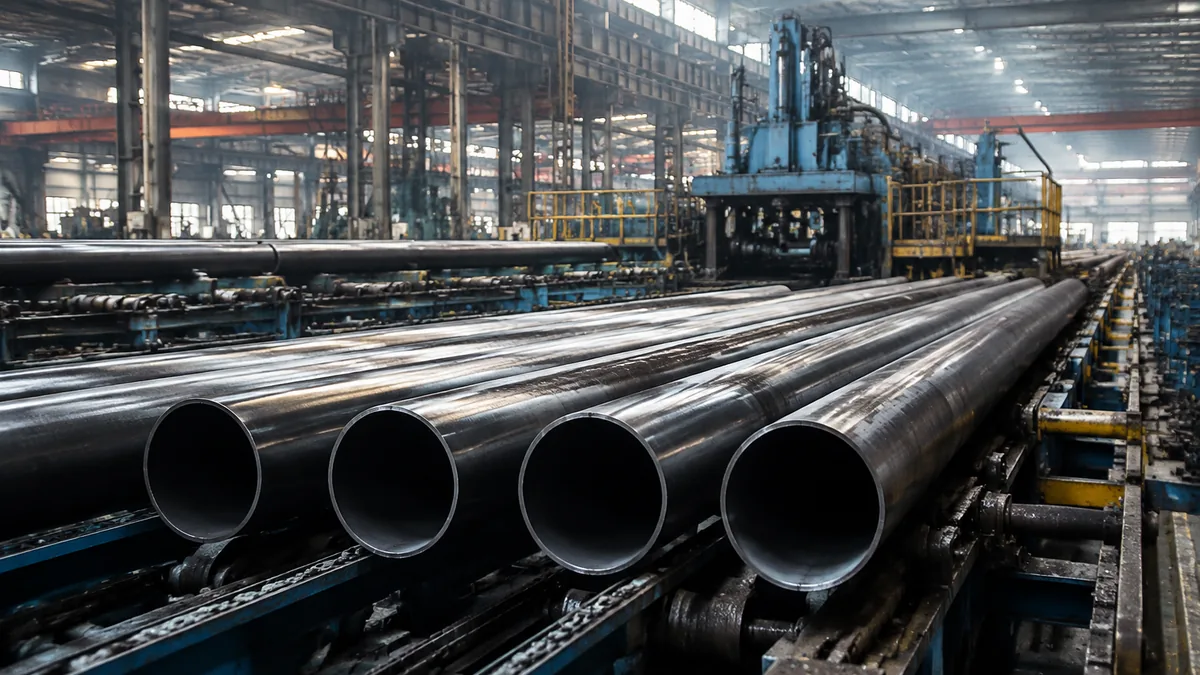
If the project is considering A53 pipe, the A53 carbon steel pipe product page provides a useful product reference. For line-pipe grade context, buyers can also review the X42 carbon steel pipe page. Product pages help define the enquiry, but the purchase order and project specification remain controlling.
Start With the Service and Project Specification
Use this decision sequence before asking a supplier to compare prices:
- Identify the intended service, design basis, applicable code, and client or EPC material specification.
- Confirm the material standard and edition named by the project.
- Select the required grade, PSL or pipe type, and manufacturing route.
- Define OD, wall thickness, length, tolerances, ends, coating or surface condition, and quantity.
- Add service-related and project-specific testing, inspection, marking, traceability, and document requirements.
- State who may approve deviations and what evidence a proposed alternative must contain.
This sequence prevents a common mistake: asking whether API 5L or ASTM A53 is “better” before defining what the pipe must do. A line-pipe project may expressly require API 5L, a specific PSL, and added project controls. A mechanical or utility application may name ASTM A53/A53M and an applicable type. Neither decision should be reversed by a supplier because another pipe happens to be in stock.
The current edition also matters. API announced the 47th edition of API Spec 5L in June 2026, but a project does not automatically change editions when a standards body publishes an update. Record the edition required by the contract, engineering documents, and purchaser. If those documents conflict, obtain a written clarification before the mill starts.
For a broader view of how the site handles specification control, see the steel standards and quality page.
What API 5L PSL1 and PSL2 Change for Buyers
API identifies two product specification levels, PSL1 and PSL2. For procurement, the important point is that “API 5L Grade B” is incomplete when the project expects a specific PSL. PSL is not a marketing quality label that the sales desk should choose after receiving the order.
Write the required PSL into the RFQ, quotation, purchase order, inspection plan, and MTC request. Then check the ordered edition and project supplements for the exact chemistry, mechanical, testing, traceability, and documentation controls that apply to the selected grade, size, manufacturing route, and service.
Avoid generic statements such as “PSL2 always includes every advanced test.” Impact, sour-service, nondestructive examination, and other requirements can depend on the standard edition, grade, pipe form, size, service condition, and project specification. The RFQ should name required supplementary or project tests instead of assuming that the letters PSL2 communicate the entire inspection package.
A usable API 5L line-pipe description therefore looks more like this:
API 5L, ordered edition, grade, PSL, manufacturing route, OD × wall thickness × length, end finish, coating, quantity, inspection and test plan, document package, marking, packing, and destination.
The buyer should also say whether mill qualification, licensing status, third-party witnessing, document pre-approval, or purchaser hold points are required. These are commercial and scheduling inputs as well as technical inputs.
Pipe Type, Manufacturing Route, Dimensions, and Ends
ASTM A53/A53M identifies Type F, Type E, and Type S pipe. API 5L covers seamless and accepted welded pipe routes. An RFQ that says only “welded carbon steel pipe” leaves too much room for interpretation.
Confirm at least the following:
- standard, edition, grade, PSL or A53 type;
- seamless or the specific permitted welded route;
- outside diameter or NPS/DN designation and actual wall requirement;
- ordered length and permitted length range;
- end condition, such as plain, beveled, threaded, or coupled when applicable;
- black, galvanized, coated, lined, or otherwise protected surface condition;
- dimensional tolerances and any project additions;
- required end protectors, caps, separators, bundling, and lifting method.
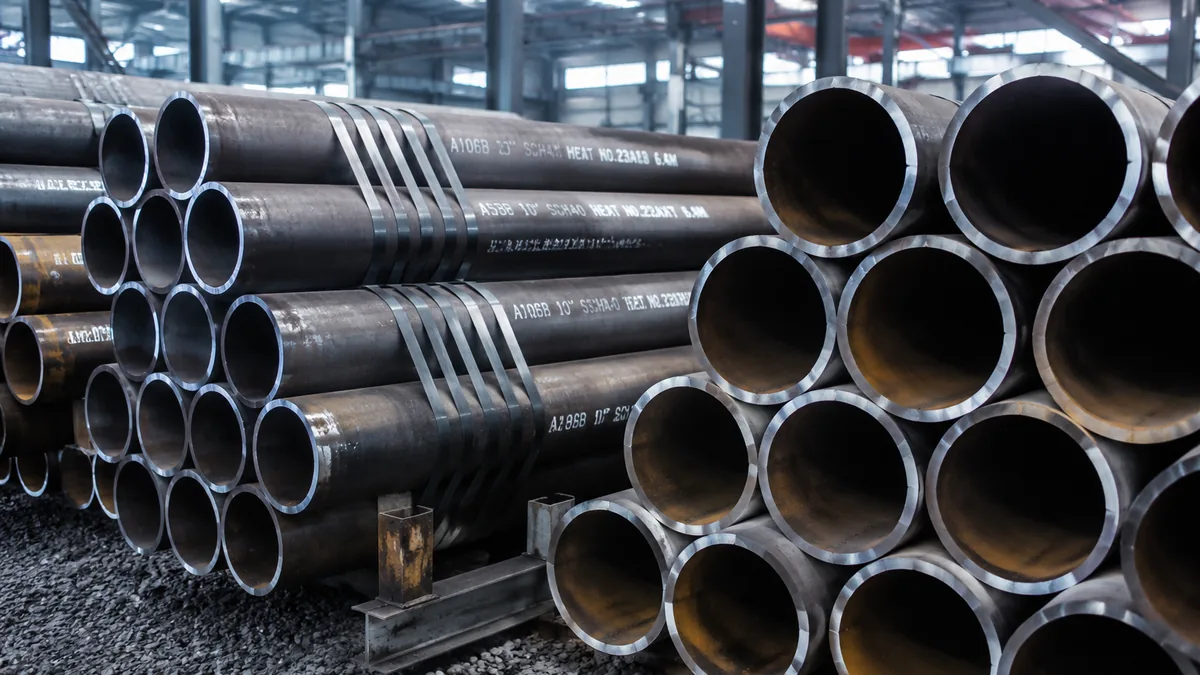
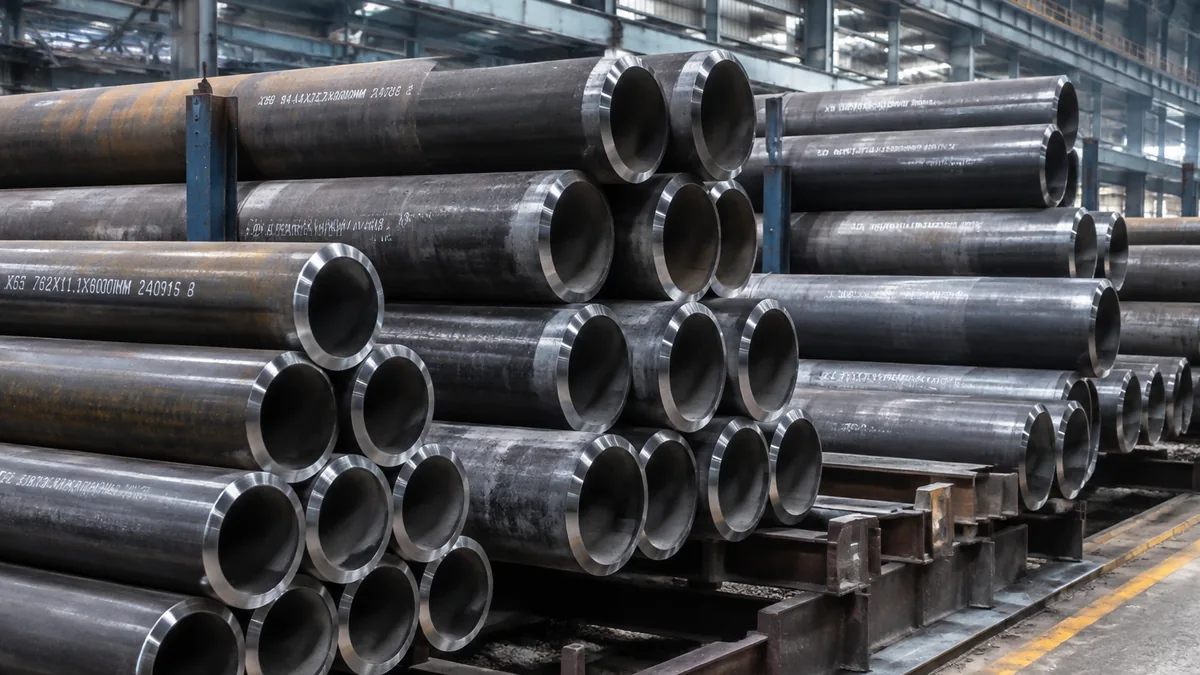
Manufacturing route affects the inspection focus. Seamless pipe still needs checks for wall distribution, surface condition, dimensions, heat treatment where applicable, and traceability. Welded pipe requires the buyer to align the accepted process and weld-seam inspection evidence with the order. The seamless versus welded steel pipe inspection checklist expands on these route-specific checks.
Do not let schedule notation replace dimensions. A quoted schedule can be useful, but the PO should make the governing dimensional standard and actual OD/wall requirement unambiguous. This is especially important when a project mixes inch and metric documents.
Inspection Documents, Testing, and Traceability
The acceptance file should tell one consistent story from the purchase order to the physical pipe. Buyers commonly request an MTC, often an EN 10204 3.1 document when the project specifies it, together with supporting inspection and test records.
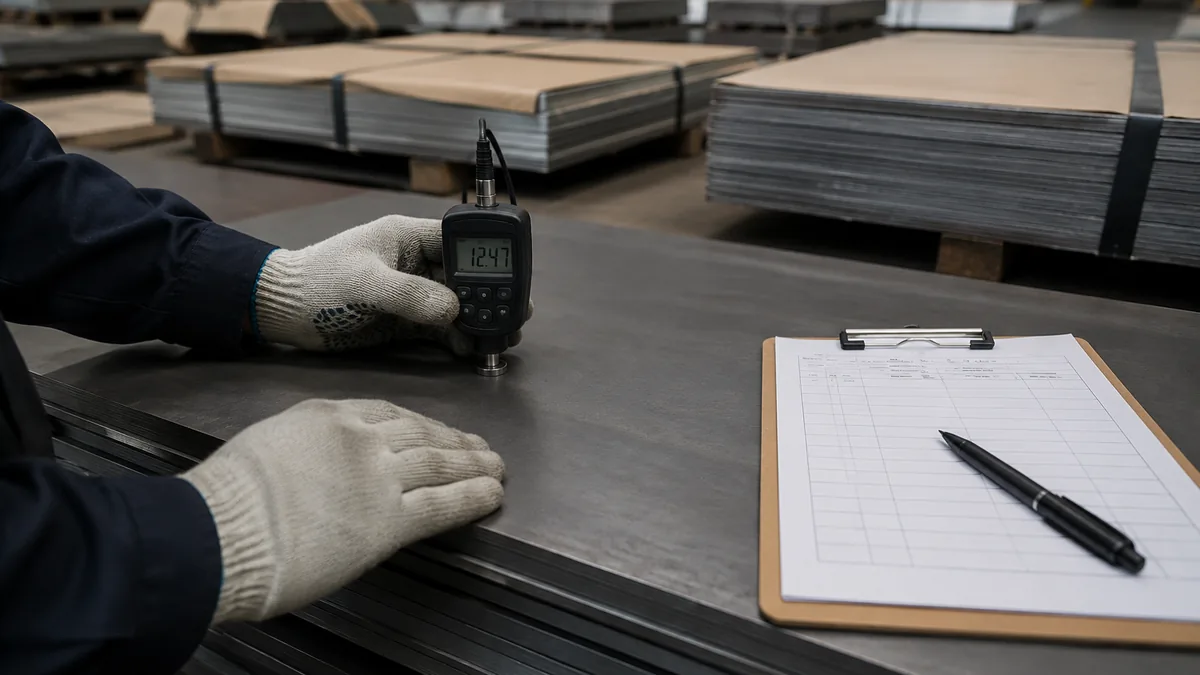
Before shipment release, check these links in the evidence chain:
| Evidence | Buyer check | Typical mismatch to stop |
|---|---|---|
| Purchase order and approved data sheet | Standard, edition, grade, PSL/type, dimensions, route, ends, coating, tests, and documents agree | Quotation says PSL2 but PO or MTC omits the PSL |
| MTC | Heat, product description, ordered standard, grade, dimensions, and reported results align with the order | Certificate belongs to a different heat, size, route, or standard |
| Pipe and bundle marking | Required identification is legible and traceable to the document set | Bundle tag and pipe marking cannot be mapped to the MTC |
| Dimensional report | OD, wall, length, straightness, ends, and other ordered dimensions were checked using defined sampling | Report lists only nominal dimensions or an unidentified lot |
| Test and NDT reports | Required method, scope, result, equipment status, personnel approval, and item identity are present where applicable | Generic report has no heat, pipe, weld, or lot traceability |
| Packing list and release note | Quantities, bundle numbers, weights, and document references match the shipment | Accepted test lot cannot be reconciled to loaded bundles |
EN 10204 defines inspection-document types for metallic products, but writing “MTC required” is still not precise enough. State the required document type and contents before production. The MTC verification guide provides a practical heat-number and shipment matching workflow.
Photographs can support a release file, but they are not substitutes for objective records. A clear pipe marking photo is useful only when the marking can be connected to the heat, inspection results, packing list, and actual shipment.
Can ASTM A53 Grade B Replace API 5L Grade B?
Not by default. The shared “Grade B” name does not prove that the scopes, product classifications, manufacturing controls, dimensions, chemistry, mechanical requirements, tests, marking, traceability, or documents all match the project.
A substitution or dual/multiple-marking proposal should pass two gates:
- Permission: the project specification, purchaser, client, or authorized engineer explicitly permits the alternative or approves the deviation in writing.
- Objective evidence: a requirement-by-requirement matrix and traceable test/document package demonstrate compliance with every ordered requirement for the actual pipe being supplied.
The comparison matrix should cite the ordered editions and project supplements, identify every difference, and name the evidence used to close each requirement. “Mill says equivalent,” “same yield strength,” “dual stamped,” or “used on another project” is not enough.
If the project does not permit substitution, the answer is no even when a supplier believes its stock could pass both standards. If permission exists but the evidence has a gap, keep the proposal open and do not release the material until the gap is resolved by the authorized party.
Common Buyer Mistakes to Avoid
A recurring RFQ failure pattern is a request for “Grade B pipe, best price.” It cannot be quoted responsibly because it leaves the standard, PSL or type, manufacturing route, size, inspection package, and service undefined. The lowest number returned may describe a different acceptance basis.
Avoid these mistakes:
- Comparing only grade names. Grade labels must be read inside their own standard, edition, and product classification.
- Letting stock availability choose the standard. An available pipe is useful only when the project accepts it and compliance is demonstrated.
- Using PSL2 as a substitute for an inspection plan. State every required project test, witness point, report, and release document.
- Requesting an MTC after production. Certificate type and required contents can affect mill routing, testing, and review time.
- Approving dual marking from a pipe stencil. Marking is one traceability element, not the complete evidence package.
- Ignoring ends and packing. End damage, missing caps, poor separators, or unsafe lifting points can make conforming pipe difficult to fabricate or receive.
- Mixing quotation revisions. Freeze the approved technical offer and attach it to the PO so the final price does not silently change the scope.
The practical rule is simple: a compliant quote should be comparable line by line. If two offers use different PSLs, routes, tests, documents, coatings, or packing, their prices are not yet comparable.
RFQ Checklist for API 5L or ASTM A53 Pipe
Send the following information in one package:
- Project or end use, design basis, and applicable client material specification
- API 5L or ASTM A53/A53M, including the ordered edition
- Grade plus PSL1/PSL2 or A53 type, as applicable
- Seamless or accepted welded manufacturing route
- OD/NPS/DN, wall thickness or schedule with governing dimensional standard, and length
- End finish, coupling/thread requirement, and end protectors
- Black, galvanized, coated, lined, or other surface requirement
- Quantity by pieces, metres, or weight, plus permitted over/under delivery
- Required MTC type, including EN 10204 3.1 when specified by the project
- Required tests, NDT, inspection level, sampling, witness/hold points, and third-party scope
- Marking, heat and bundle traceability, report language, and document submission timing
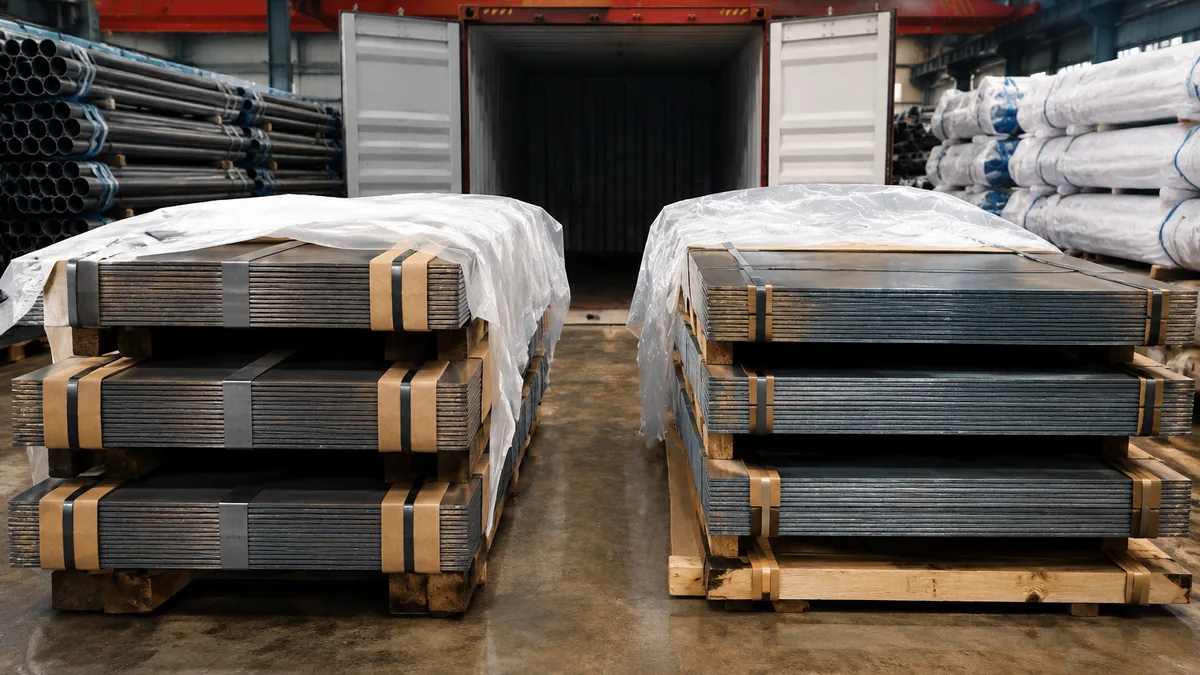
- Export packing, separators, caps, lifting method, shipping marks, and loading-photo requirement
- Incoterm, destination port, delivery window, and any unloading constraints
- Written deviation process and the authorized party for substitution decisions
Attach the material requisition, data sheet, applicable drawing, bill of quantities, and inspection plan where available. A supplier can then return a clear compliance statement, deviations list, document schedule, and commercial offer instead of guessing the acceptance basis.
Conclusion
API 5L versus ASTM A53 is not a contest between two Grade B labels. It is a decision about scope, service, PSL or type, manufacturing route, inspection evidence, traceability, and project permission.
Start with the governing project documents, write the full pipe description into the RFQ, and require objective evidence for any proposed substitution or dual marking. If you want a mill-linked quotation, send the standard and edition, grade, PSL/type, dimensions, route, test and MTC requirements, quantity, packing, and destination through the request-a-quote page. The technical offer can then be reviewed against one defined acceptance basis before price comparison.