








Introduction
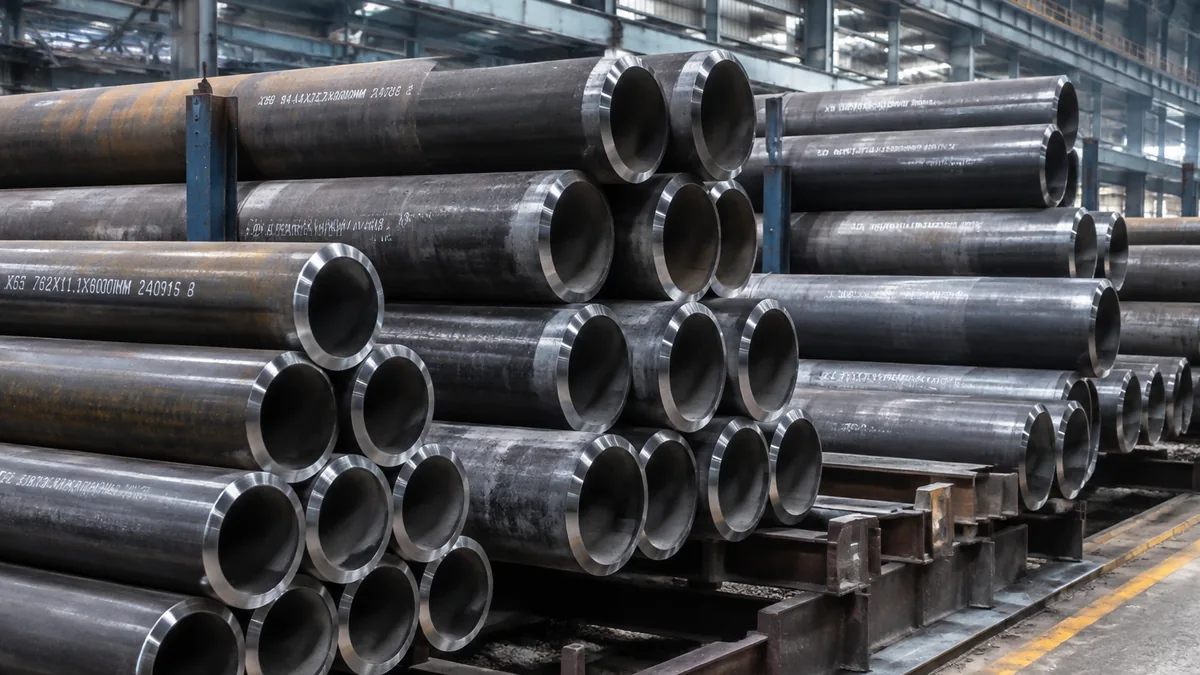
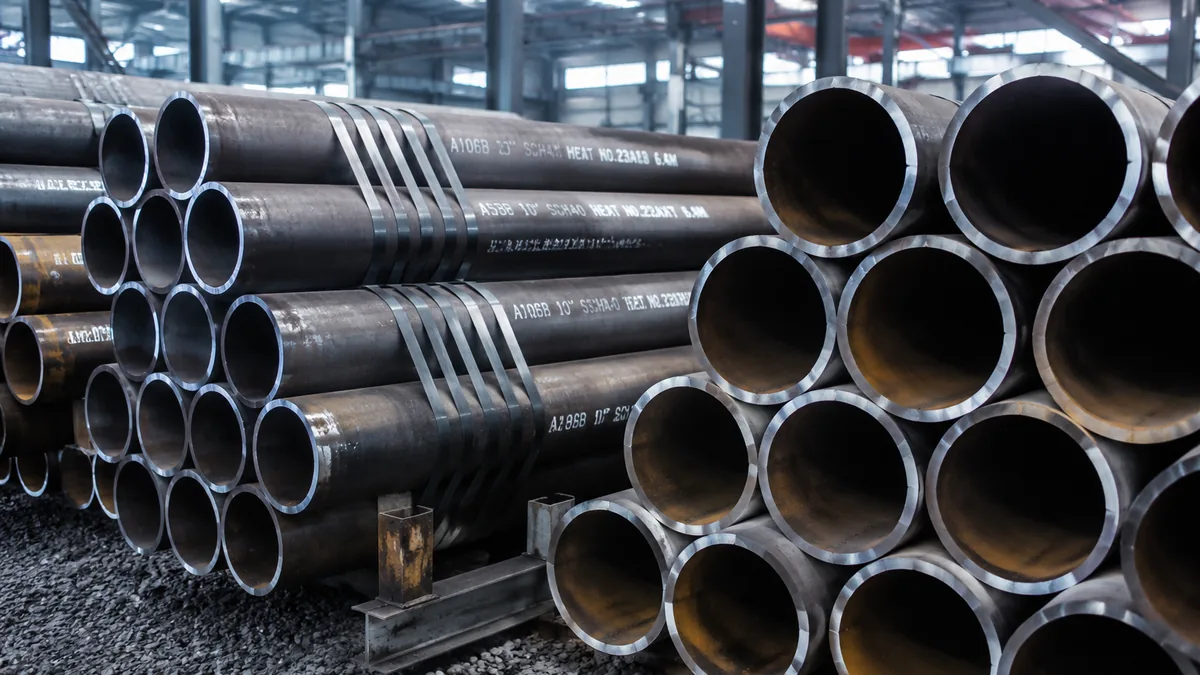
China mills often quote one seamless bundle as ASTM A53 Grade B / ASTM A106 Grade B / API 5L Grade B. The unit price looks interchangeable. The drawing usually names only one of those specifications.
This guide is for importers who buy carbon steel pipe from China against ASTM process or utility bills of materials. It is procurement guidance, not a substitute for the ordered edition of ASTM A106/A106M or ASTM A53/A53M, and not an approval to dual-stamp a substitute. If the project is line pipe, start with the API 5L vs ASTM A53 buyer guide. If you still need to freeze seamless versus welded as a manufacturing route, use the seamless vs welded inspection checklist.
What The Two Specifications Actually Cover
ASTM A106/A106M is a seamless carbon steel pipe specification for high-temperature service. The current ASTM scope text covers NPS 1/8 to NPS 48 with nominal walls as given in ASME B36.10M, and it allows other dimensions if the rest of the specification is met. The pipe is intended to be suitable for bending, flanging, similar forming, and welding. Grades A, B, and C sit in this family. Grade B is the commercial default on most export quotes.
ASTM A53/A53M covers seamless and welded black and hot-dipped galvanized steel pipe in NPS 1/8 to NPS 26. It is intended for mechanical and pressure applications and for ordinary steam, water, gas, and air lines. The specification names three types:
- Type F: furnace-butt-welded, continuous welded, Grades A and B
- Type E: electric-resistance-welded, Grades A and B
- Type S: seamless, Grades A and B
Type F is not intended for flanging. When close coiling or cold bending is required, Grade A is the preferred A53 grade; that note does not ban cold bending of Grade B.
| Buyer checkpoint | ASTM A106/A106M | ASTM A53/A53M | What to write in the RFQ |
|---|---|---|---|
| Core scope | Seamless pipe for high-temperature service | Black or galvanized welded and seamless pipe for mechanical, pressure, and ordinary utility lines | Named specification, not “Grade B pipe” |
| Manufacturing route | Seamless only | Type F, Type E, or Type S | A106, or A53 plus the type letter |
| Size window in the ASTM scope text | NPS 1/8 to NPS 48 | NPS 1/8 to NPS 26 | NPS or OD x wall, schedule, and length |
| Coating | Not a galvanized-pipe specification | Black or hot-dipped galvanized within scope | Bare, black, or HDG, stated |
| Typical substitution risk | Dual-stamped A53 Type S offered as A106 | Welded Type E offered against an A106 or Type S line | Ordered specification plus “no silent dual stamp” |
| Certificate string | ASTM A106/A106M, grade, seamless, heat | ASTM A53/A53M, type, grade, heat | EN 10204 3.1 MTC with the exact string |
Product pages for A106 GRB carbon steel pipe and A53 carbon steel pipe help frame an enquiry. The purchase order still has to name one specification, one type if A53 is used, and one edition.
A53 Type F, Type E, And Type S
An A53 order without a type letter is incomplete. Type F is furnace-butt-welded continuous welded pipe and is not intended for flanging. Type E is electric-resistance-welded. Type S is seamless. The mill cannot choose the type after the price is agreed.
A106 has no type letter because the specification is seamless only. If the drawing says A106, Type E is not a fill-in. If the drawing says A53 and the service is ordinary water or fire protection, Type E is often the intended commercial pipe. Write the type on the RFQ, the proforma, the packing list, and the MTC request.
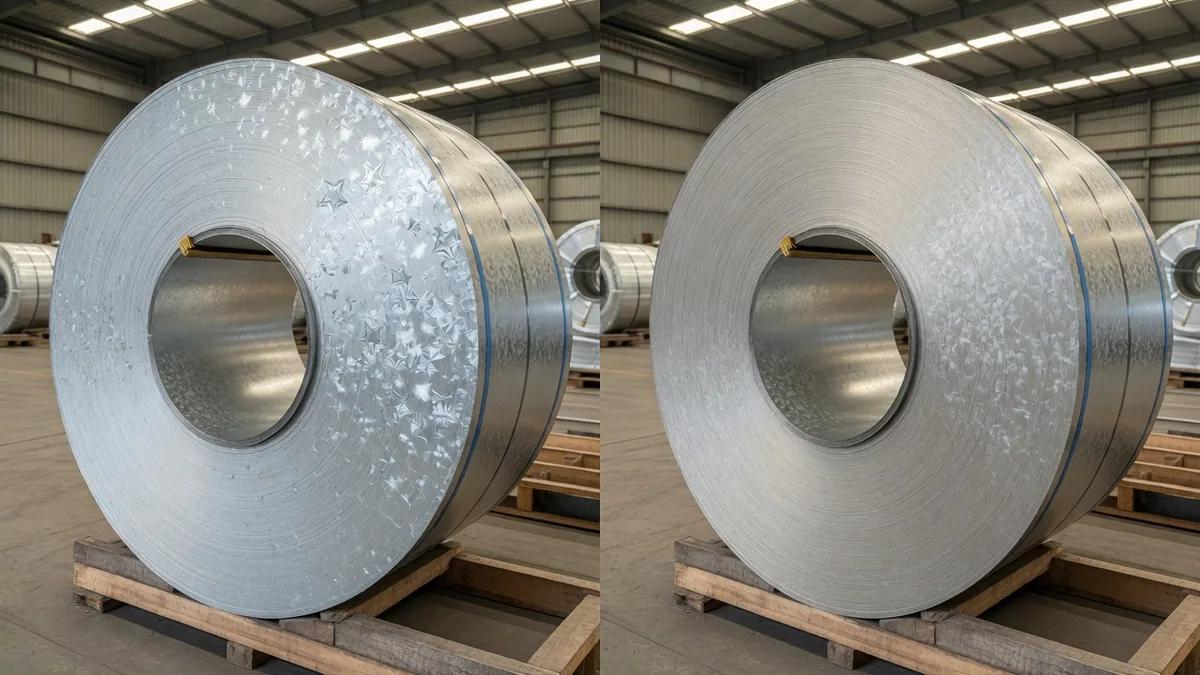
Galvanizing is an A53 option. Hot-dipped zinc coating belongs on an A53 line when the project asked for it. It does not convert A53 Type E into A106 process pipe.
Why Dual-Stamp Quotes Appear
Many seamless mills roll one heat to a chemistry that can be certified to A53 Type S, A106, and API 5L Grade B on the same MTC. Sales then print all three names on the offer. The mill is selling manufacturing convenience. The project is buying one specification.
Other patterns we see on first lots:
- The RFQ says “seamless Grade B” without ASTM A106 or ASTM A53 and without Type E or Type S.
- Stock A53 Type E is offered against an A106 line because both say Grade B.
- Galvanized A53 is offered on a high-temperature process enquiry that named A106.
- The stencil shows A106/A53/API 5L and the MTC heat chemistry fails the silicon row the A106 edition requires.
A dual-stamped pipe can be a legitimate A106 pipe when it meets the ordered A106 edition and the MTC says so. The failure is an undisclosed swap, or a certificate that names three standards when the drawing named one.
For line-pipe dual stamps, freeze PSL as well. The API 5L PSL1 vs PSL2 importer guide covers that split.
Silicon, Killed Steel, And Why Grade B Strength Is Not Enough
A106 is written for high-temperature service. Distributor and mill comparison tables commonly highlight a minimum silicon content on A106 Grade B that A53 Grade B does not carry in the same way. Silicon is part of killed-steel practice and heat resistance. Confirm the silicon row on the MTC against the ordered edition of ASTM A106/A106M. Do not assume a dual-stamped A53 Type S heat has that silicon just because the yield looks the same.
Grade B tensile and yield sit in the same nominal class on many mill tables, often quoted around 60,000 psi tensile and 35,000 psi yield. Matching those two numbers does not prove the pipe meets A106 chemistry, heat treatment, or test scope. Phosphorus and sulfur limits also differ by specification and edition. Read the actual table in the ordered text. Do not copy a mill brochure into the purchase order.
ASTM A106 notes possible graphitization in high-temperature service and asks the buyer to state the purpose of the pipe on the order. That sentence belongs on the RFQ. If the process engineer needs A106 because of temperature, an A53 Type S dual stamp without the A106 chemistry and test package is the wrong pipe.
Documents And Marking Checks Before Loading
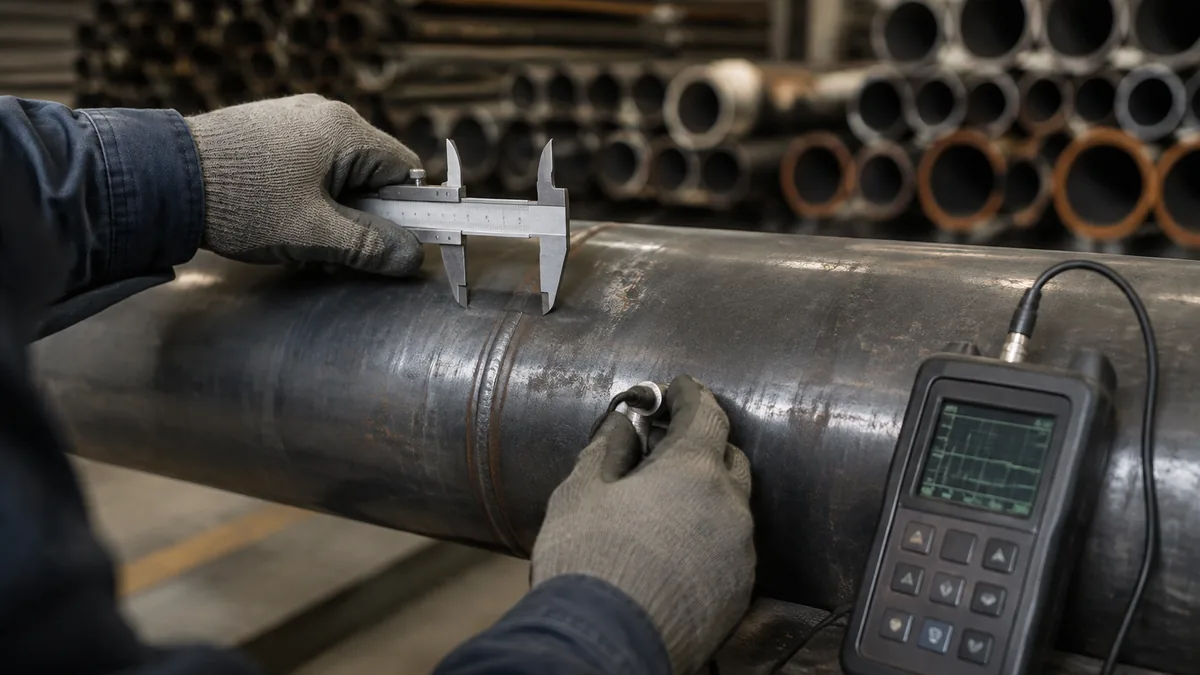
Use this sequence on first lots and on any order where the mill offered a dual stamp:
- PO shows ASTM A106/A106M Grade B seamless, or ASTM A53/A53M Grade B plus Type F, Type E, or Type S. Not “A106/A53.”
- EN 10204 3.1 MTC prints the same standard, type, and grade as the PO. Our EN 10204 3.1 checklist lists the fields a complete certificate should carry.
- Heat numbers on pipe bodies or bundles match the MTC and the packing list, using the same method as MTC verification before shipment.
- Silicon and other chemistry rows are present when A106 is ordered.
- Hydrostatic or permitted NDE substitute is recorded as the ordered specification requires.
- Galvanizing appears only when ASTM A53 and a zinc coating were ordered.
- End finish (PE, BE, threaded) matches the offer.
If the MTC says ASTM A53 Type E and the stencil says A106, hold the shipment.
RFQ Wording That Stops False Equivalence
Copy this block:
- Product: carbon steel pipe
- Either ASTM A106/A106M Grade B seamless [edition] or ASTM A53/A53M Grade B Type [F / E / S] [edition]. One specification per price column.
- Approved dual stamp only if named, with a separate price
- NPS or OD x wall, schedule, length, quantity, ends
- Surface: black, bare, or hot-dipped galvanized (A53 only when HDG is required)
- Purpose of the pipe (process, steam, water, structural) as ASTM A106 asks the order to state
- Tests: hydrostatic and any NDE, flattening, or bending required by the ordered text
- Documents: EN 10204 3.1 MTC with the exact specification string, heat-to-piece map
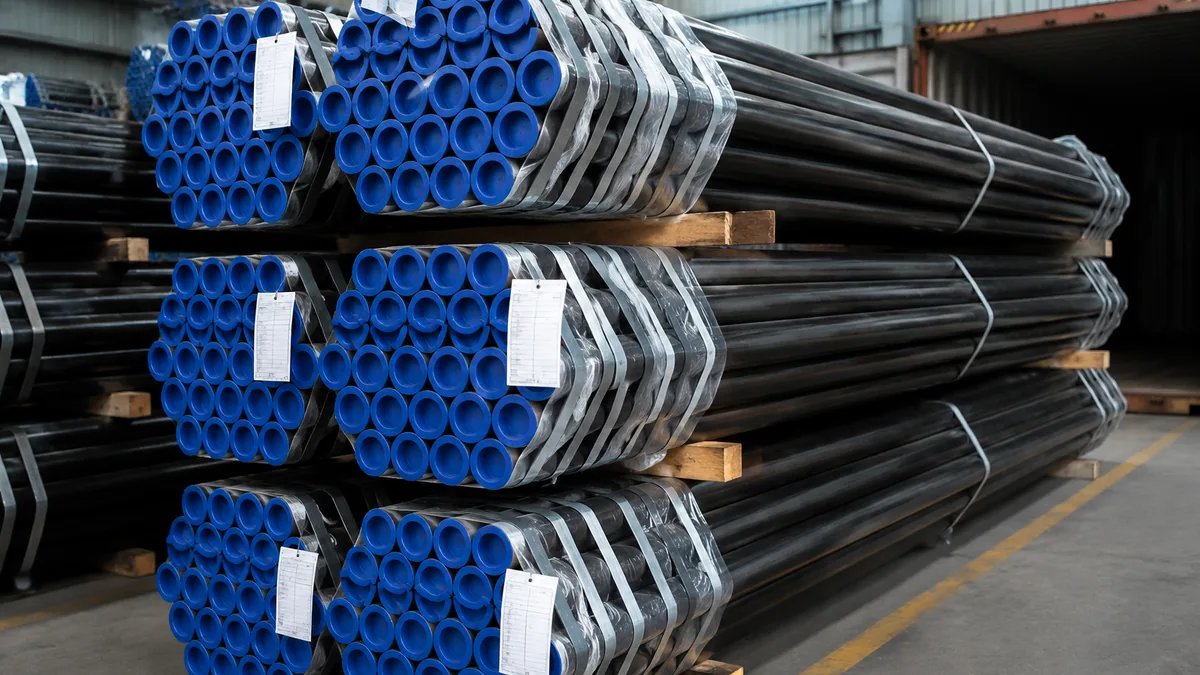
- Packing: end protectors, bundles, export marks
If two mills quote the same FOB price and only one can print a single-specification MTC, they are not the same offer. Rank them in separate columns.
Conclusion
A106 and A53 share a Grade B name. They do not share a scope. A106 is seamless high-temperature pipe. A53 is black or galvanized pipe in three manufacturing types for mechanical and ordinary utility service. Dual-stamp mill stock can meet more than one specification. The purchase order still has to name the one the drawing requires.
We quote carbon steel pipe with the ASTM specification and type written on the offer, and we align EN 10204 3.1 heat data, silicon rows when A106 is ordered, and packing marks before shipment. If you want comparable quotations, request a quote with ASTM A106/A106M or ASTM A53/A53M plus type, size, ends, coating, and destination document needs in the same message.