








Introduction: Navigating Global Cold Rolled Steel Specifications
Procurement managers, stamping fabricators, and steel distributors frequently encounter international project drawings citing different national standards for commercial quality cold rolled carbon steel sheet and coil. A stamping plant in Southeast Asia may require Japanese Industrial Standard JIS G 3141 SPCC, a European automotive subcontractor might specify EN 10130 DC01, while North and South American engineering packages standardise on ASTM A1008 CS Type B (or Chinese domestic standard GB/T 5213 DC01).
While these designations are frequently quoted as direct substitutes during trade negotiations, assuming automatic 100% interchangeability creates significant commercial risk. Differences in carbon ceilings, minimum elongation, temper rolling reductions, and surface roughness can result in edge cracking, orange peel defects, or rejected customs shipments.
Understanding these technical distinctions allows buyers to select practical engineering equivalents, optimize procurement costs, and source prime SPCC cold rolled steel coil specifications with confidence.
🧭 Cold Rolled Steel Sourcing Decision Flow
- Assess Forming & Drawing Severity:
- Moderate Bending & Light Stamping: Commercial Quality (
SPCC/DC01/ASTM A1008 CS Type B)- Deep Drawing & Appliance Shells: Drawing Quality (
SPCD/DC03/ASTM A1008 DS Type B)- Severe Stretch & Oil Pans: Extra Deep Drawing (
SPCE/DC04/ASTM A1008 DDS)- Specify Surface Condition: Matte / Dull 2B Finish ($Ra = 0.6\text{—}1.9\ \mu\text{m}$) + Light Protective Rust-Preventative Oiling
- Freeze Dimensional Tolerances: Thickness precision $\pm 0.02\text{—}0.04\text{ mm}$ & Coil ID $508\text{ mm}$
- Lock Container & Quality Terms: 1x20GP (25–28 MT) Seaworthy VCI Packing & EN 10204 3.1 MTC
Grade Comparison & Chemical Composition Limits
Quick Technical Summary (Featured Snippet Direct Answer):
JIS G 3141 SPCC, EN 10130 DC01, and ASTM A1008 CS Type B are practical commercial equivalents for general bending and stamping. However, DC01 enforces a tighter carbon ceiling (max 0.12%) compared to SPCC (max 0.15%), while ASTM A1008 CS Type B permits up to 0.02–0.15% carbon. None should be treated as absolute substitutes without verifying drawing depth and temper state.
When reviewing mill test certificates (MTC) and factory heat analyses, the chemical composition thresholds determine the steel’s weldability, hardness, and work hardening rate:
| Standard | Commercial Grade | Carbon (C) % max | Manganese (Mn) % max | Phosphorus (P) % max | Sulfur (S) % max | Deoxidation / Killed Status |
|---|---|---|---|---|---|---|
| JIS G 3141 | SPCC | 0.15 | 0.60 | 0.100 | 0.035 | Semi-killed or Killed |
| EN 10130 | DC01 (1.0330) | 0.12 | 0.60 | 0.045 | 0.045 | Fully Killed |
| ASTM A1008 / A1008M | CS Type B | 0.02 – 0.15 | 0.60 | 0.030 | 0.035 | Fully Killed / Semi-killed |
| GB/T 5213 | DC01 | 0.10 | 0.50 | 0.035 | 0.025 | Fully Killed Aluminum |
Metallurgical Observations for Procurement Desks:
- Phosphorus and Cleanliness: EN 10130 DC01 and GB/T 5213 enforce stricter phosphorus thresholds ($P \le 0.045%$ and $0.035%$) compared to standard JIS SPCC ($P \le 0.100%$), which enhances ductility and surface consistency during high-speed stamping.
- Deoxidation Control: While basic SPCC can technically be supplied as semi-killed steel under older mill practices, modern export coils from prime Chinese mills are continuously cast and fully aluminum-killed, aligning cleanly with European DC01 standards.
Mechanical Properties, Forming Ratings & Temper Designations
A critical divergence among standards is how mechanical properties are guaranteed. In JIS G 3141, standard commercial grade SPCC does not mandate yield strength or elongation guarantees in the standard specification unless specifically agreed upon during inquiry. In contrast, EN 10130 DC01 establishes strict mechanical boundary conditions for tensile strength and elongation ($A_{80}$):
| Grade Designation | Quality Class | Yield Strength ($R_{p0.2}$ MPa) | Tensile Strength ($R_m$ MPa) | Elongation ($A_{80}$ / $A_{50}$ %) min | Recommended Forming Application |
|---|---|---|---|---|---|
| SPCC / DC01 / A1008 CS-B | Commercial (CQ) | 140 – 280 (typical) | 270 – 410 | $\ge 28%$ ($A_{80}$) | General bending, flat panels, light pressing |
| SPCD / DC03 / A1008 DS-B | Drawing (DQ) | 140 – 240 | 270 – 370 | $\ge 34%$ ($A_{80}$) | Medium draw, automotive brackets, home appliances |
| SPCE / DC04 / A1008 DDS | Deep Drawing (DDQ) | 130 – 210 | 270 – 350 | $\ge 38%$ ($A_{80}$) | Severe deep drawing, compressor shells, oil pans |
| SPCF / DC05 / A1008 EDDS | Extra Deep Draw | $\le 180$ | 270 – 330 | $\ge 40%$ ($A_{80}$) | Non-aging complex multi-stage stretch forming |
Temper Rolling (Skin Pass) Codes:
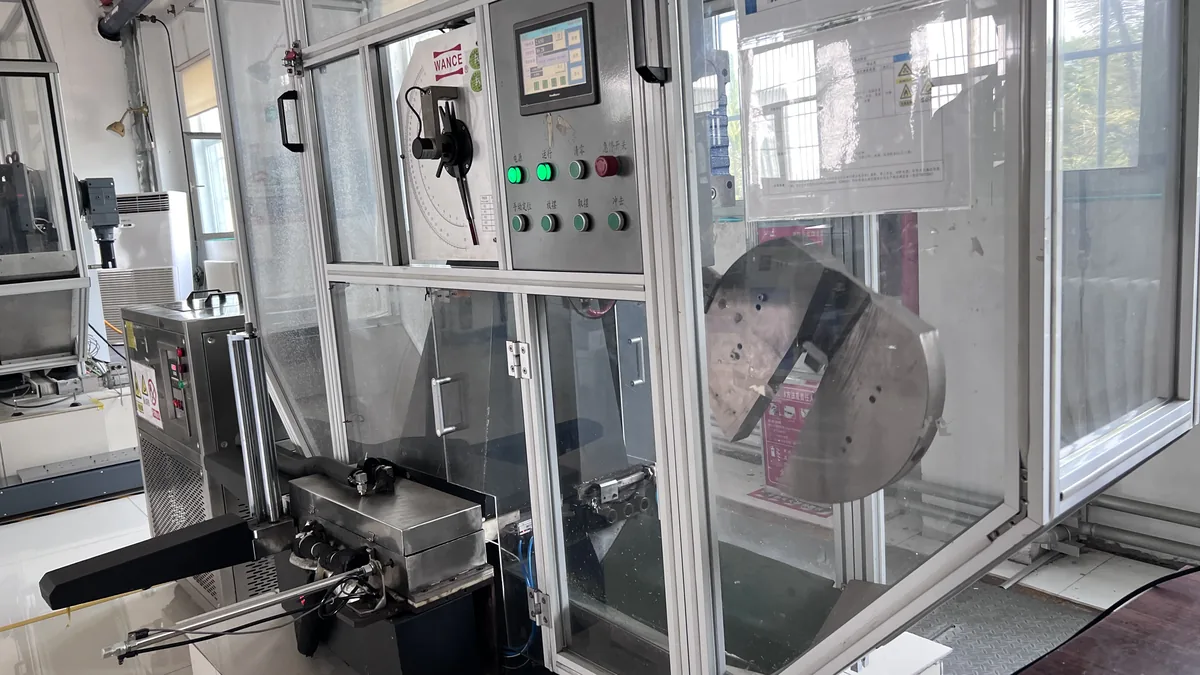
- Standard Annealed & Skin Passed (SPCC-S / DC01-A): Cold rolled sheet is annealed and given a light temper rolling pass (0.5%–1.5% reduction) to eliminate stretcher strain (Lüders bands) and achieve the target surface flatness.
- Hardness Classes: For non-forming structural requirements, cold rolled coils can be ordered in cold-worked temper states: 1/8 Hard (HRB 50–65), 1/4 Hard (HRB 65–75), 1/2 Hard (HRB 74–89), and Full Hard SPCC-1 / 1.0330 Full Hard (HRB $\ge 85$). For comparison with hot-rolled feedstock, see our hot rolled vs cold rolled steel coil guide.
Commercial Dimensional Tolerances & Surface Conditioning
When procuring export cold rolled coils, dimensional precision and surface oiling directly govern downstream processing yields:
- Thickness Precision:
- Standard precision: $\pm 0.03\text{ mm}$ for thickness $0.50\text{ mm} \le t \le 1.00\text{ mm}$;
- High-precision slitting: $\pm 0.015 mm to ±0.020 mm.
- Width & Coil Geometry:
- Standard widths: $914\text{ mm}$, $1000\text{ mm}$, $1200\text{ mm}$, $1219\text{ mm}$, and $1250\text{ mm}$ (slitted strips available down to $20\text{ mm}$).
- Internal Diameter (ID): $508\text{ mm}$ (standard) or $610\text{ mm}$.
- Coil Weight: $4.0\text{ to }8.0\text{ MT}$ per coil (optimized for container unloader cranes).
- Surface Roughness & Protection:
- Matte / Dull Finish (D / 2B): Roughness $Ra = 0.6\text{ to }1.9\text{ }\mu\text{m}$, engineered for optimal lubricant retention during stamping and superior paint/powder adhesion.
- Oiling: Coils are electrostatically oiled ($600\text{ to }1500\text{ mg/m}^2$ DOS or rust-preventative oil) to withstand 60–90 days of maritime shipping humidity. For galvanized options, consult our galvanized steel coil coating weight guide.
Seaworthy Export Packing & Mill Test Certificate (MTC 3.1)
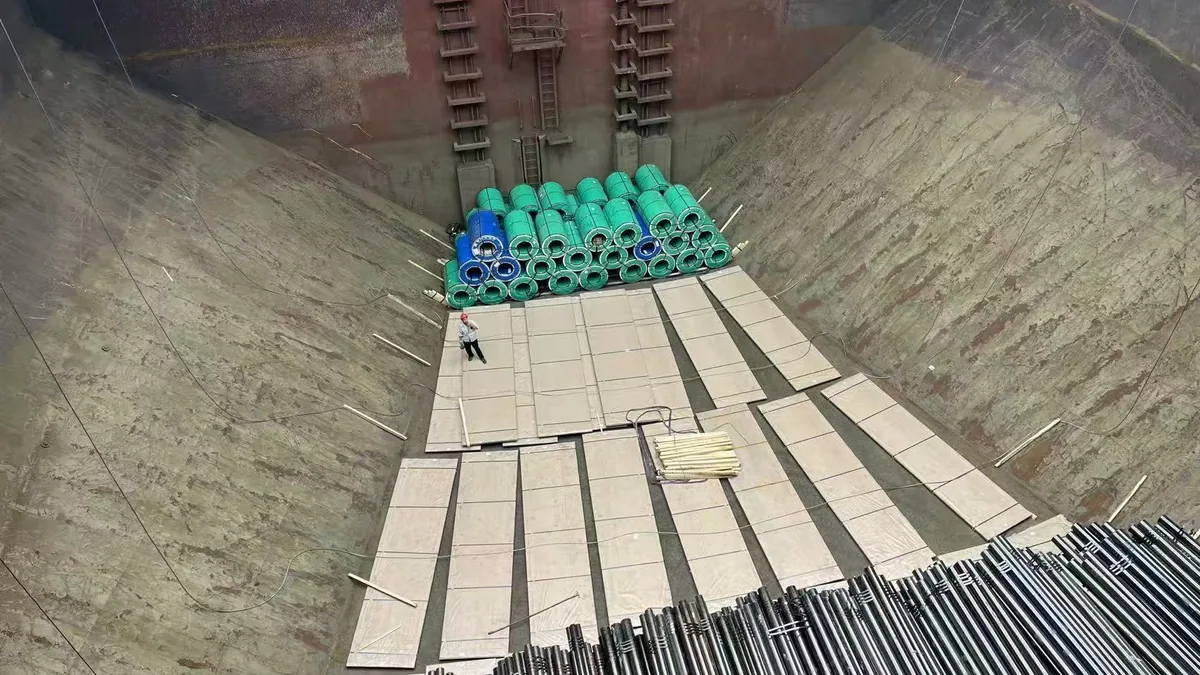
Cold rolled steel has an unprotected bare steel surface, making seaworthy anti-corrosion packaging vital during ocean voyages across high-humidity equatorial routes.
Multi-Layer Packaging Protocol:
- Layer 1: Neutral anti-rust VCI (Volatile Corrosion Inhibitor) paper wrapping.
- Layer 2: Heavy-duty waterproof polyethylene plastic film wrap.
- Layer 3: Galvanized steel inner and outer circumferential corner protectors plus side metal disks.
- Layer 4: At least 3 radial high-tensile steel strapping bands and 4 circumferential straps.
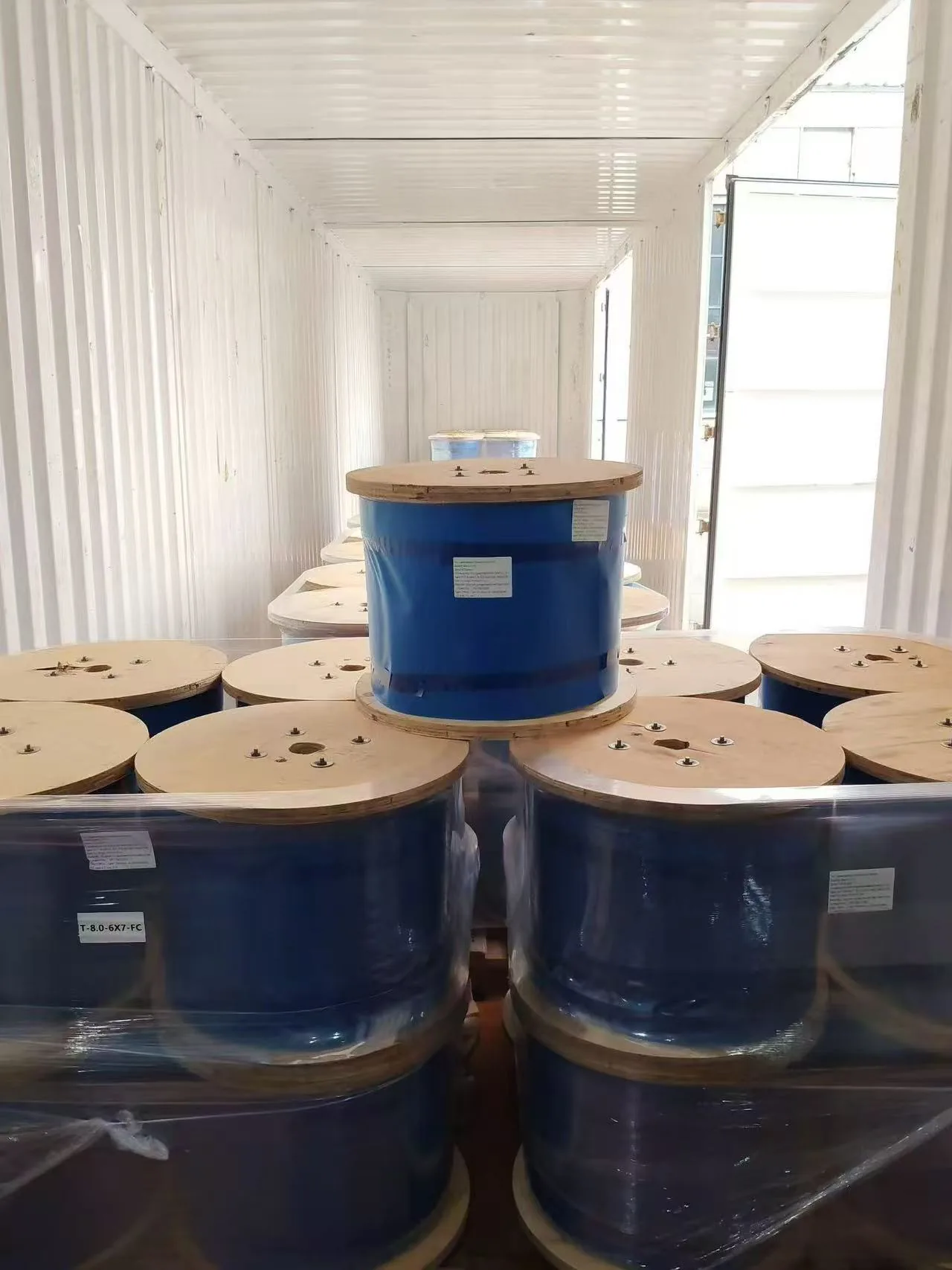
- Container Stowage: Coils loaded Eye-to-Sky on fumigated heavy wooden pallets or Eye-to-Wall in timber cradles with high-tensile wire rope lashing. Detailed lashing procedures can be reviewed in our steel export packing and rust prevention guide.
Quality Verification (MTC 3.1):
Every shipment is accompanied by a certified EN 10204 3.1 Mill Test Certificate providing full heat number traceability, actual ladle analysis (C, Si, Mn, P, S, Al), mechanical test values ($R_m, R_{p0.2}, A$), and dimensional verification. Buyers can verify authentic documentation protocols via our guide on how to verify steel mill test certificates.
Planning an Order or Need a Technical Verification?
If you are sourcing SPCC / DC01 / ASTM A1008 Cold Rolled Steel Coils or require technical drawing verification:
- Fast Technical Quote: Standard trial orders supported from 1 × 20GP container (25–28 MT) with 7–15 days dispatch for standard sizes ($0.50\text{—}2.0\text{mm} \times 1000/1219/1250\text{mm}$). Submit your grade and schedule via our Online RFQ Form.
- Quality Assurance: Every batch is backed by genuine EN 10204 3.1 Mill Test Certificates with full heat-lot traceability. Third-party inspections (SGS, BV, TUV) are welcomed.
- Urgent Inquiries: Contact our Shandong export desk directly on WhatsApp at +86 151 5311 2221 for instant specification confirmation.