








Introduction
When importers price 304 coil, sheet, plate, or pipe from China, a lower offer can hide a different alloy: 201 stainless sold under a vague “stainless” description, or even under a 304 label without matching chemistry. The surfaces can look similar. A magnet may not settle the argument. The commercial risk shows up later as early rust, rejected food-contact lots, weld problems, or a customer claim that the material is not what the project bought.
This guide is for buyers who need 201 vs 304 as a substitution-risk checklist, not a materials encyclopedia. It pairs grade differences with RFQ language, Mill Test Certificate (MTC) heat checks, and PMI/XRF sampling. Use it with the broader stainless sourcing from China guide and the 304 vs 316 sheet buyer guide when chloride service points toward molybdenum-bearing grades. It is procurement guidance, not a project design specification.
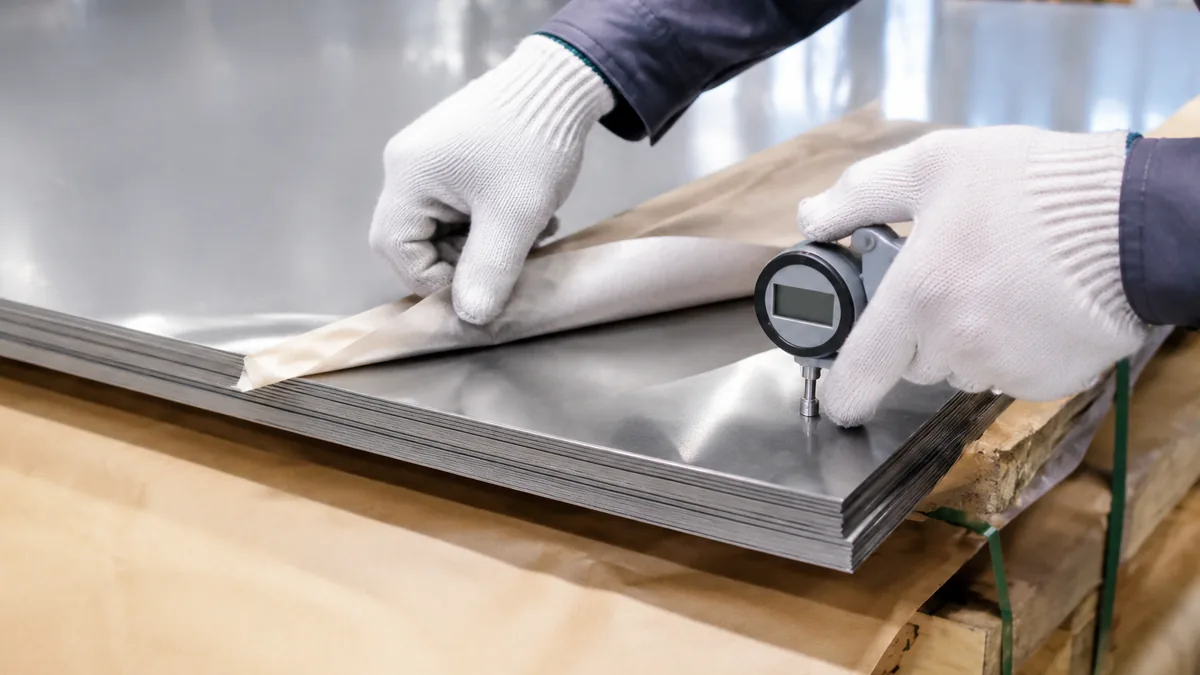
What Buyers Mean By 201 And 304
Both 201 and 304 are commonly supplied as austenitic stainless steels for sheet, coil, plate, strip, tube, and fabricated goods. 304 (and low-carbon 304L when welding rules demand it) is the default “18-8” commercial grade for many industrial, food-contact, and architectural orders. 201 is a 200-series grade that replaces part of the nickel with manganese and often nitrogen to cut alloy cost.
Industry references commonly describe commercial ranges in this direction (always confirm against the ordered standard edition, for example ASTM or EN product standards on the purchase order):
| Element / feature | 201 (typical commercial direction) | 304 (typical commercial direction) | Why buyers care |
|---|---|---|---|
| Chromium (Cr) | Often about 16 to 18% | Often about 18 to 20% | Corrosion film stability |
| Nickel (Ni) | Often about 3.5 to 5.5% | Often about 8 to 10.5% | Corrosion resistance and austenite stability |
| Manganese (Mn) | Often about 5.5 to 7.5% | Often max about 2% | Cost reduction vs nickel; PMI fingerprint |
| Carbon (C) | Higher allowance on many 201 sheets | Lower on 304; 304L tighter still | Welding and sensitization risk |
| Cost driver | Lower nickel | Higher nickel | 201 quotes can undercut 304 sharply |
| Corrosion expectation | Lower in wet/chloride service than 304 | Higher baseline for general service | Silent swap is a performance change |
Treat the table as a buyer decision aid, not a substitute for the chemical limits printed on the governing standard and heat analysis. Non-standard “200-series style” melts with even lower chromium also appear in some supply chains; those are not automatic equivalents to standardized 201 either.
Why Silent 201-For-304 Substitution Happens
Nickel is expensive relative to manganese. When an RFQ only says “stainless sheet” or “SS plate mirror finish” without grade, standard, and certificate type, suppliers can quote a cheaper 200-series product while the buyer still benchmarks price against 304. Other patterns:
- Labels or stickers say 304 while heat chemistry on the MTC shows low Ni and high Mn.
- Partial shipments mix 201 and 304 coils under one packing list line.
- Traders reuse a previous 304 MTC heat number on a different physical lot.
- Buyers accept a magnet test or surface color as grade proof.
201 is not “fake stainless” when it is sold as 201 for a suitable duty. The problem is undisclosed substitution against a 304 order or a project specification that assumes 300-series performance.
Performance Gaps That Matter In Import Projects
| Decision area | 201 buyer reality | 304 buyer reality | Substitution risk if mixed up |
|---|---|---|---|
| Outdoor / wet / coastal | Often shorter service life in aggressive moisture | Better general corrosion baseline | Early staining, pitting complaints |
| Food / hygienic equipment | Many projects and markets expect 304/304L or 316L | Common approved baseline for many hygienic designs | Spec rejection, rework |
| Chloride-bearing process fluids | Usually not the first choice | May still be insufficient vs 316; still better than 201 for many mild duties | Wrong alloy family entirely |
| Forming and strength | Higher work-hardening is common | Familiar forming window for many shops | Unexpected springback or cracking after forming |
| Welding | Can be harder on thicker or marginal 200-series melts | 304/304L widely practiced | Weld-adjacent failures if wrong grade was used |
| Price | Lower alloy cost | Higher alloy cost | “Too good” unit price is a red flag |
Nickel Institute commentary on 200-series alternatives stresses that grade choice must follow application demand: lower corrosion resistance, more difficult welding in some cases, and the need to investigate before switching from 300-series defaults. Some low-chromium 200-series products are not standardized and face food-contact restrictions in certain markets. Confirm destination rules separately; do not treat this article as legal or food-contact approval advice.
Red Flags And Verification Before Loading
Do not rely on color, shine, or a pocket magnet. Use document and chemistry checks:
| Checkpoint | What to require | Red flag |
|---|---|---|
| Purchase order grade | Explicit 201 or 304 / 304L plus product standard | Only “stainless” or “SS” without grade |
| MTC chemistry | Heat analysis with Cr, Ni, Mn (and others required by standard) | Ni near 201 range on a 304 order |
| Heat number map | Same heat on MTC, tags, packing list, photos | Mismatched or missing heat marks |
| Certificate type | EN 10204 3.1 or project-required document type | “Typical values” without heat data |
| PMI / XRF sampling | Spot checks on coils/plates/pipes for grade-critical lots | Supplier blocks sampling |
| Price vs market | 304 quote far below peer 304 offers | Possible 201 economics under a 304 label |
| End-use honesty | 201 quoted openly for dry indoor trim, etc. | 201 pushed as “same as 304” for wet service |
PMI / XRF (Positive Material Identification with X-ray fluorescence) is a practical field tool to separate many 201 vs 304 lots by nickel and manganese patterns. It does not replace heat-linked MTCs, and it may not fully resolve carbon or every light element. For welded critical service, buyers sometimes add laboratory analysis or optical emission methods. Pair instrument checks with the MTC verification checklist and, when needed, pre-shipment inspection scope.
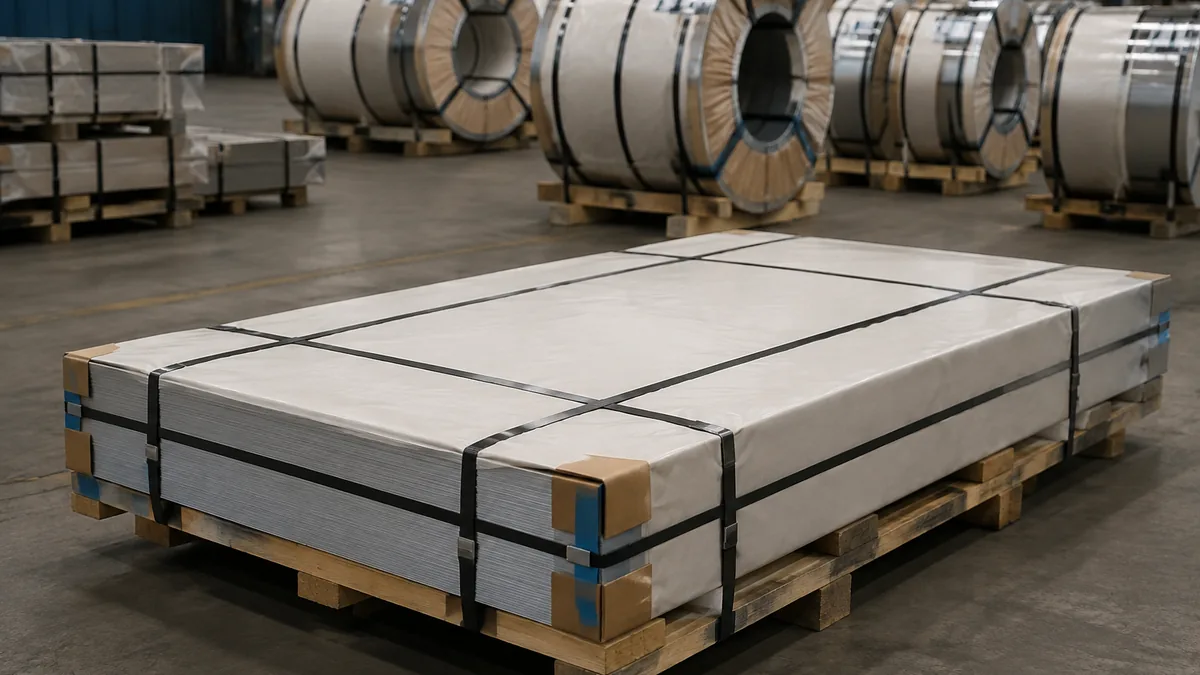
RFQ Details That Prevent Misquoting
Write the grade decision so every supplier answers the same question:
- Product form: coil, sheet, plate, pipe, bar, or fabricated part.
- Exact grade: 201, 304, or 304L (do not accept silent dual marking without chemistry proof).
- Governing standard and edition (for example ASTM or EN product standard as required by the project).
- Size, tolerance, surface finish (2B, BA, No.1, HL, polished grit, and so on).
- Quantity, packing, marking, and destination.
- Certificate: EN 10204 3.1 MTC with heat chemistry, or project alternative.
- Explicit line: No substitution of 201 for 304 without written buyer approval.
- Optional: PMI/XRF sampling plan, hold-before-loading rights, and third-party PSI.
For stainless specification hygiene more broadly, see how to source stainless from China without specification mistakes. When chloride resistance is the real driver, compare upward to 304 vs 316 sheet selection rather than shopping only on 201 vs 304 price. Product pages such as 201 stainless steel coil, 201 stainless steel plate, and 304L stainless steel coil still need the same heat-level evidence once the grade is frozen.
First-hand procurement practice that stops late disputes: freeze grade + standard + MTC type + anti-substitution clause before price ranking. On first orders or large lots, add a small PMI sample plan against packing-list heats before container release. If the only “proof” offered is a magnet photo, treat the offer as incomplete.
Specify the grade before quotation
201 and 304 are different commercial grades. 201 can be the right cost choice when the environment is mild and the grade is named honestly. 304 remains the safer default for many wet, hygienic, and general industrial imports. The expensive failure mode is not “using 201”; it is paying for 304 while receiving 201.
If you are preparing a stainless RFQ and want comparable quotes that already state grade, standard, finish, packing, and certificate scope, request a quote with those fields fixed. Clear specification language makes 201-for-304 substitution harder to hide and easier to catch before shipment.