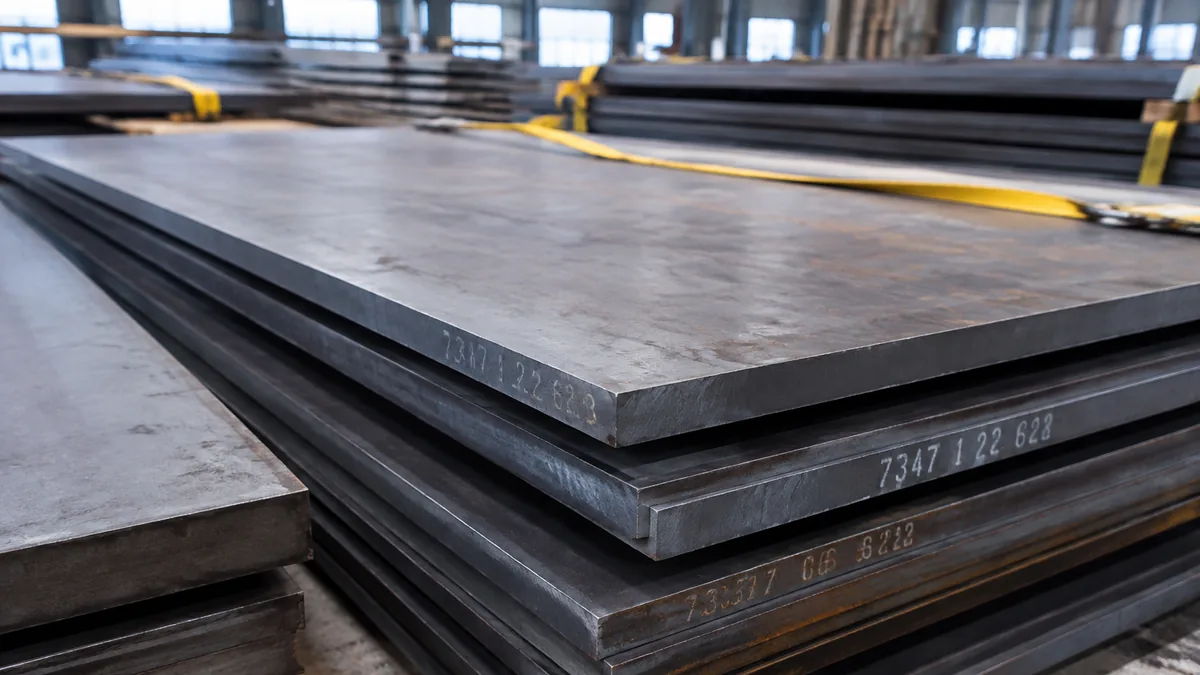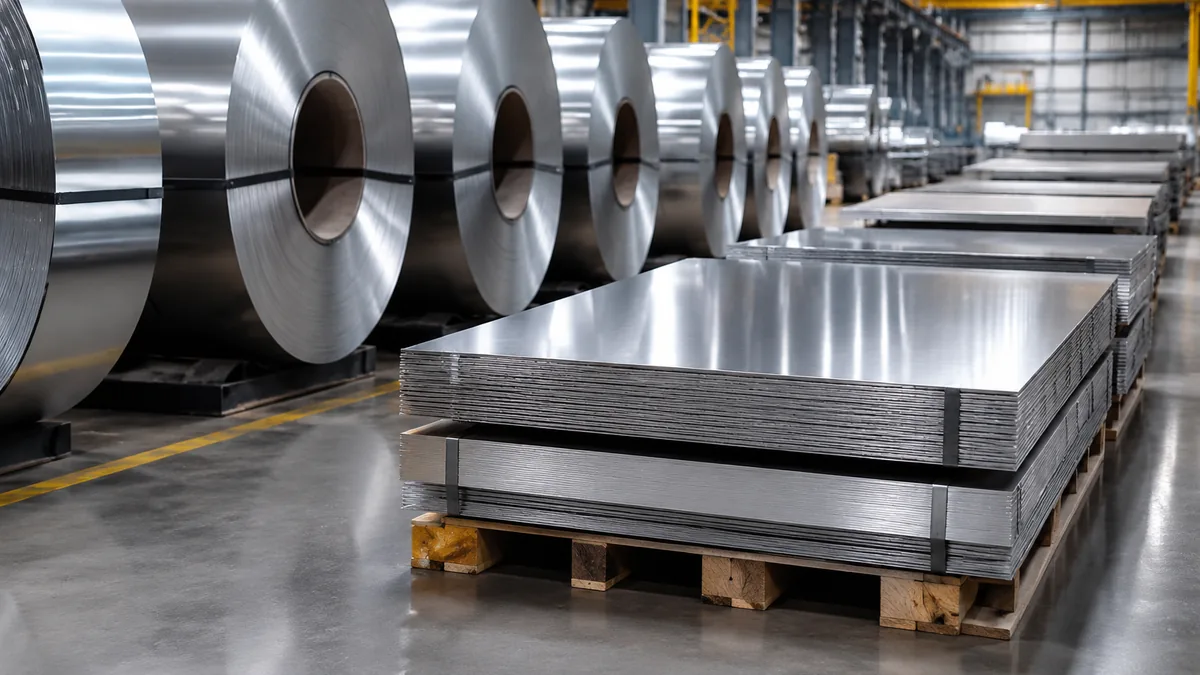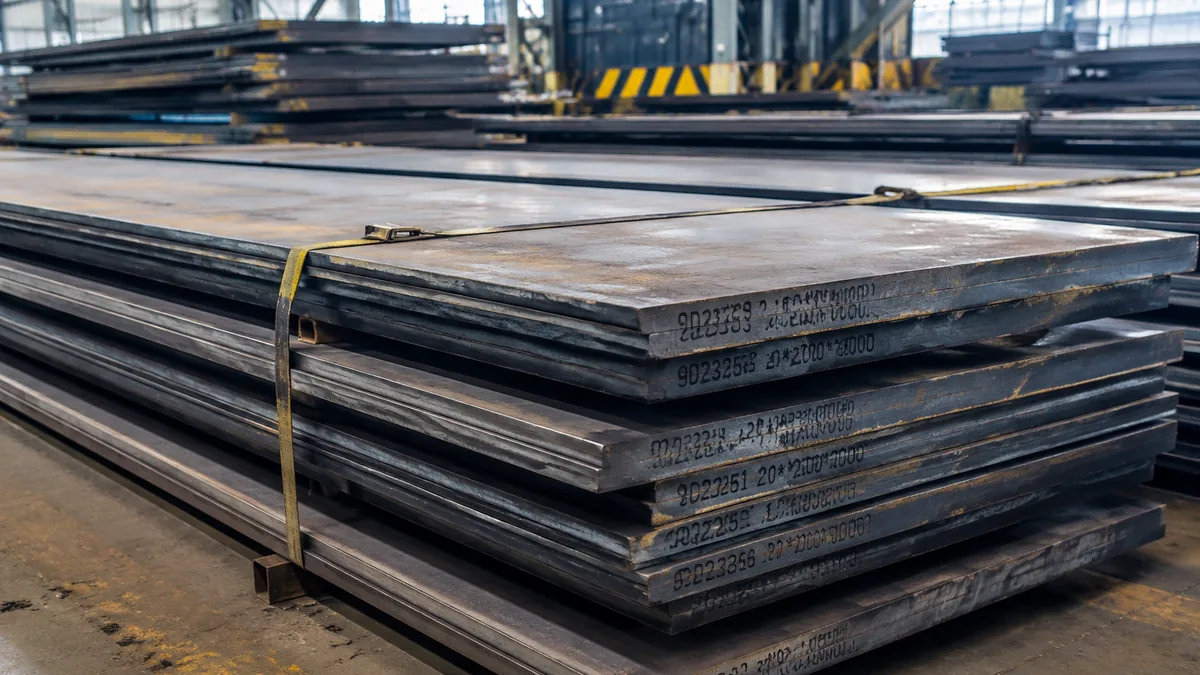









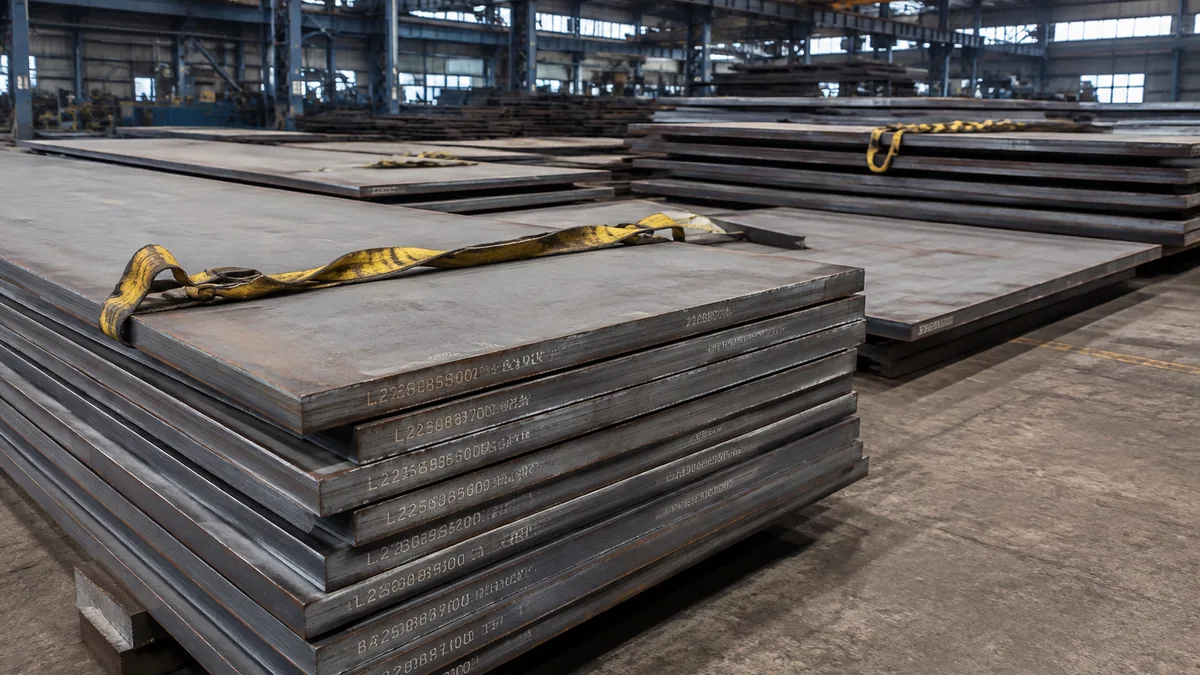
Introduction
Many CIS and international buyers receive drawings or BOMs that still reference GOST St3sp (Ст3сп) practice, while Chinese mills quote Q235B under GB/T 700 and European packages call S235JR under EN 10025-2. The three names sit in the same mild structural family, but they are not a free swap.
This guide is for importers, project buyers, and traders who need Chinese supply against mixed drawing languages. It is a procurement cross-reference, not a design code and not legal or sanctions advice. We do not discuss shipping Russian-origin steel into restricted markets. The practical question is simpler: when a drawing or client still speaks GOST language, how do you RFQ Chinese structural plate, coil, or sections without inventing “full equivalence”?
Related grade comparisons already on the site include ASTM A36 vs S235JR and Q235 vs ASTM A36. This article focuses on the S235JR / Q235B / St3sp triangle that appears on CIS-linked packages.
Buyer Snapshot: Three Names, One Family
All three grades are low-carbon structural steels used for general construction, welded and bolted members, and common sections at ambient service. Industry cross-reference tables often list them together. That is a starting map, not a blank approval.
| Buyer checkpoint | S235JR (EN 10025-2) | Q235B (GB/T 700) | St3sp (GOST 380 family / product GOSTs) |
|---|---|---|---|
| Naming idea | S = structural; 235 = min yield class (MPa) for thin gauges; JR = impact class | Q = yield class in Chinese naming; 235 = yield class; B = quality grade with impact | St3 = common structural carbon grade; sp = killed (fully deoxidized) practice |
| Typical thin-gauge min yield | About 235 MPa for t ≤ 16 mm (then steps down with thickness) | About 235 MPa for t ≤ 16 mm (then steps down) | Often about 245 MPa for thinner plate bands, then about 235 / 225 MPa in thicker bands (confirm product standard) |
| Typical tensile band (common flats) | About 360-510 MPa | About 370-500 MPa | About 370-480 MPa (product standard dependent) |
| Impact idea (common structural quality) | Charpy V, about 27 J at +20 °C for JR | Charpy V, about 27 J at +20 °C for grade B | Often different impact methods/categories; do not assume the same JR/B package |
| Buyer risk if “equivalent only” | EN package missing on MTC | Chinese grade shipped without drawing owner approval | Drawing expects GOST chemistry or test style not on the Chinese MTC |
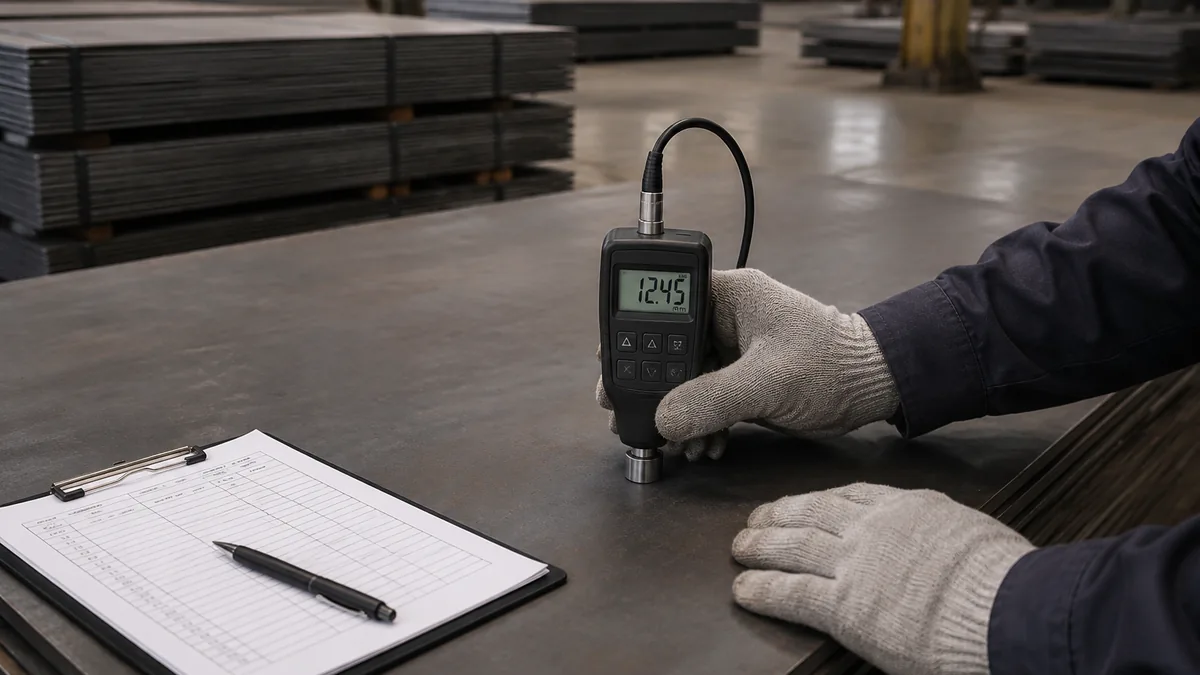
Exact limits depend on thickness, product form (plate, coil, section), and the edition of the ordered standard. Always read the mill table on the proforma invoice and the MTC, not a website summary alone.
How To Read Each Grade Name
S235JR under EN 10025-2
S235JR is a European non-alloy structural steel. Buyers care about three tokens: the 235 yield class for thinner material, the JR impact quality (commonly associated with about 27 J at +20 °C Charpy V), and the product standard EN 10025-2. Delivery condition notes (for example as-rolled language on the order) still belong on the RFQ.
Q235B under GB/T 700
Q235B is the Chinese carbon structural grade most often offered when export buyers ask for “S235 class” material from China. Grade B is the quality level that normally brings room-temperature impact control in mill practice for structural supply. Chemistry and mechanical ranges are close to S235JR for many commercial thicknesses, which is why substitution talk is common. Close is not automatic.
St3sp in GOST language
St3sp (Ст3сп) is a standard-grade carbon structural steel under the GOST 380 family, used with product standards such as plate standards in the GOST system. The sp suffix marks killed steel, preferred for welded load-bearing members versus rimmed or semi-killed variants. Mechanical tables and impact categories can follow different product GOSTs. Treat “St3sp” on a drawing as a specification family, then map tests and thickness bands to the Chinese offer line by line.
What “Equivalent” Can And Cannot Mean
Cross-reference tables help mills and traders start a conversation. They do not replace the ordered standard on the contract.
Safe buyer language:
- “Offer Q235B to GB/T 700 with full MTC. State any deviation from the St3sp / S235JR acceptance list.”
- “If the drawing says St3sp, list proposed Chinese grade, standard, thickness band, impact test, and deoxidation practice for engineer review.”
Unsafe buyer language:
- “Same as St3sp / fully equivalent / always accepted.”
For design-critical members, pressure parts, low temperature, seismic categories, or client-mandated GOST only packages, demand engineer-written substitution notes before production. For non-critical ambient structures, many packages still accept Q235B or S235JR after document review, but that is a project decision.
Thickness, Impact, And Deoxidation: Where Quotes Fail
Thickness bands change yield
All three systems reduce minimum yield as thickness rises. An RFQ that only says “S235 / Q235 / St3” without thickness or section size invites wrong tensile tables and wrong mill selection.
Impact is not a shared language by default
S235JR and Q235B commonly use Charpy V language at +20 °C for the JR/B quality story. GOST packages may use different impact specimen practice and category codes. If the client needs impact evidence, write the test method, temperature, direction, and minimum energy on the order. Do not assume the mill will invent a matching package.
Killed steel and weld intent
St3sp’s killed practice is a welding and structural-quality signal. On Chinese offers, ask the mill to state deoxidation / killed practice when the drawing or client care about it, and keep that statement on the PI and MTC trail.
MTC And Document Checklist
Before shipment, align documents with the purchase order the same way you would for any structural plate package. Use our guides on how to verify a steel mill test certificate before shipment and the EN 10204 3.1 certificate checklist when certificate type EN 10204 3.1 is ordered.
| Document check | What to confirm |
|---|---|
| Standard + grade | Same strings as the PO (for example Q235B + GB/T 700, or S235JR + EN 10025-2) |
| Heat number | Matches tags, stencils, and packing list |
| Size | Thickness or section size inside the mechanical table used |
| Chemistry | Within ordered limits; no silent grade upgrade/downgrade |
| Yield / tensile / elongation | Meet the ordered thickness band |
| Impact | Present when ordered; method and temperature stated |
| Certificate type | EN 10204 3.1 / MTC as ordered |
| Producing mill | Named party matches the commercial trail |
RFQ Fields That Keep Quotes Comparable
Freeze these items before you request a quote:
- Product form: plate, coil, sheet, angle, channel, beam, or other section
- Ordered standard and grade: S235JR / EN 10025-2, Q235B / GB/T 700, or client St3sp reference plus proposed Chinese supply grade
- Thickness or section size and quantity
- Delivery condition and surface expectation
- Impact requirement (method, temperature, energy) or “no impact”
- Deoxidation / killed steel note if the drawing cares
- Certificate type such as EN 10204 3.1
- Destination port, packing, and marking language
- Whether substitution needs written engineer approval
If you are sourcing plate stock, start from product pages such as A36 carbon steel plate only as a commercial catalogue entry, then rewrite the RFQ to the actual ordered standard. Catalogue nicknames are not a substitute for the drawing.
Common Sourcing Mistakes
| Mistake | Risk | Better practice |
|---|---|---|
| Treating “equivalent table” as contract | Claim and rejection at inspection | Engineer + PO define allowed substitutes |
| RFQ with grade only | Non-comparable mill offers | Add standard, size, impact, certificate |
| Ignoring thickness band | Wrong yield table on MTC | State thickness and acceptance table |
| Assuming impact tests match | Missing or wrong toughness evidence | Write method and temperature on the order |
| Mixing drawing language without mapping | Warehouse receives the wrong document set | Map GOST words to Chinese supply line item by item |
Conclusion
S235JR, Q235B, and GOST St3sp sit in the same mild structural family and often appear on the same commercial shortlist for CIS-linked and international work. They are approximate cross-references, not automatic twins. Win the order by freezing standard, thickness, impact, deoxidation, and certificate type, then reading the MTC against that freeze.
If you need a comparable offer for structural plate, coil, or sections under mixed EN / GB / GOST drawing language, request a quote with size, destination, ordered grade or allowed substitute list, and the certificate package you require.