








Introduction
China mills now quote Q355B on many structural plates, coils, and sections. European and Middle East drawings still say S355JR. The two names look close: both advertise a 355 MPa yield class. That is how a cheaper Q355B line enters a bid table that the designer wrote as EN 10025-2 S355JR.
This guide is for importers who buy Chinese carbon structural steel against EN drawings. It is procurement guidance, not a substitute for the ordered edition of EN 10025-2 or GB/T 1591, and not an approval to substitute grades. If the project is ASTM-based, start with the S355JR vs ASTM A572 Grade 50 buyer guide. If you are still on mild structural steel, use ASTM A36 vs S235JR first.
What The Two Names Actually Mean
S355JR is an EN 10025-2 non-alloy structural steel. S is structural. 355 is the yield class for the thinner thickness band. JR is the impact option letter. Related letters J0 and J2 are colder Charpy options on the same strength class. Delivery condition suffixes such as +AR, +N, or +M change the rolling and heat-treatment route.
Q355B is a Chinese GB/T 1591 high-strength low-alloy structural steel. Q marks yield. 355 is again the yield class for the thinner band. B is a quality letter in the A/B/C/D/E series. Those letters are not the same code as JR/J0/J2. GB/T 1591-2018 is the edition that put this 355 class under Q355. Older stock and trader lists still show Q345B.
| Buyer checkpoint | Q355B (GB/T 1591) | S355JR (EN 10025-2) | What to write in the RFQ |
|---|---|---|---|
| Specification home | Chinese structural projects and many China mill lists | EN drawings, CE-marked structural packages | Exact standard and edition |
| Yield class | 355 MPa class on thinner product; drops with thickness | Same idea under EN thickness steps | Thickness range, not only the grade name |
| Impact letter | B is one quality letter; A/C/D/E are different options | JR is the room-temperature Charpy option; J0 and J2 are colder | Impact temperature and energy if the drawing needs them |
| Typical substitution risk | Quoted against an S355JR MTO because both say 355 | Drawing says S355JR; mill ships Q355B or Q345B | Ordered grade plus “no silent alternate” |
| Certificate string | GB/T 1591, Q355B, heat, mechanicals | EN 10025-2, S355JR, heat, mechanicals, impact as ordered | EN 10204 3.1 MTC with the exact grade printed |
| Destination extras | Usually no CE mark unless separately contracted | EU structural work often needs CE / EN 10025-1 factory production control | CE requirement yes/no |
Do not convert 355 MPa into a license to swap systems. Thickness steps, CEV, deoxidation, and impact methods differ. Confirm them on the purchase order.
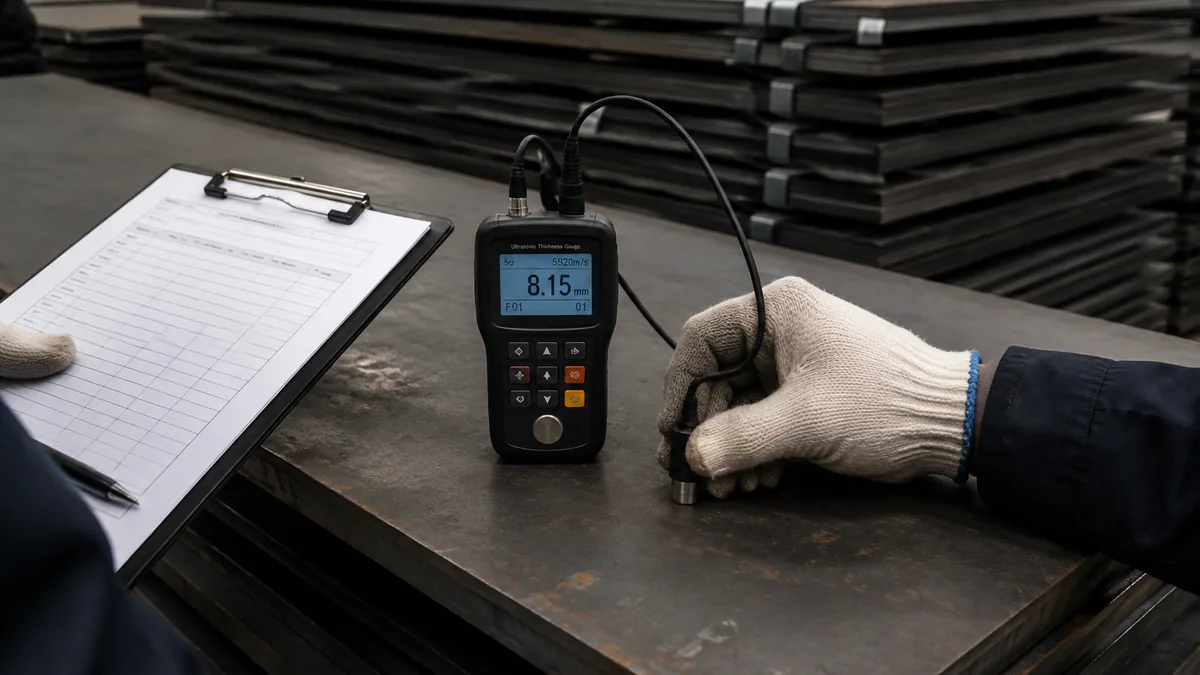
Site product pages for S355JR carbon steel plate and Q345B carbon steel plate help frame an enquiry. Q345B is the older commercial neighbour, not a third equivalent. The purchase order still has to name one standard.
Why Silent Q355B-For-S355JR Quotes Appear
After GB/T 1591-2018, many mills stopped rolling a “Q345” story and started offering Q355 as the default 355 class. Sales tables then line Q355B next to S355JR and A572 Grade 50. The unit price looks interchangeable. The MTC later shows a different standard string than the drawing.
Other patterns:
- The RFQ says “S355 plate” without JR/J0/J2, edition, or thickness.
- A trader reuses a previous S355JR certificate heat on a Q355B lot.
- The mill can meet a 355 MPa yield on thin plate but not the impact letter or the CE route the destination needs.
- Stock Q345B is offered as “same as S355.”
Q355B is a real grade when it is sold as Q355B against a GB drawing. The failure is an undisclosed swap against an EN 10025-2 S355JR line.
Impact Letters And Thickness: Where Substitution Breaks
EN 10025-2 buyers should freeze JR, J0, or J2. JR is the room-temperature Charpy option. J0 and J2 are specified when the design needs colder toughness. A Q355B quote that is silent on test temperature is not proof of JR, and it is not proof of J0.
GB/T 1591 quality letters A through E are a different ladder. Do not map B to JR by habit. Write the test temperature and the minimum absorbed energy on the RFQ if the project needs impact evidence.
Yield is thickness-dependent on both systems. A mill can show 355 MPa on a thin coupon and still fail the thicker step the MTO actually buys. State the thickness band, the product form (plate, coil, section), and whether the mechanicals are to be taken longitudinal or transverse as the ordered standard requires.
For EU landing of EN-named structural steel, ask whether CE marking and an EN 10025-1 factory production control file are required. A GB/T 1591 Q355B certificate does not create that file.
Document And Marking Checks Before Loading
Use this sequence on first lots and on any order where the mill offered Q355B against an S355 drawing:
- PO shows EN 10025-2 S355JR or GB/T 1591 Q355B, not “S355 / Q355.”
- EN 10204 3.1 MTC prints the same standard and grade as the PO.
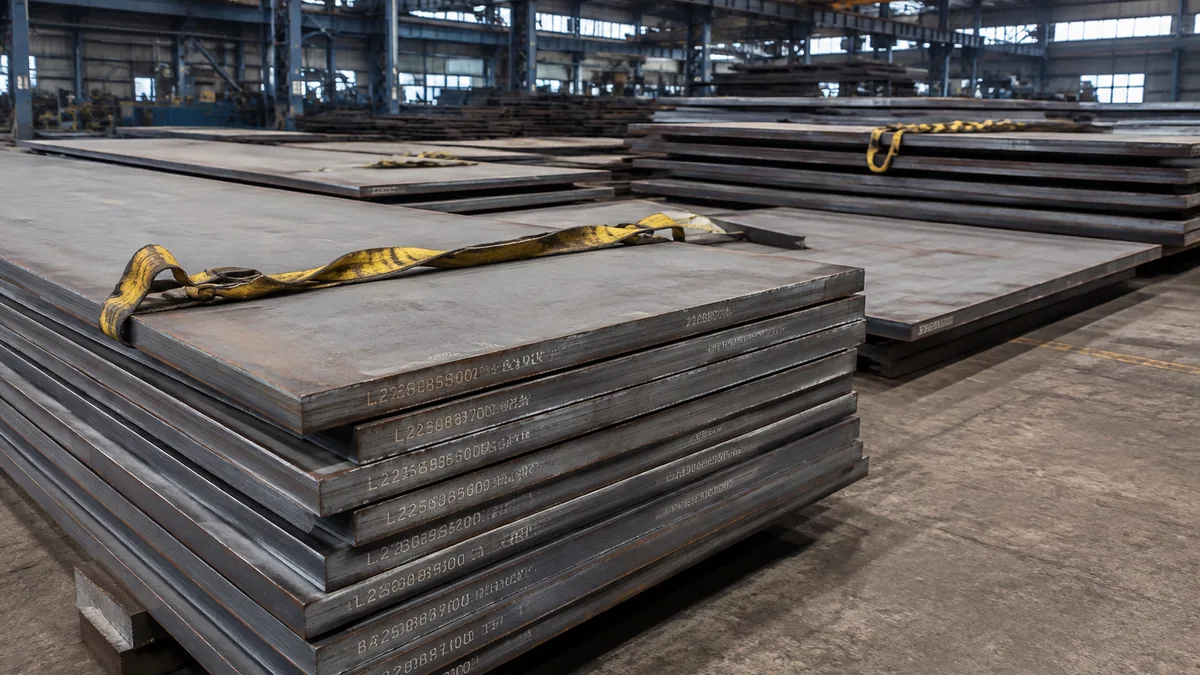
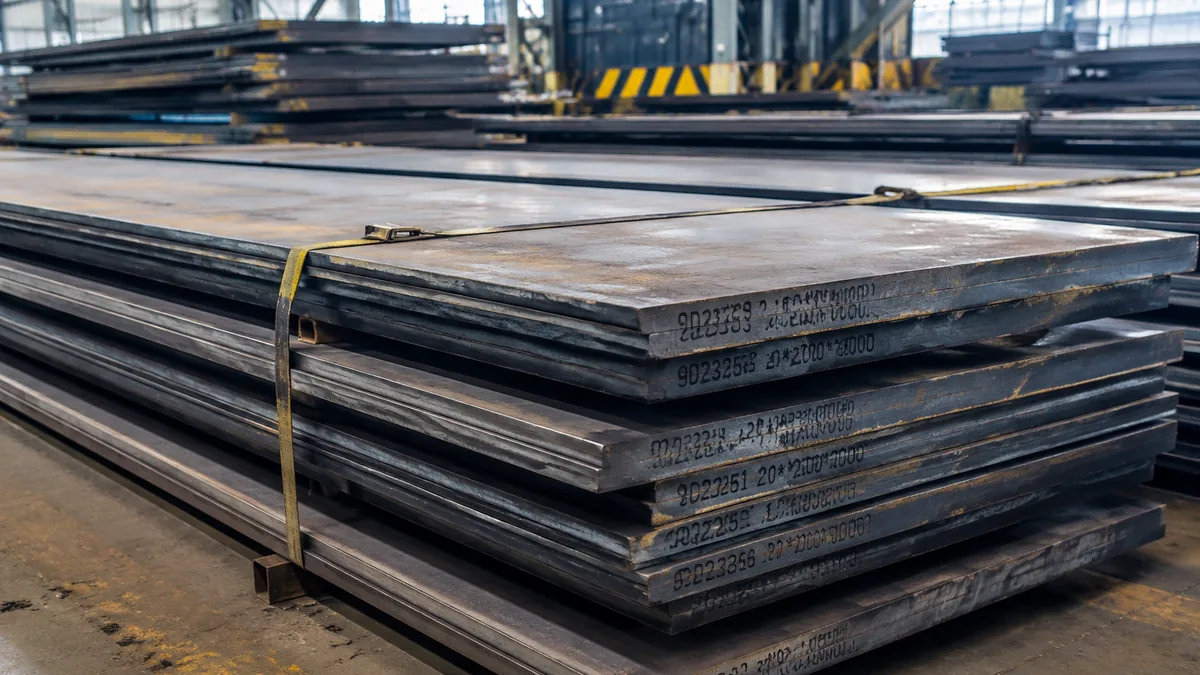
- Heat numbers on plates or bundles match the MTC and the packing list.
- Impact rows appear when JR/J0/J2 or a GB quality letter that requires Charpy is ordered.
- Delivery condition (+AR, +N, +M, or the GB delivery state) matches the offer.
- CE paperwork is present only if the PO asked for it; do not invent it from a GB certificate.
If the MTC says Q355B and the stencil says S355JR, hold the shipment. That is the same class of problem as a broken heat map.
RFQ Wording That Stops False Equivalence
Copy this block:
- Product: carbon structural plate / coil / section
- Either EN 10025-2 S355JR [edition] or GB/T 1591 Q355B [edition]. One grade per price column.
- Approved alternate only if named, with a separate price
- Thickness x width x length, quantity, delivery condition
- Impact: letter plus temperature and energy if required
- Documents: EN 10204 3.1 MTC, heat-to-piece map, CE package if required
- Packing, destination port, inspection hold points
If the drawing is still S235 / Q235 class, do not “upgrade” in the RFQ without the designer. The Q235 vs ASTM A36 structural steel guide covers that milder band.
Conclusion
Q355B and S355JR share a 355 yield-class name. They do not share a specification system. After GB/T 1591-2018, Q355B is the common China mill quote. S355JR remains the EN 10025-2 string on many export drawings. The costly error is ranking those quotes as one grade, then discovering the MTC, impact letter, or CE file does not match at the port.
We quote carbon structural steel with the standard and grade written on the offer, and we align EN 10204 3.1 heat data, impact rows when ordered, and packing marks before shipment. If you want comparable quotations, request a quote with EN 10025-2 S355JR or GB/T 1591 Q355B, thickness, impact letter, and destination document needs in the same message.