







Introduction
For line-pipe importers, writing “API 5L” on an RFQ is not enough. API 5L defines two Product Specification Levels—PSL1 and PSL2—and they do not buy the same risk profile. Choosing the wrong level can leave a project without impact toughness evidence, with incomplete NDT coverage, or with chemistry that the design team never intended to accept.
This guide explains the buyer-facing differences between API 5L PSL1 and PSL2, the RFQ fields that prevent ambiguity, and the document checks that matter before shipment. It is a practical procurement brief, not a substitute for the current API 5L edition text or project engineering approval. Confirm the ordered edition, grade, product form, and annexes against your design specification.
If you are still choosing between API 5L and ASTM A53 for a non-pipeline service, start with our API 5L vs ASTM A53 steel pipe buyer guide first, then return here to freeze PSL1 or PSL2.
If the enquiry itself is still a loose size list, paste the line-pipe block from the steel RFQ template for accurate comparable quotes and lock PSL, process route, CVN, NDT, and hydrostatic wording from this guide before you send it.
PSL1 vs PSL2 at a Glance
API 5L uses PSL1 as the standard product specification level and PSL2 as the additional level with tighter requirements. In commercial practice, PSL2 is the level buyers select when the pipeline design, client specification, or end-user quality plan demands more control than a basic line-pipe supply.
| Buyer checkpoint | API 5L PSL1 | API 5L PSL2 | Why importers care |
|---|---|---|---|
| Chemistry control | Basic chemistry limits by grade and product | Tighter chemistry rules plus carbon-equivalent control | Weldability and HAZ performance |
| Carbon equivalent | Not the defining PSL2 package | Required CE reporting/limits per API 5L PSL2 rules | Critical for field welding procedures |
| Yield and tensile | Minimum properties as required by grade | Minimums plus maximum yield/tensile and Y/T control where applicable | Reduces over-strength and ductility risk |
| Charpy V-notch (CVN) | Not a default PSL1 package | Mandatory under PSL2 for the applicable scope | Low-temperature toughness evidence |
| Non-destructive testing | Level defined for PSL1 product form | Fuller NDT package typical of PSL2 | Weld-body integrity and defect acceptance |
| Delivery condition | As ordered / standard delivery condition options | Delivery condition tightly linked to grade and PSL2 rules | Heat treatment and property consistency |
| Traceability documents | EN 10204 3.1 MTC commonly requested | Same certificate type, but with more test tables expected | Heat-to-pipe evidence for release |
Use this table as a procurement map, not as a full reprint of the standard. Exact limits depend on grade (for example X42, X52, X60, X65), seamless or welded process, wall thickness, and the API 5L edition named on the order.
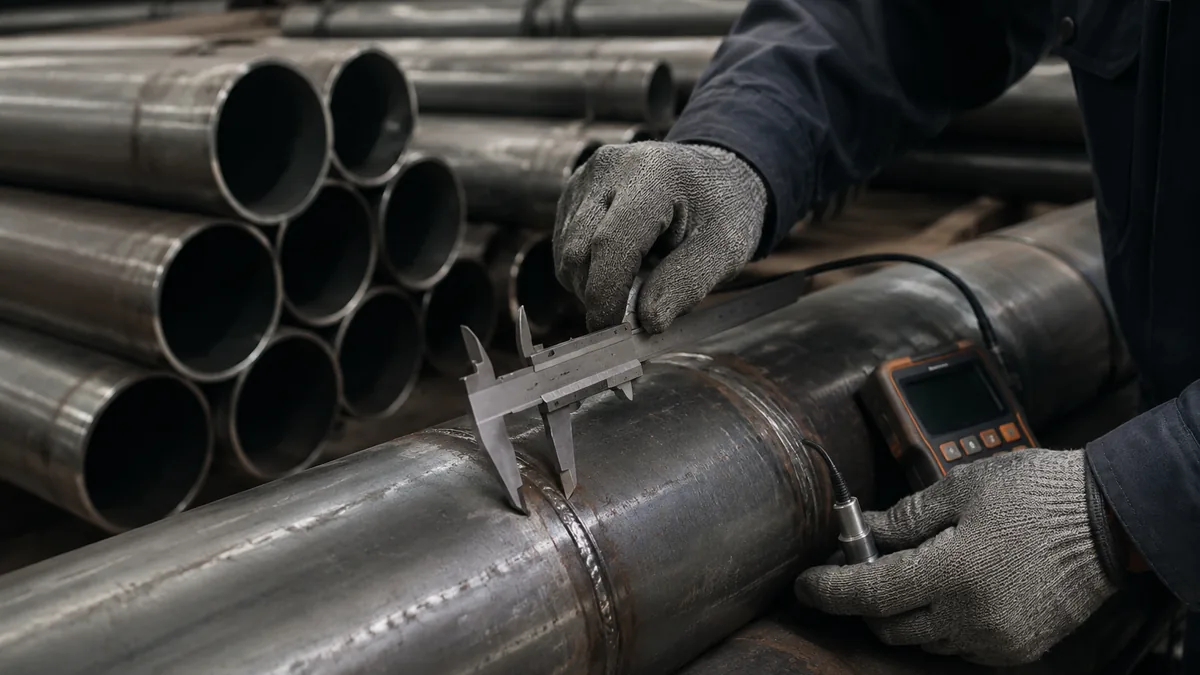
When Pipe Importers Choose PSL1 vs PSL2
Use this as a buyer decision screen before commercial negotiation—not as a substitute for the project piping specification:
- Choose PSL1 when the design code, client specification, and end-user quality plan accept PSL1, and the service does not require Charpy toughness evidence, CE control, or the fuller PSL2 NDT package as mandatory release criteria.
- Choose PSL2 when the pipeline design, low-temperature service, weldability plan, or client standard requires CVN, carbon-equivalent discipline, mechanical upper limits / Y/T control where applicable, and a fuller NDT trail on the weld and body.
- Do not leave PSL blank to “let the mill advise.” Competing quotes then mix PSL1 and PSL2 under the same grade name, and the cheaper offer is not comparable.
- Do not upgrade after rolling. Chemistry, heat treatment, CVN scheduling, and NDT coverage for PSL2 need to be planned before melting and welding. State the level on the RFQ and the purchase order from the start.
Freeze grade and process on the product page first—for example API 5L carbon steel pipe, welded API 5L line pipe, X42 carbon steel pipe, seamless steel pipe, ERW steel pipe, or LSAW steel pipe under steel pipes & fittings—then freeze PSL1 or PSL2 here so mills quote the same risk package.
What Buyers Must Freeze Before Quoting
Price comparison is meaningless if one supplier quotes PSL1 and another quotes PSL2 under the same grade name. Freeze these fields in the RFQ before you ask for commercial terms:
- Product form: seamless, ERW, LSAW, or SSAW, and whether longitudinal or spiral weld applies.
- API 5L edition year or edition number the project accepts, plus any annexes or SR (supplementary requirements).
- Product Specification Level: PSL1 or PSL2 written in full, not implied.
- Grade and service designator as required by the project (for example X52 / L360).
- Outside diameter, wall thickness, length, end finish, and dimensional tolerance class.
- Delivery condition and heat-treatment state.
- Required tests: tensile, flattening or bend where applicable, CVN temperature and energy if PSL2 or project-mandated, hardness if specified, hydrostatic test, and NDT method scope.
- Certificate type: normally EN 10204 3.1 Mill Test Certificate with heat numbers that match pipe marking.
- Coating or bare condition, packing method, and destination marking language.
For welded-process selection after PSL is frozen, our seamless vs welded steel pipe inspection checklist covers the process-side checks importers should not leave to the packing list alone.
Chemistry, Carbon Equivalent, and Mechanical Caps
Chemistry and carbon equivalent
PSL2 is the level where buyers should expect stricter chemical control and carbon-equivalent (CE) discipline. CE is not a marketing label; it is a weldability signal used with the WPS/PQR and field welding plan. On PSL2 orders, require the MTC to report the actual chemistry and the CE method used (for example IIW or other method defined by the order and standard).
On PSL1 orders, do not assume CE will appear automatically. If the project welding procedure needs CE, write that requirement into the PO even when the commercial package is PSL1.
Yield, tensile, and Y/T ratio
Both levels require mechanical properties that match the ordered grade. PSL2 is the level associated with additional upper limits on yield and tensile strength and with yield-to-tensile control where the standard and grade require them. That matters when over-strong pipe complicates bending, field fit-up, or strain-based design assumptions.
Ask the supplier to state on the proforma invoice:
- Grade and PSL
- Minimum and, where PSL2 applies, maximum yield and tensile expectations per the ordered edition
- Whether Y/T ratio reporting is included
Charpy Impact and NDT: Where PSL2 Changes the Document Pack
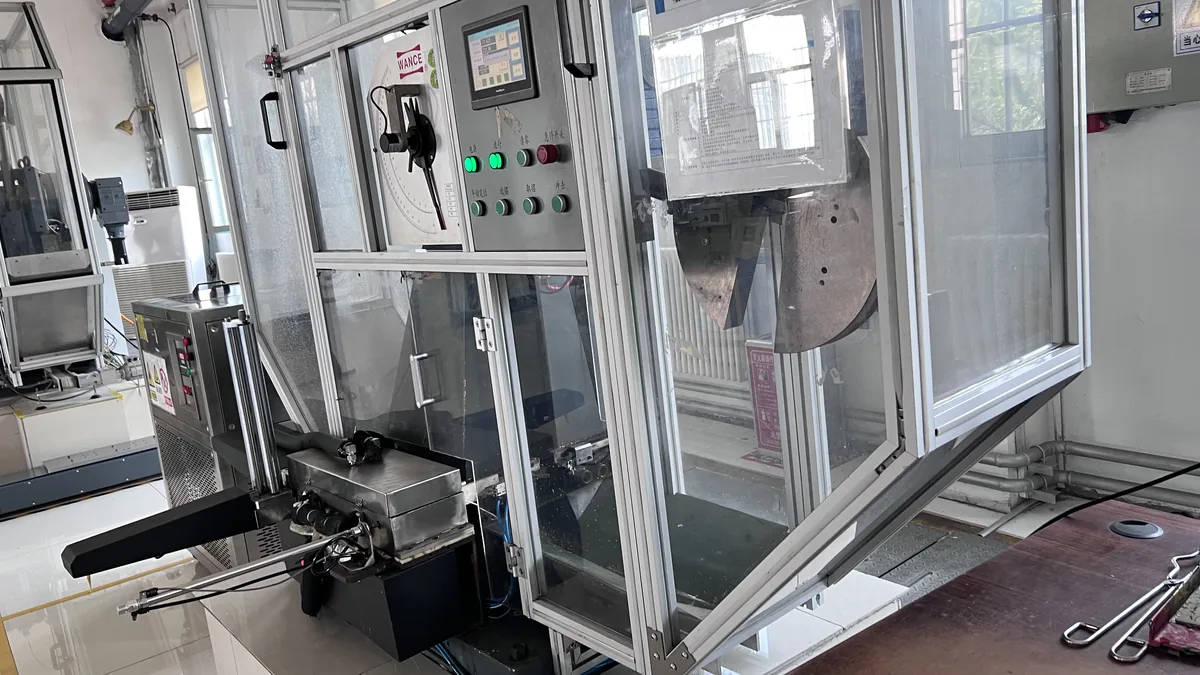
Charpy V-notch testing
CVN testing is one of the most common commercial reasons buyers move from PSL1 to PSL2. For PSL2, plan impact testing into production and laboratory scheduling. The RFQ should state:
- Test temperature
- Specimen orientation and size when the project dictates them
- Minimum absorbed energy and shear area if the client specification adds them
- Whether transverse or longitudinal testing applies to the product form
Do not accept a verbal “impact tested” statement without temperature and acceptance criteria on the order and certificate.
Non-destructive testing
PSL2 packages typically require a fuller NDT approach for the weld and body, depending on manufacturing process. Importers should require the supplier to name the NDT methods, coverage, acceptance standard, and whether automatic or manual methods are used. Keep NDT reports or summary statements aligned with heat numbers and pipe numbers on the packing list.
Hydrostatic test
Hydrostatic testing is part of the normal API 5L release path for both PSL1 and PSL2 unless the purchase order and the ordered edition allow a defined alternative. Do not treat “hydro included” as self-explanatory. Freeze on the RFQ:
- Whether hydrostatic testing is required for every length, or whether an allowed alternative NDE route applies under the ordered edition and annexes
- Test pressure basis (standard formula vs project override) when the client specification adds one
- Hold time if the project specification states it
- How hydro results appear on the EN 10204 3.1 MTC or a linked test summary
If a mill quotes PSL2 with CVN and NDT but leaves hydro scope blank, ask for the same clarity you demand on impact temperature. Document gaps at quotation stage become shipment disputes later.
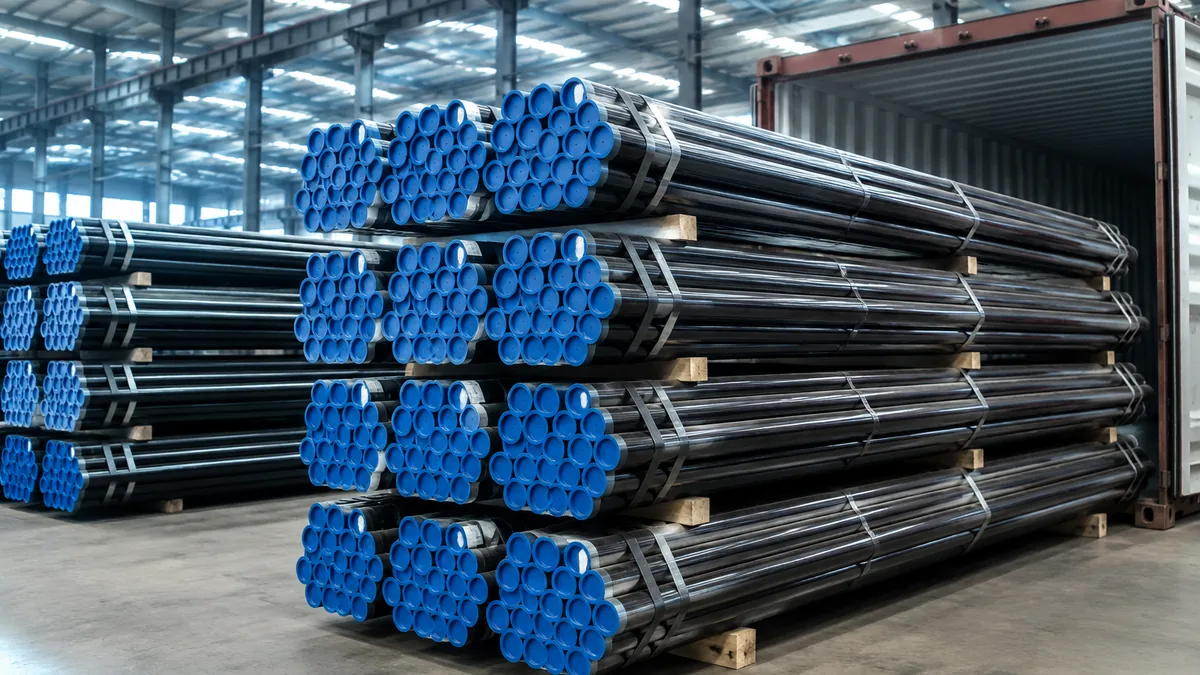
Document Checklist Before Shipment
Use this sequence before container loading or vessel booking release:
- Confirm the PO states API 5L, edition, grade, PSL1 or PSL2, size, quantity, and process route.
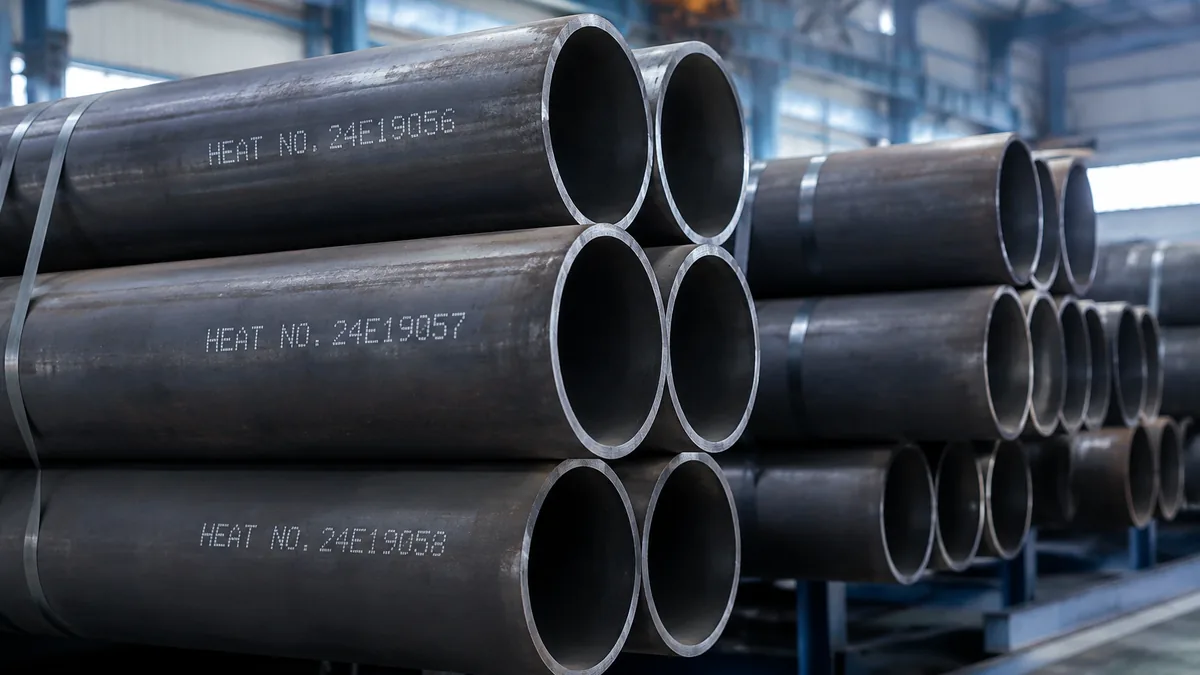
- Match heat numbers on the EN 10204 3.1 MTC to stencils, tags, and packing list lines.
- For PSL2, verify chemistry, CE, tensile with applicable maxima, CVN results, and NDT statements are present.
- For PSL1, verify you did not accidentally accept missing impact or CE data that the project actually needs.
- Check OD, wall, length, and end finish against the order tolerance.
- Review packing, end protectors, and rust-prevention method for sea freight.
Our guides on how to verify a steel mill test certificate before shipment and the EN 10204 3.1 certificate checklist detail the certificate-side checks that apply to both PSL levels.
RFQ Wording That Prevents Under-Specified Quotes
Copy this structure into your next line-pipe RFQ:
- Product: API 5L [edition], grade [X/L], PSL1 or PSL2, [seamless/ERW/LSAW/SSAW]
- Size: OD × WT × length, end finish, quantity
- Delivery condition: [state]
- Tests: tensile; CE method if required; CVN at [°C] if PSL2/project required; hydrostatic; NDT methods [list]
- Documents: EN 10204 3.1 MTC, packing list with heat mapping, marking photos, third-party inspection scope if any
- Packing: sea-freight export packing, end protectors, bundle/loose pipe rules
Clear PSL wording usually removes the largest hidden price gap between competing mills and traders.
Conclusion
API 5L PSL1 and PSL2 are not interchangeable labels. PSL1 can be the correct commercial choice when the project specification accepts it. PSL2 is the package buyers use when they need stricter chemistry and CE control, mechanical upper limits, Charpy toughness evidence, and a fuller NDT trail. The expensive mistake is not choosing PSL2 every time—it is leaving the level blank and discovering the gap after production.
As an exporting mill partner, we quote API 5L line pipe with the Product Specification Level written into the offer, and we align EN 10204 3.1 heat data, CVN or NDT scope when ordered, and packing marks before shipment. Certificate practices are summarized on our quality certificates page.
If you are preparing a line-pipe enquiry, fill the pipe block in the steel RFQ template so grade, PSL1 or PSL2, process route, CVN, NDT, hydrostatic scope, and EN 10204 3.1 certificate lines sit in one package. Then request a quote with that block, or WhatsApp the filled specification to the Shandong export desk at +86 151 5311 2221 for a gap list before formal quotation. We return commercial terms with the technical package listed side by side so competing mill prices stay comparable.