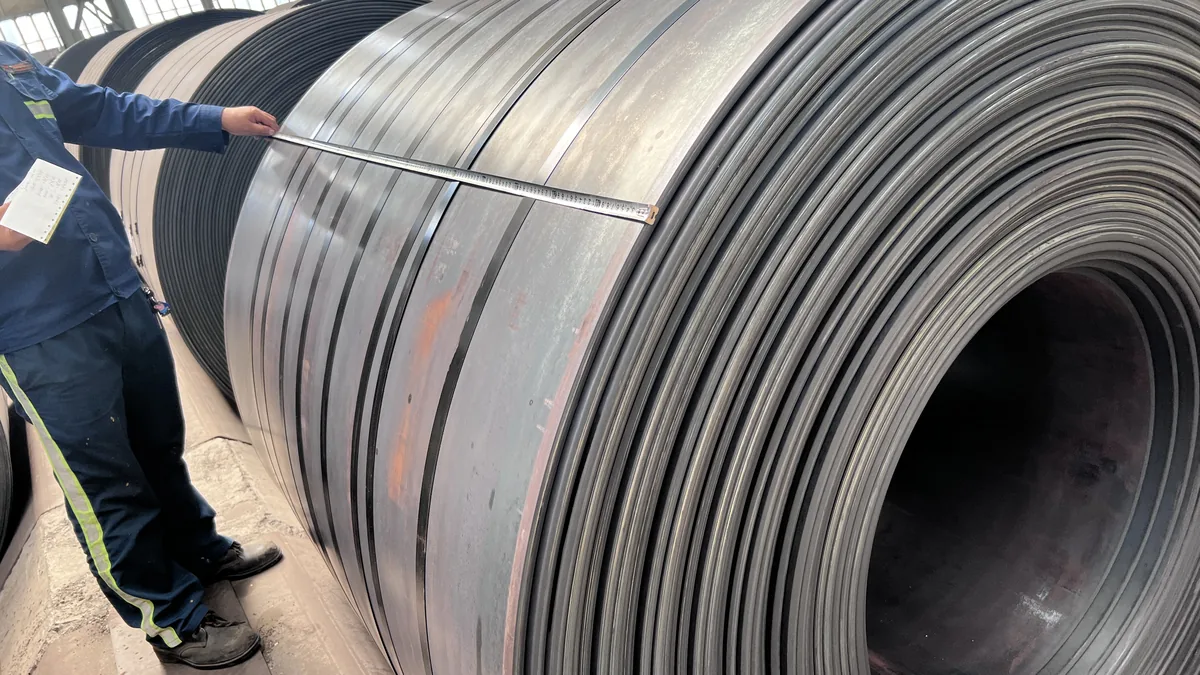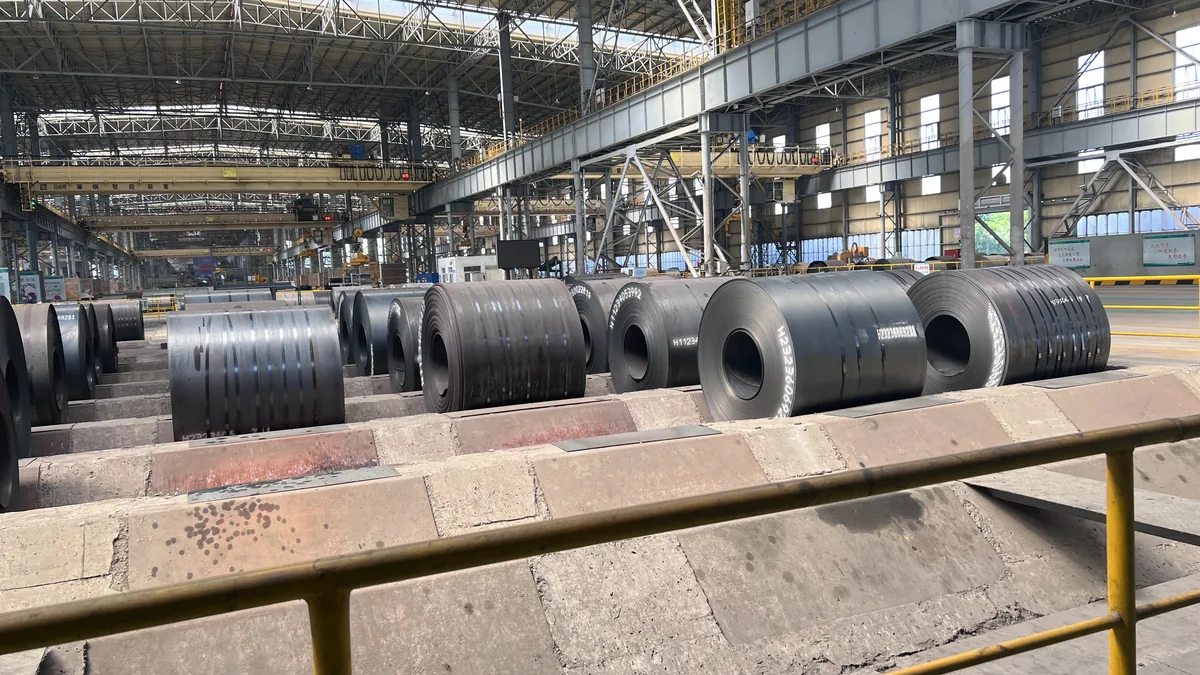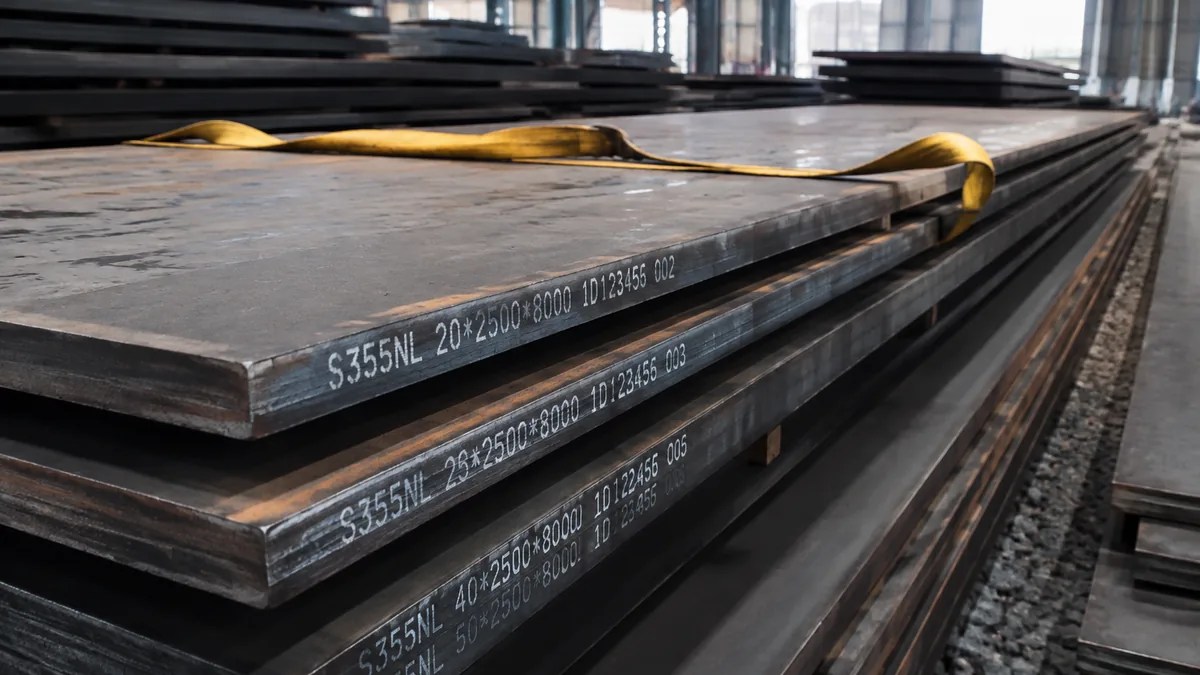









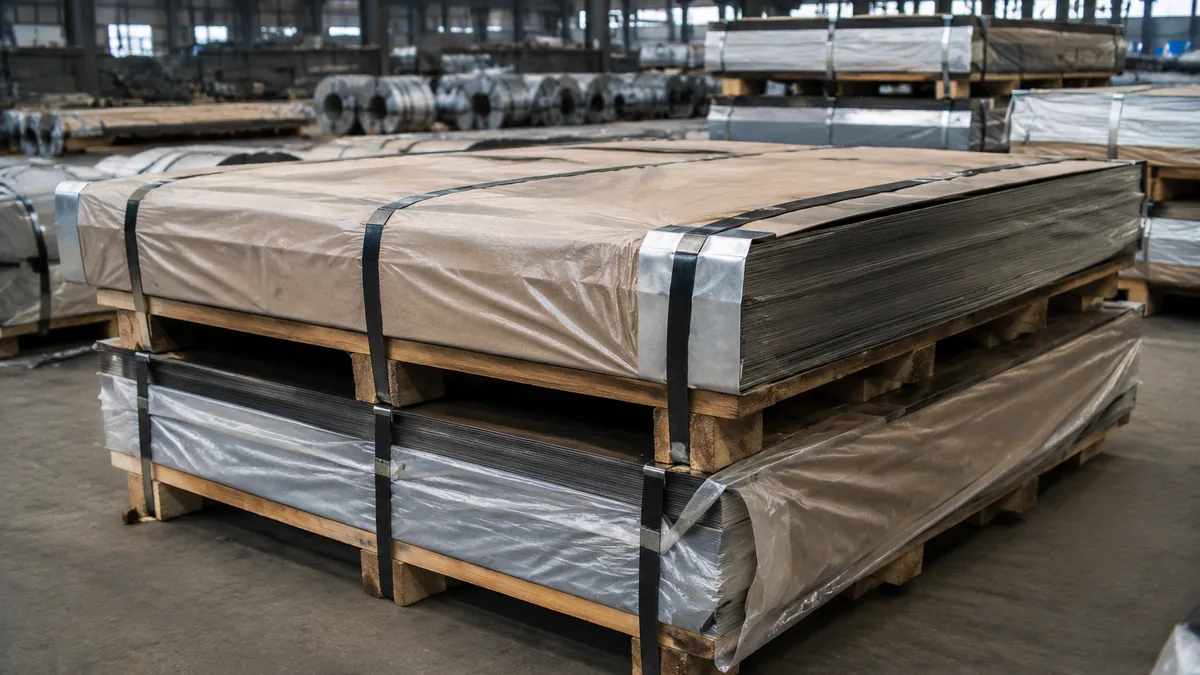
Introduction
A steel price is only useful when every supplier priced the same job. Incomplete RFQs create the opposite result: one mill quotes FOB with theoretical weight and mill packing, another quotes CIF with actual weight, edge protectors, and third-party inspection. Both look like “offers,” but they are not comparable.
This article is a steel RFQ template for importers, project buyers, and traders who need accurate, comparable quotes on coils, plates, pipes, bars, or sections from China. It expands the short field list in our steel RFQ checklist (grade, size, port, MTC) into a full request package you can paste into email or a buying portal. It is procurement guidance, not legal advice on contracts or Incoterms.
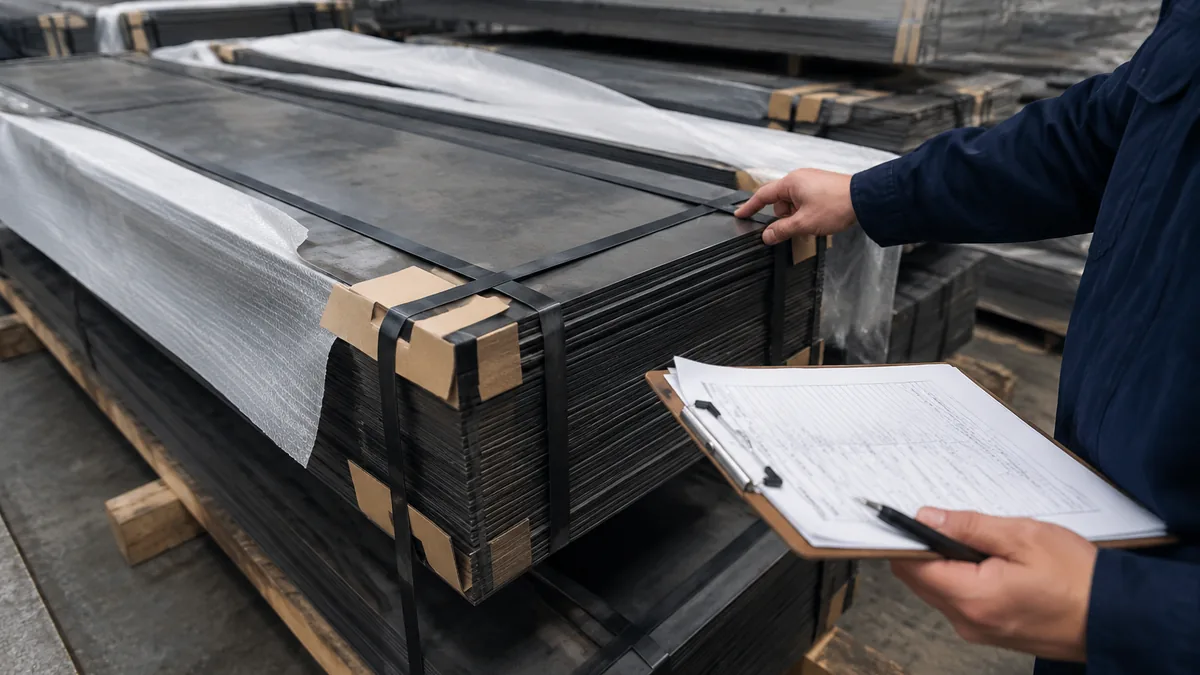
Why Incomplete Steel RFQs Break Comparability
| Missing field | What suppliers invent | What you cannot compare |
|---|---|---|
| Grade + standard family | Local nickname or “equivalent” | Chemistry, mechanical, and acceptance basis |
| Size tolerances | Mill commercial tolerance only | Yield, scrap, and rework risk |
| Quantity basis | MT vs pieces vs container guess | Unit price and freight |
| Weight basis | Theoretical vs actual scale weight | Invoice tons and claim path |
| Packing level | Bare mill wrap vs export sea packing | Corrosion and handling claims |
| Certificate type | 2.2 declaration vs EN 10204 3.1 | Project QA acceptance |
| Incoterm + ports | FOB assumed, or CIF without insurance detail | Landed cost and risk split |
| Inspection | “As per mill” only | Release criteria before loading |
When two quotes differ by USD 20 per ton, the gap is often packing, weight basis, or freight, not the steel melt.
Steel RFQ Template (Copy Block)
Paste the block below and fill every line you can. Mark unknown lines as “TBD” and keep them on the form so the export desk returns a gap list instead of a silent assumption.
STEEL RFQ / REQUEST FOR QUOTATION
Date:
Buyer company / contact / time zone:
Reply-by date:

1) PRODUCT
- Product form (coil / plate / sheet / pipe / bar / section / other):
- Standard + grade (write full code, not nickname only):
- Process notes (HR / CR / HDG / PPGI / seamless / ERW / other):
- Surface / finish / coating mass or paint system (if coated):
- End use (forming, structural, pressure, roofing, machining, other):

2) SIZE AND TOLERANCE
- Main size (e.g. thk x width; OD x WT x length; section designation):
- Length / cut length / random length rules:
- Tolerance standard or project limits (thickness, width, OD, WT, length, camber, flatness):
- Edge / end finish (mill edge, slit, bevel, plain end, threaded):
- Coil ID / max coil weight / plate max piece weight (if relevant):

3) QUANTITY AND WEIGHT BASIS
- Quantity (MT / pieces / meters / containers):
- Split allowed? (one lot / partial shipments):
- Weight basis for pricing and invoice (actual scale / theoretical):
- Over/under shipment tolerance (commercial % if any):

4) PACKING AND MARKING
- Export packing level (VCI, oil, edge protectors, wrap layers, skids, desiccant):
- Bundle / coil / crate rules:
- Marking (heat no., grade, size, PO, destination marks):
- Photo sample of packing required before loading? (Y/N):

5) DOCUMENTS AND QUALITY
- Mill Test Certificate type (e.g. EN 10204 3.1 / EN 10204 3.2 / other):
- Other certs (COO, packing list fields, NDT/UT method + class e.g. EN 10160 S_/E_, coating reports):
- Third-party PSI required? Agency preference? Scope summary:
- Sample / PMI / hardness / hydro / coating spot checks (if any):

6) COMMERCIAL AND LOGISTICS
- Incoterms® year + term (e.g. Incoterms 2020 FOB / CFR / CIF / other):
- Loading port preference (if any) / destination port or place:
- Target shipment window / lead time:
- Payment terms preference (for indication only if not fixed):
- Validity requested for the offer (days):

7) ATTACHMENTS
- Drawing / MTO / packing sketch / previous MTC sample / inspection instruction:
Send the same filled template to every shortlisted supplier. If one desk cannot answer a line, keep the line and record their assumption in your comparison sheet.
Field-By-Field Notes Buyers Actually Need
Product form, grade, and standard
Write the procurement standard, not only a shop nickname. “A36 plate,” “S235,” and “Q235” are not automatic substitutes; treat them as different buying bases unless your engineer has approved a documented alternate. For coated coil, freeze zinc mass or paint system with the grade, not RAL alone. For pipe, freeze process (seamless, ERW, LSAW, SSAW) with the grade family such as API 5L or ASTM line-pipe specs.
Related product pages help suppliers pre-fill size families: A36 carbon steel plate, S355 carbon steel plate, and hot-dip galvanized coil under the broader carbon steel category. For line pipe, freeze PSL and process with the API 5L PSL1 vs PSL2 importer guide before you send the template.
Size, tolerance, and piece limits
Export desks price different risk when thickness is “about 10 mm” versus a named tolerance band. Coil buyers should freeze max coil weight and ID when cranes or container limits matter. Pipe buyers should freeze OD, wall, length, and end finish together. If the project drawing rules, attach the drawing and revision.
Quantity and weight basis
State whether price and invoice use actual scale weight or theoretical weight. Mixed bases make unit-price ranking meaningless. If you need container loading targets, say “about 1x20’ GP” and a tonnage band so mills do not quote a loose “one container” without density assumptions.
Packing and marking
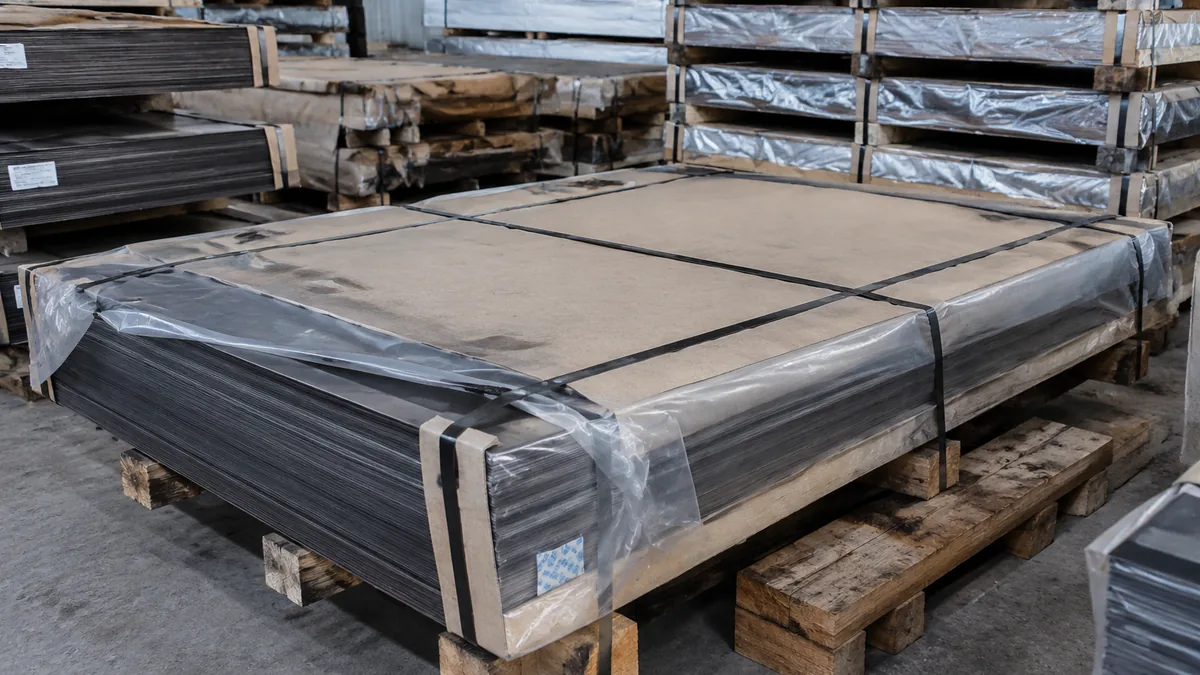
Sea freight packing is a cost line. Bare mill wrap that works for short domestic trucking often fails after weeks on the water. Ask for heat number, grade, and size on tags that survive handling. Packing risk context is covered in the steel export packing guide.
Documents, MTC, and inspection
Most industrial export lots use EN 10204 3.1 Mill Test Certificates with heat-linked chemistry and mechanical results. Require 3.2 only when the contract truly needs independent validation. Document verification steps live in the MTC verification checklist and the EN 10204 3.1 checklist. If you book third-party pre-shipment inspection, write the scope early; see the PSI report reading guide.
When the drawing names ultrasonic testing on plate, do not write only “UT included” or a bare “NDT records” line. Freeze the method and acceptance classes—typically EN 10160 body (S) and edge (E) letters, or a named ASTM A435 / A578 alternative—using the EN 10160 ultrasonic testing RFQ guide. Put that string in section 5 of the template so every mill prices the same inspection package.
Incoterms and ports
Name the Incoterms year, the term, and the named place or port. FOB, CFR, and CIF split freight and insurance differently; risk transfer still needs careful contract wording. Rank offers only after you normalize to one basis. Prefer one destination port in the first RFQ so freight desks do not invent different discharge assumptions.
How To Compare Offers On One Sheet
| Comparison column | What to lock from the RFQ | Normalize before ranking |
|---|---|---|
| Unit price | Currency, MT vs piece | Same unit |
| Weight basis | Actual vs theoretical | Convert or reject mixed bases |
| Packing | Export level described | Add packing upgrade cost if missing |
| Certificate | EN 10204 3.1 / EN 10204 3.2 / other | Same document pack |
| Inspection | PSI yes/no + scope | Add PSI fee if only one offer includes it |
| Incoterm | FOB / CFR / CIF + ports | Convert to one landed or one FOB basis |
| Lead time | Production + shipment window | Same ready-date definition |
| Validity | Offer expiry | Drop expired lines |
A practical rule: if you cannot fill a comparison cell from the written offer, the RFQ or the quote is still incomplete.
RFQ Details That Prevent Misquoting
These are the lines export desks ask for after a “price please” email, because each one changes cost or claim path:
- Standard + grade together, not grade alone.
- Tolerance owner: project drawing, named ASTM/EN/JIS table, or mill commercial.
- Weight basis for both price and invoice.
- Max piece or coil weight for handling and container plans.
- Export packing level in plain words (VCI, edge protectors, skids, desiccant).
- MTC type and whether heat numbers must appear on tags and packing list.
- Incoterms year + term + port, not “CIF your side” without a place name.
- Inspection decision: none / mill only / third-party PSI with a short scope.
- Attachment list: drawing revision, previous acceptable MTC, packing photo standard.
- One reply format: ask suppliers to return the template with their assumptions filled, plus unit price and validity.
First-order buyers who skip items 3, 5, and 7 often award the lowest line and then renegotiate packing or freight after deposit. That is not a price win; it is a scope change.
Send a comparable RFQ
When the template is filled, send it from the request a quote page or attach it to your email to the export desk. For a direct specification review, WhatsApp the filled block to the Shandong export desk at +86 151 5311 2221. If you only have product form, size band, and destination so far, send that partial pack and ask for a gap list before formal quotation. Clear specification beats a rushed number that cannot survive purchase-order review.
Related reading for lines that often stay blank on first RFQs: steel RFQ checklist (grade, size, port, MTC), EN 10160 ultrasonic testing on plate, and API 5L PSL1 vs PSL2.