







Introduction
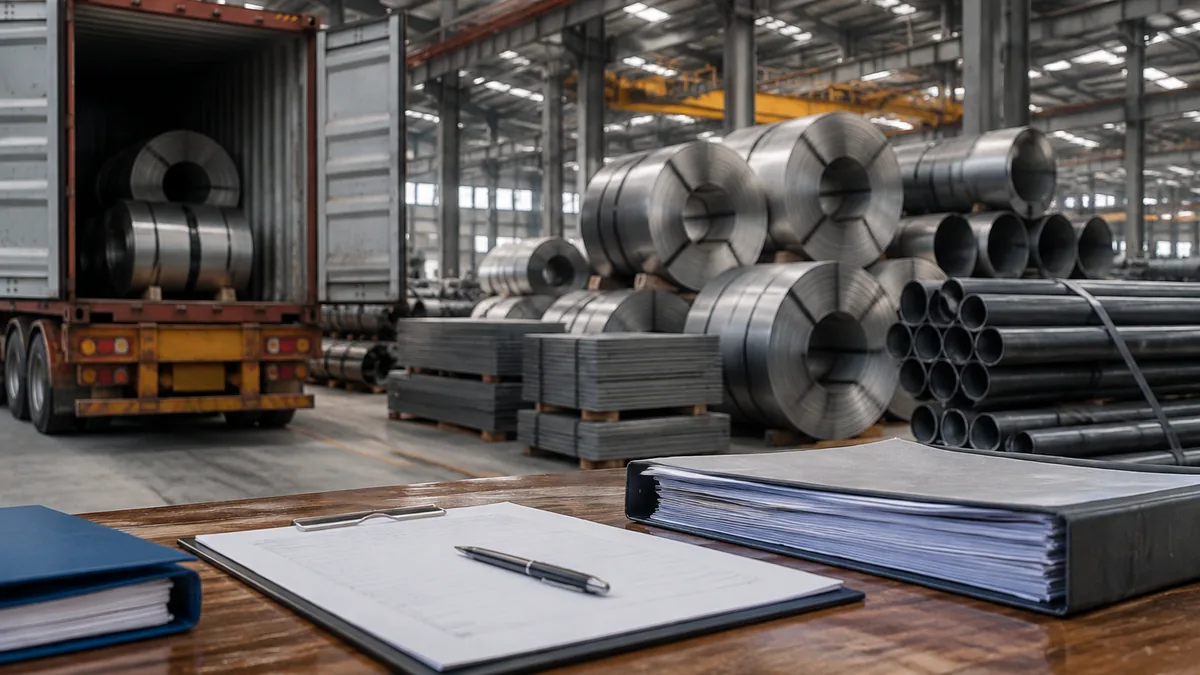
Steel that lands in the European Union in 2026 now carries two separate paper trails. One is the heat trail you already know: grade, standard, and an EN 10204 3.1 Mill Test Certificate. The other is carbon. Under the Carbon Border Adjustment Mechanism (CBAM), the importer of record has to account for the greenhouse gas emissions embedded in covered iron and steel goods and, above the annual threshold, surrender CBAM certificates for those emissions.
This guide is for buyers who source Chinese plate, coil, pipe, or sections into the EU. It is procurement guidance, not legal or customs advice. Confirm CN codes, thresholds, and filing duties with your customs broker and the national competent authority in the Member State where the importer is established. For the quota, 50% out-of-quota duty, and melt-and-pour origin rule that sit beside CBAM, use our EU steel import quota and melt-and-pour guide.
The commercial problem is simple. A mill quote that lists only grade and price forces the importer onto Commission default values plus a mark-up. That number lands in the 2027 certificate bill. Buyers who freeze emissions data in the RFQ can compare offers on the same carbon basis.
What CBAM Changes for Steel Buyers in 2026
CBAM is Regulation (EU) 2023/956. Regulation (EU) 2025/2083 later simplified parts of the regime. The transitional reporting years (2023 to 2025) are over. The definitive regime applies from 1 January 2026.
Iron and steel sits in Annex I with cement, aluminium, fertilisers, electricity, and hydrogen. For most iron and steel goods, the Commission counts direct emissions from production. Indirect electricity emissions are in scope for cement, fertilisers, and agglomerated iron ore. Do not assume a corporate sustainability PDF or a life-cycle assessment database will pass. The Commission Q&A states that LCA and LCI emission factors are not accepted for embedded emissions.
The legal duty sits on the authorised CBAM declarant, usually the EU importer or an indirect customs representative. The mill is not the declarant. The mill is the party who can produce installation-level data. If the mill cannot, the declarant falls back to default values.
| Buyer checkpoint | What changed in 2026 | What to freeze in the RFQ |
|---|---|---|
| Legal phase | Definitive regime from 1 January 2026 | Destination is EU customs territory, yes or no |
| Who files | Authorised CBAM declarant, except below the mass threshold | Named importer and whether they already hold authorisation |
| Carbon cost | Certificates for embedded emissions, after free-allocation adjustment and any third-country carbon price | Ask whether actual verified data or defaults will be used |
| Steel emissions scope | Direct emissions for most iron and steel; precursors count in complex goods | Product form, CN code, and whether slab or billet came from another mill |
| Evidence | Installation-level data, or country-year default values plus mark-up | Emissions pack as a separate file from the MTC |
Product pages for S355JR carbon steel plate and carbon steel coil help frame the commercial line. They do not replace the CN-code check your broker must still do.
Dates and Thresholds That Change How You Order
The dates that move money are few. Write them on the purchase-order cover sheet.
| Date | What happens | Buyer action |
|---|---|---|
| 1 January 2026 | Definitive CBAM regime applies | Stop treating carbon as a reporting-only item |
| Annual mass threshold of 50 tonnes | Importers of CBAM goods other than hydrogen and electricity below 50 tonnes do not need authorisation | Add year-to-date EU CBAM tonnes to every new order; do not guess |
| 1 February 2027 | Certificate sales start on the common central platform | Budget the 2026 bill before this date |
| 30 September 2027 | First annual declaration and first certificate surrender, covering 2026 imports | Keep 2026 shipment files complete through this date |
| From 2027 | After the annual threshold is exceeded, hold certificates equal to at least 50% of year-to-date embedded emissions at set quarter-end dates | Do not wait until September to buy |
The 50 tonne figure comes from the Commission Q&A last updated 27 May 2026. Hydrogen and electricity have no such exemption. Stock produced in 2025 and imported in 2026 is still a 2026 import for CBAM. Confirm both points with your broker before you use bonded warehouse or old-mill stock as a workaround.
Certificate prices follow EU ETS auction averages: quarterly averages for 2026 imports, weekly averages from 2027. The Commission publishes those prices. Do not lock a unit carbon cost into a long contract without a review clause.
Actual Emissions Data vs Default Values
When the mill cannot give verified actual embedded emissions, the authorised declarant may use default values in Annex I to Implementing Regulation (EU) 2025/2621. A correcting act, Implementing Regulation (EU) 2026/1740, updated those values in July 2026. Use the corrected annex, not a transitional-period spreadsheet.
Default values are country- and year-specific. If the good or country cell is blank, the “Other countries and territories” table applies. Every default then takes a mark-up: 10% in 2026, 20% in 2027, 30% from 2028. Fertiliser uses a 1% mark-up; steel does not.
The Commission wrote the mark-up so defaults are rarely cheaper than real data. For a blast-furnace route, that gap is usually large enough to change who wins the bid. For an EAF route with a cleaner electricity mix, the same gap is why the mill should want to file actual values.
What “actual” means in practice:
- Data at the installation that made the goods, not a group average.
- Direct emissions for most steel; precursor emissions for complex goods such as rolled plate or welded pipe made from purchased slab or billet.
- A reference period that is a calendar year by default, or another representative period of at least three consecutive months.
- Verification by an accredited CBAM verifier if you want those actual values on the 2026 declaration due 30 September 2027.
- No substitution of LCA software factors.
If the mill bought slab from a second plant and cannot get that plant’s data, it may combine its own process data with default values for the precursor. That mixed file is still better than a full default on the finished good, but only if the precursor country is known. Ask for it.
Documents to Request from the Mill Before Shipment
Treat the emissions pack the way you already treat the MTC. Put it on the purchase order. Our EN 10204 3.1 certificate checklist and MTC verification guide cover the heat file. The list below is the extra CBAM file.
- Installation name, address, and country of the melt shop and of any rolling or coating mill that processed the goods.
- Production route in plain words: blast furnace and converter, electric-arc furnace, or a named mixed route.
- Whether the goods are simple or complex under CBAM, and the mass of any precursor (pig iron, DRI, crude steel, slab, billet) that came from another installation.
- Country of melt and pour for each heat. That field also serves the separate melt-and-pour evidence rule.
- Specific embedded direct emissions in tCO2 per tonne of product, with the reference period.
- Whether an accredited CBAM verifier has already issued a verification report that the EU declarant can attach.
- If actual data is not ready, a written statement that the offer was priced on Commission default values plus the 2026 10% mark-up, naming the country table used.
- Any carbon price already paid in the country of production, with the legal basis. The declarant may claim a deduction only against an effective carbon price, not against a mill marketing claim.
On first lots, match heat numbers on the MTC, the packing list, and the stencil before the container closes. Then match the installation named on the emissions pack to the producing mill on the MTC. If the MTC names mill A and the emissions file names mill B, hold the shipment.
How CBAM Sits Next to Melt-and-Pour and MTC Checks
Buyers sometimes send one email that says “send CBAM documents” and expect the MTC to answer it. These are three files.
| File | Question it answers | Typical owner | When it is needed |
|---|---|---|---|
| EN 10204 3.1 MTC | What was melted, what was tested, which heat | Producing mill | Every commercial shipment |
| Melt-and-pour statement | Where the steel first became liquid and was cast | Producing mill, then exporter | EU entries from 1 October 2026 under the overcapacity regulation |
| CBAM emissions pack | How many tonnes of CO2 sit in each tonne of goods | Installation operator, then authorised declarant | 2026 imports declared by 30 September 2027 |
Melt-and-pour is a customs origin rule. CBAM is a carbon-price rule. A heat number that proves melt-and-pour country does not compute embedded emissions. An emissions number without a heat map cannot defend a rejected MTC.
From the mill side, the cheap mistake is a trader certificate that hides the melt shop. That already fails ordinary MTC checks. Under CBAM it also pushes the importer onto the “Other countries” default table, which is built from the highest-intensity exporters. Close the mill name at order, not after sailing.
RFQ Wording That Makes Quotes Comparable
Copy this block into the next EU enquiry. Keep one carbon basis per price column. The same idea sits in our steel RFQ template.
- Destination: EU Member State, port, and importer of record.
- Product, grade, standard, size, quantity, and Incoterms 2020 term with named ports.
- CN code the importer intends to declare, for the mill’s information only. The importer still owns the classification.
- Year-to-date CBAM tonnes already imported by that importer in 2026, so both sides can see the 50 tonne threshold.
- EN 10204 3.1 MTC with producing-mill name and heat numbers.
- Melt-and-pour country on the offer and the order confirmation.
- CBAM emissions: actual installation-level direct emissions, verification status, or a priced default-value fallback that names country, year, and the 10% mark-up.
- Precursor mills, if slab, billet, or pig iron is bought in.
- Packing, marks, and inspection hold points.
If two mills quote the same CFR price and only one can supply verified actual data, they are not the same offer. Rank them in separate columns.
Conclusion
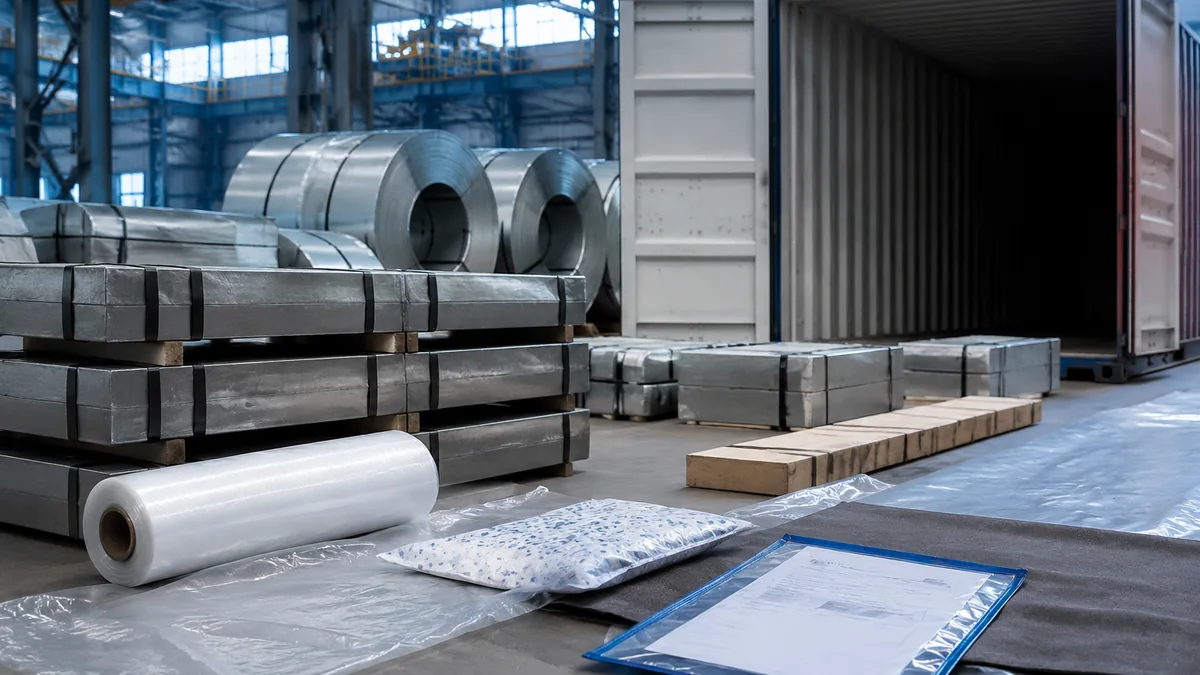
CBAM does not replace the quota file or the MTC. It adds a third cost that is cheap to specify on the RFQ and expensive to reconstruct in 2027. Freeze the importer’s authorisation status, the year-to-date tonnage against the 50 tonne threshold, and whether the price assumes actual verified emissions or Commission defaults plus the 2026 mark-up.
We prepare EU-bound plate, coil, and pipe with the heat file, melt-and-pour country, and the installation data the declarant will need. If you want those fields on the quotation before the vessel sails, request a quote with destination Member State, CN code if you have it, grade, size, quantity, and whether you will file actual emissions or defaults.