







Introduction
A steel RFQ that says only “FOB” or “CIF” is not enough. The two labels do not buy the same freight, the same insurance, or the same control over the vessel. They also do not move cargo risk to the destination port just because the seller paid the ocean freight.
This guide is for importers who need to choose between FOB and CIF on China steel shipments under Incoterms 2020. It is procurement guidance, not legal advice and not a reprint of the ICC rule text. Name the edition on the purchase order. For packing and rust control that sit under either term, use the steel export packing guide. For the commercial fields that belong next to the Incoterm, use the steel RFQ template.
What FOB And CIF Allocate
Both FOB (Free On Board) and CIF (Cost, Insurance and Freight) are Incoterms 2020 rules for sea and inland waterway transport. Under both, the seller delivers when the goods are on board the vessel at the named port of shipment. Risk transfers at that on-board point. The commercial difference is who contracts and pays the main carriage, and whether the seller must buy insurance.
| Buyer checkpoint | FOB | CIF | Why steel importers care |
|---|---|---|---|
| Named place | Port of shipment | Port of destination for cost and insurance; risk still leaves at the load port | Write both ports; do not leave “CIF China” or “FOB factory” |
| Who books the ocean vessel | Buyer or the buyer’s forwarder | Seller | Vessel quality, schedule, and transshipment sit with the party who books |
| Who pays ocean freight | Buyer | Seller, included in the unit price | A cheaper CIF number can hide a slow or poorly serviced routing |
| Insurance | Buyer arranges the cover they want | Seller must provide minimum cover, Institute Cargo Clauses (C) unless the contract raises it | Rust, wet damage, and handling claims often need more than Clause C |
| Risk during the sea leg | Buyer | Buyer (even though the seller paid freight) | CIF is not “seller’s risk until discharge” |
| Export clearance | Seller | Seller | Load-port documents still come from the mill or trader |
| Import customs and duties | Buyer | Buyer | Neither term pays destination duty |
| Typical steel fit | Buyer has a forwarder and wants freight and inspection control | Buyer wants one landed-to-port number and accepts seller-chosen freight | Do not mix the two in one bid table |
CIF insurance is a minimum package. Incoterms 2020 keeps Institute Cargo Clauses (C) as the CIF default and lets the parties agree a higher clause. CIP, by contrast, defaults to a higher Institute Cargo Clauses (A) cover. If the cargo is painted coil, polished stainless, or any surface that rust or wet stain will reject, write the insurance clause on the RFQ. Do not assume a CIF price already bought all-risks cover.
When FOB Gives The Buyer More Control
Choose FOB when you already work with a forwarder, when you want to pick the carrier, or when you need a third-party hold at the load port before the vessel is nominated. The buyer pays ocean freight and insurance, so the mill quote is closer to a mill-plus-local-export number. That makes competing FOB offers easier to rank.
FOB also pairs cleanly with a pre-shipment inspection. You can refuse a vessel booking until dimensions, packing, and the EN 10204 3.1 MTC match the order. The mill still handles export packing, marks, and delivery on board at the named Chinese port.
The usual FOB failure is an incomplete named place: “FOB China” or “FOB warehouse.” Write the port, for example FOB Qingdao (Incoterms 2020). If the cargo is containerized coil handed to a terminal before it is on the vessel, say so. ICC guidance often points containerized cargo toward FCA. FOB risk is tied to on-board delivery, not to the container-yard gate.
When CIF Is The Practical Quote
Choose CIF when you want the seller to contract freight and minimum insurance to a named destination port, and you will compare several mills on one CIF number. That can be useful for first shipments, for destinations where the mill has regular sailings, or when a letter of credit wants seller-arranged carriage documents.
CIF does not make the seller the cargo insurer of last resort for every rust or wet-stain claim. Risk still passed at the load port. If the seller bought only Clause C, many weather and handling losses sit outside that cover. Ask the seller to state the insurance clause, the insured amount basis, and whether a certificate will be tendered with the documents.
A second CIF risk is freight quality. The mill or trader picks the carrier. A low CIF unit price can use a long transshipment, an old vessel, or a slot that leaves coils in a humid yard. Write transit expectations and packing photos into the order if the surface will not survive a slow routing.
Neither FOB nor CIF includes unloading at destination, inland haulage, or import clearance. Those stay with the buyer unless a different term (for example DAP or DPU) is written.
Steel Claims That Sit Between Risk And Insurance
Sea-freight steel claims are usually rust, white stain on zinc, wet packing, strap failure, coil telescoping, or pipe-end damage. Under both FOB and CIF, those events after on-board delivery are the buyer’s risk. CIF only helps if the seller’s minimum policy actually responds.
Before you accept a CIF offer, ask:
- Insurance clause: Institute Cargo Clauses (C), or a higher clause agreed in the contract.
- Whether the policy follows the named destination port on the commercial invoice.
- Whether packing method, VCI or oil, and container or breakbulk stowage are described well enough for a surveyor.
- Heat and bundle marks that match the EN 10204 3.1 MTC, so a claim file has identity.
FOB buyers should place their own cargo insurance before the vessel sails. Waiting until a rust photo arrives from the discharge port is too late.
RFQ Wording That Keeps FOB And CIF Quotes Comparable
Copy this block. Do not let one bidder quote FOB and another quote CIF on the same line.
- Incoterms 2020, either FOB [named load port] or CIF [named destination port]. One term per bid set.
- Product, standard, grade, size, quantity, packing method
- Documents: EN 10204 3.1 MTC, packing list, B/L or waybill as the bank requires
- If CIF: insurance clause, whether a certificate is tendered, and that destination customs stay with the buyer
- If FOB: buyer nominates the vessel or forwarder; seller delivers on board by the agreed window
- Inspection: mill + optional third-party hold before loading
- Photos of packing and container or hatch stowage
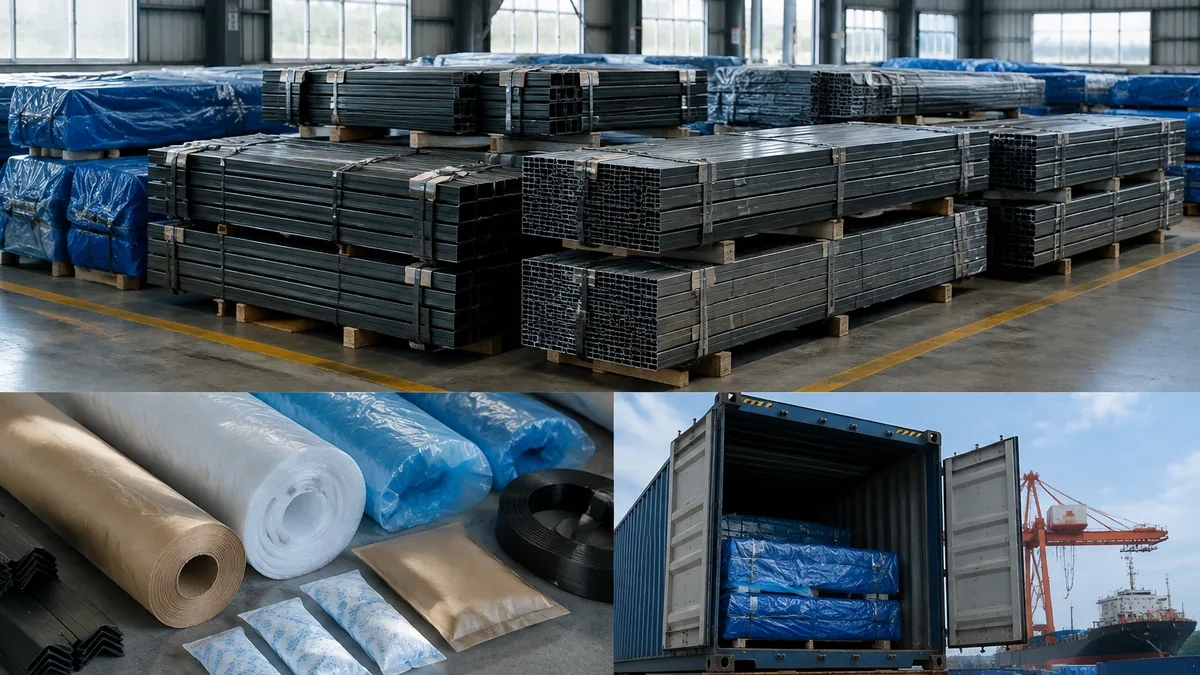
Match heat numbers on the MTC to bundle marks the same way you would on any other order. The mill test certificate check does not change because the Incoterm changed.
Conclusion
FOB and CIF are not two labels for the same steel shipment. Both move risk at the load-port rail once the goods are on board. FOB leaves freight and insurance with the buyer and usually gives more control. CIF puts freight and a minimum insurance contract on the seller and still leaves sea-leg risk with the buyer. The expensive error is ranking a FOB unit price against a CIF unit price, or treating CIF as seller risk until discharge.
We quote steel with the Incoterms 2020 term and named ports written on the offer, and we align packing, EN 10204 3.1 heat data, and loading photos before the vessel or the container is released. If you want comparable quotations, request a quote with FOB or CIF, both ports, packing, tests, and destination customs responsibility in the same message.